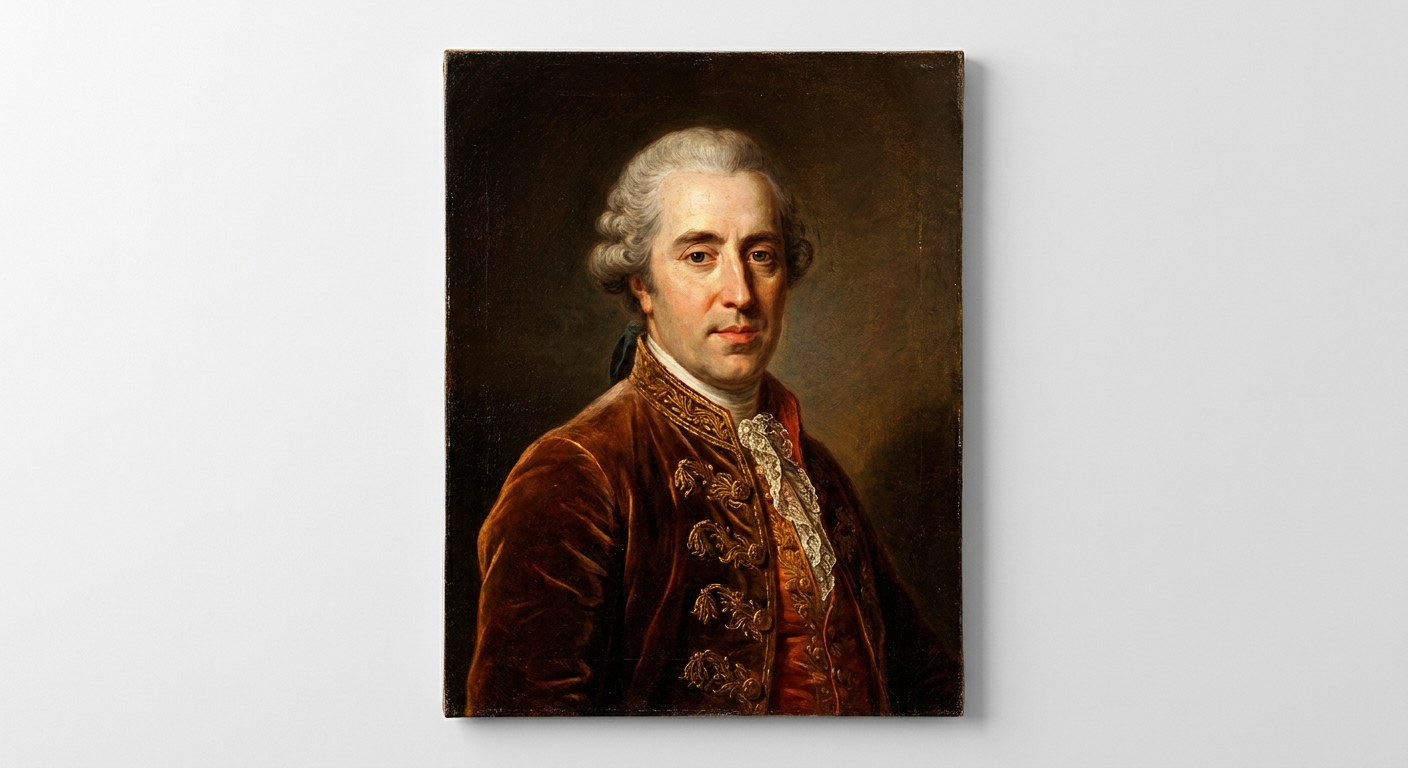
Charles X
1757 – 1836 · French · King of France
Recommended Audiobooks
Listen next from Marcus Alden

Life Lessons from Frederic Chopin
Marcus Alden · 54 min

Life Lessons from John Wesley
Marcus Alden · 52 min
Introduction
Charles X (9 October 1757–6 November 1836) was king of France and Navarre from 1824 until the July Revolution of 1830. The youngest grandson of Louis XV and the younger brother of both Louis XVI and Louis XVIII, he was the final Bourbon monarch to rule France under the traditional title of king of France and Navarre. His reign represented the last serious attempt to restore the political authority, social hierarchy, and religious character associated with France’s pre-revolutionary monarchy.
Born Charles-Philippe de France and known for most of his life as the comte d’Artois, Charles began adulthood as a fashionable, extravagant prince. The French Revolution transformed him into one of Europe’s most determined royalist exiles. He opposed compromise with revolutionary principles, encouraged foreign intervention against revolutionary France, and later emerged as the symbolic leader of the ultraroyalists—those who wished to reverse many of the political and social consequences of the Revolution.
When Charles succeeded Louis XVIII on 16 September 1824, France was governed under the Charter of 1814, which combined hereditary monarchy with a legislature, limited civil liberties, religious toleration, and legal recognition of many revolutionary reforms. Charles formally swore to uphold the Charter, but his political instincts favored a stronger crown, a more privileged Catholic Church, and compensation for aristocrats whose estates had been confiscated during the Revolution.
His reign produced important measures, including the indemnification of émigrés, recognition of Haitian independence, French intervention in Greece, and the conquest of Algiers. Yet it was increasingly overshadowed by conflict between the crown and the elected Chamber of Deputies. Charles’s appointment of the deeply unpopular Jules de Polignac as chief minister and his issuance of the July Ordinances in 1830 provoked an uprising in Paris. After three days of fighting, he abdicated and went into exile.
Charles X’s fall did not end monarchy in France, but it ended the senior Bourbon Restoration. His cousin Louis-Philippe, duke of Orléans, became “King of the French” under a more explicitly constitutional regime. Charles therefore occupies a pivotal place in European history: he was not merely an anachronistic monarch, but a ruler whose failure exposed the difficulty of reconciling dynastic legitimacy with the political society created by revolution.
Quick Facts
| Category | Details |
|---|---|
| Full name | Charles-Philippe de France |
| Best known as | Charles X of France |
| Born | 9 October 1757, Palace of Versailles, France |
| Died | 6 November 1836, Görz, Austrian Empire—now Gorizia, Italy |
| Reign | 16 September 1824–2 August 1830 |
| Coronation | 29 May 1825, Reims Cathedral |
| Dynasty | House of Bourbon |
| Father | Louis, Dauphin of France |
| Mother | Maria Josepha of Saxony |
| Grandfather | Louis XV of France |
| Brothers | Louis XVI and Louis XVIII |
| Wife | Princess Maria Theresa of Savoy |
| Children | Louis Antoine, Sophie, Charles Ferdinand, and Marie Thérèse |
| Principal title before accession | Comte d’Artois |
| Predecessor | Louis XVIII |
| Successor in practice | Louis-Philippe I |
| Religion | Roman Catholicism |
| Major ministers | Joseph de Villèle, Jean-Baptiste de Martignac, Jules de Polignac |
| Political orientation | Conservative royalism; associated with the ultraroyalists |
| Cause of death | Cholera |
| Burial place | Kostanjevica Monastery, Nova Gorica, Slovenia |
Early Life & Background
Charles-Philippe was born at Versailles on 9 October 1757, the youngest surviving son of Louis, Dauphin of France, and Maria Josepha of Saxony. Through his father, he was a grandson of Louis XV; through his mother, he descended from the electors and kings of Saxony and Poland. At birth he received the title comte d’Artois, by which he was generally known until becoming king.
His childhood was marked by bereavement. His father died in 1765, his mother in 1767, and Louis XV assumed responsibility for the future of the royal grandchildren. Charles and his elder brothers—the future Louis XVI and Louis XVIII—were educated within the ceremonial and intellectual world of Versailles. Their tutor, the duc de La Vauguyon, emphasized religion, morality, history, and the obligations of monarchy.
Charles was not initially regarded as a future king. His elder brother Louis-Auguste became dauphin and succeeded Louis XV as Louis XVI in 1774. Another brother, Louis-Stanislas-Xavier, comte de Provence, stood ahead of Charles in the succession. This relative distance from the throne allowed Charles to cultivate the public image of a charming, energetic, and pleasure-loving prince.
On 16 November 1773, he married Princess Maria Theresa of Savoy, daughter of Victor Amadeus III, future king of Sardinia, and Maria Antonia Ferdinanda of Spain. The marriage strengthened France’s dynastic ties with the House of Savoy. The couple had four children, although only two sons survived to adulthood: Louis Antoine, duke of Angoulême, and Charles Ferdinand, duke of Berry.
As a young man, the comte d’Artois accumulated heavy debts through gambling, building projects, horses, clothing, and court entertainments. The Château de Bagatelle in the Bois de Boulogne became a famous symbol of his extravagance. According to tradition, it was constructed rapidly after a wager with his sister-in-law Marie Antoinette. Although later portrayals often exaggerated his frivolity, Charles unquestionably embodied the expensive aristocratic culture that came under growing criticism before 1789.
He also pursued a military identity. In 1782 he traveled to Gibraltar during the final stages of the American Revolutionary War, hoping to distinguish himself during the unsuccessful Franco-Spanish siege of the British fortress. The expedition brought him publicity but no major military achievement.
During the political crisis preceding the French Revolution, Charles adopted a conservative position. He resisted efforts to weaken royal authority and opposed reforms that appeared to threaten the privileges of the monarchy, aristocracy, or Church. By 1789, his reputation as a defender of court conservatism made him deeply unpopular among many supporters of political change.
Rise to Prominence
When the Bastille fell on 14 July 1789, Louis XVI’s government could no longer guarantee the safety of prominent conservative princes. At the king’s urging, the comte d’Artois left France on 16 July. He was among the first major émigrés, traveling initially to the Austrian Netherlands and then to Turin, where his father-in-law ruled.
From exile, Charles became a leading organizer of royalist resistance. He pressed European monarchs to intervene in France, communicated with counter-revolutionary networks, and helped establish an émigré court. At Pillnitz in August 1791, he participated in discussions surrounding the Declaration of Pillnitz, in which Emperor Leopold II and King Frederick William II of Prussia expressed concern for Louis XVI and suggested the possibility of collective European action.
Charles often favored bold intervention, but his ambitions exceeded his resources. The émigré princes depended on foreign governments whose priorities did not always coincide with those of the Bourbons. Military expeditions were costly, royalist conspiracies were frequently penetrated or defeated, and the execution of Louis XVI on 21 January 1793 destroyed hopes for a simple restoration of the old court.
After Louis XVI’s death, Charles recognized his nephew—the imprisoned Louis-Charles—as Louis XVII. When the boy died in 1795, Charles’s elder brother, the comte de Provence, claimed the throne as Louis XVIII. Charles accepted his brother’s leadership and assumed the title Monsieur, traditionally used for the reigning king’s eldest brother.
In 1795 Charles supported the ill-fated Quiberon expedition, during which British-backed émigré forces landed in Brittany. The expedition ended in disaster when republican forces defeated the royalists. Charles himself reached the Île d’Yeu off the Vendée coast but did not establish a durable bridgehead. Critics accused him of hesitation, although the practical difficulties of landing and coordinating with insurgents were severe.
For much of the Napoleonic era, Charles lived under British protection. From 1807 he resided at Hartwell House in Buckinghamshire with Louis XVIII and other members of the Bourbon court. He maintained contacts with royalist agents but played no decisive role in Napoleon’s military defeat.
The collapse of the First French Empire in 1814 brought Charles back to prominence. He entered Paris on 12 April 1814 as lieutenant-general of the kingdom, several weeks before Louis XVIII’s formal arrival. His return allowed the Bourbons to present themselves as a national dynasty rather than merely the clients of invading powers.
During the Bourbon Restoration, Charles became the leading patron of the ultraroyalists. The “ultras” accepted the return of the monarchy but distrusted the constitutional compromises embodied in the Charter of 1814. They called for punishment of revolutionaries and Bonapartists, greater authority for the Catholic Church, and political recognition of aristocratic interests.
Charles’s influence was especially visible after Napoleon’s Hundred Days in 1815 and during the reaction known as the Second White Terror. Although he did not personally control every act of repression, his household became a center of ultraroyalist politics. His sons also occupied important positions: the duke of Angoulême became a military figure, while the duke of Berry was expected to continue the Bourbon line.
The assassination of the duke of Berry by Louis Pierre Louvel on 13 February 1820 intensified royalist fears. Berry’s widow, Caroline of Naples and Sicily, later gave birth to a posthumous son, Henri, duke of Bordeaux. Royalists celebrated the child as the “miracle child,” since his birth preserved the direct male line of Charles’s branch.
Major Achievements
Charles inherited a financially stable and internationally respected kingdom. His early reign benefited from the administrative continuity provided by Joseph de Villèle, who had served as Louis XVIII’s leading minister and remained in office until 1828.
One of the most consequential domestic measures was the Law of Indemnity of 1825. During the Revolution, the property of émigrés had been confiscated and sold as biens nationaux. Returning those estates would have disrupted property ownership and endangered the Restoration settlement. Instead, the government granted former owners compensation totaling approximately one billion francs, financed through a reduction in the interest paid on government debt. The measure reassured purchasers that revolutionary property transfers would stand, but it was attacked as a “billion for the émigrés.”
Charles also granted official recognition to the independence of Haiti in 1825. Haiti had declared independence from France in 1804 after a successful slave revolution. Under Charles’s ordinance, France recognized Haitian sovereignty in return for trade concessions and an indemnity initially fixed at 150 million francs, intended to compensate former colonists. Recognition ended more than two decades of diplomatic uncertainty, but the enormous indemnity burdened Haiti for generations and remains one of the most controversial aspects of his reign.
French foreign policy enjoyed notable successes. In 1823, before Charles became king, the duke of Angoulême had commanded the French expedition that restored the absolutist authority of Ferdinand VII in Spain. Under Charles, France later joined Britain and Russia in supporting Greek autonomy from the Ottoman Empire. At the Battle of Navarino on 20 October 1827, the allied fleets destroyed an Ottoman-Egyptian fleet, a decisive event in the struggle for Greek independence.
The most enduring territorial achievement of Charles’s government was the invasion of Algiers in 1830. Relations with the Regency of Algiers had deteriorated over financial disputes, piracy, and the 1827 “fly-whisk incident,” in which Hussein Dey struck or touched the French consul Pierre Deval with a fly whisk during an argument. A French expeditionary force under General Louis de Bourmont landed near Sidi Ferruch on 14 June 1830 and captured Algiers on 5 July.
The expedition enhanced French prestige and supplied the foundation for the conquest of Algeria. Yet it did not save Charles politically. It also initiated a colonial process characterized by warfare, dispossession, settlement, and profound violence against Algerian society.
Charles promoted religious and cultural restoration. His coronation at Reims on 29 May 1825 revived much of the sacred ceremonial of the old monarchy, including anointing rites associated with medieval and early modern kingship. He also supported religious congregations and commemorations for victims of the Revolution, while the arts benefited from royal patronage and expanding public institutions.
Defining Moments
Charles’s coronation was one of the most revealing events of his reign. Louis XVIII had avoided a traditional coronation, but Charles deliberately chose Reims Cathedral, where French kings had historically been anointed. The elaborate ceremony was intended to demonstrate continuity, sacred legitimacy, and national reconciliation. To liberals, however, it suggested a desire to revive absolutist traditions incompatible with post-revolutionary France.
The Sacrilege Law of 20 April 1825 further intensified that impression. It prescribed severe penalties, theoretically including death in certain circumstances, for profaning consecrated objects. No execution took place under its capital provisions, but the law became a symbol of clerical reaction and the political power attributed to the Catholic Church.
Charles and Villèle also attempted to strengthen aristocratic inheritance through a proposed law favoring primogeniture for certain estates. The proposal encountered resistance and failed, demonstrating that even conservative institutions would not automatically accept a return to pre-revolutionary social arrangements.
Political opposition expanded through newspapers, professional associations, electoral campaigns, and the liberal middle class. In April 1827 Charles reviewed the Paris National Guard and was greeted with hostile cries against Villèle and the Jesuits. He dissolved the Guard shortly afterward. Elections later that year strengthened the opposition, and Villèle resigned in January 1828.
Charles then appointed the more moderate vicomte de Martignac. Martignac attempted limited administrative and educational reforms, including measures to restrain unauthorized religious congregations. Yet he lacked firm support from either the king or the liberal opposition. In August 1829 Charles dismissed him and appointed Jules, prince de Polignac, an intensely conservative aristocrat whose political outlook alarmed constitutionalists.
The confrontation sharpened in March 1830. In the Address of the 221, a majority of deputies declared that cooperation between the ministry and the Chamber did not exist. Charles dissolved the Chamber, expecting elections to produce a more compliant body. Instead, the elections of June and July strengthened the opposition.
On 25 July 1830, at Saint-Cloud, Charles signed the July Ordinances under Article 14 of the Charter. Published the next day, they suspended press freedom, dissolved the newly elected Chamber before it met, altered the electoral system to reduce the influence of the commercial middle class, and called new elections.
Paris erupted. During the “Three Glorious Days”—27, 28, and 29 July—workers, students, journalists, former National Guardsmen, and republican activists erected barricades and fought royal troops. Marshal Auguste de Marmont, commanding the forces in Paris, could not restore control. The Louvre and Tuileries were occupied, and the tricolor replaced the Bourbon white flag.
Charles withdrew from Saint-Cloud to Rambouillet. On 2 August he abdicated in favor of his grandson Henri, duke of Bordeaux, after his son Louis Antoine renounced his own rights. Charles expected Louis-Philippe, duke of Orléans, to serve as lieutenant-general and proclaim Henri as Henry V. Instead, the Chamber offered Louis-Philippe the crown. On 9 August he became King of the French.
Timeline
| Year | Event |
|---|---|
| 1757 | Born at Versailles on 9 October |
| 1765 | His father, Louis, Dauphin of France, dies |
| 1767 | His mother, Maria Josepha of Saxony, dies |
| 1773 | Marries Princess Maria Theresa of Savoy |
| 1774 | His brother becomes Louis XVI |
| 1782 | Visits the Franco-Spanish forces besieging Gibraltar |
| 1789 | Leaves France after the fall of the Bastille |
| 1791 | Participates in royalist diplomacy surrounding the Declaration of Pillnitz |
| 1793 | Louis XVI is executed; Charles intensifies counter-revolutionary activity |
| 1795 | Supports the failed Quiberon expedition; Louis XVIII becomes Bourbon claimant |
| 1807 | Joins the exiled Bourbon court at Hartwell House in England |
| 1814 | Returns to Paris as lieutenant-general of the kingdom |
| 1815 | Bourbon monarchy restored again after Napoleon’s Hundred Days |
| 1820 | His younger son, the duke of Berry, is assassinated |
| 1824 | Succeeds Louis XVIII on 16 September |
| 1825 | Crowned at Reims; Sacrilege Law and émigré indemnity enacted; Haiti recognized |
| 1827 | Allied victory at Navarino; elections weaken Villèle |
| 1828 | Villèle is replaced by Martignac |
| 1829 | Charles appoints Jules de Polignac |
| 1830 | Address of the 221, conquest of Algiers, July Ordinances, revolution, and abdication |
| 1832 | His daughter-in-law, the duchess of Berry, unsuccessfully attempts an uprising |
| 1836 | Dies of cholera at Görz on 6 November |
Personal Life
Charles’s marriage to Maria Theresa of Savoy was dynastically appropriate but not notably intimate. He had a reputation for romantic affairs during his youth, most famously with Louise d’Esparbès de Lussan, vicomtesse and later duchesse de Polastron. Her death from tuberculosis in London in 1804 deeply affected him and may have contributed to the increasingly serious religious devotion of his later years.
Of Charles’s four children, Sophie and Marie Thérèse died young. Louis Antoine, duke of Angoulême, married his cousin Marie Thérèse Charlotte, the only surviving child of Louis XVI and Marie Antoinette. Their marriage produced no children. Charles Ferdinand, duke of Berry, married Caroline of Naples and Sicily and fathered Henri, duke of Bordeaux, the future Legitimist claimant to the French throne.
Charles was personally courteous, physically active, and more socially graceful than his reserved elder brothers. Even opponents sometimes acknowledged his charm. Yet he was also stubborn, emotionally attached to family and dynastic principle, and inclined to trust loyal aristocratic advisers over broader currents of public opinion.
Following his overthrow, Charles sailed from Cherbourg to Britain and stayed for a time at Holyrood Palace in Edinburgh. He later moved to Prague Castle under the protection of Emperor Francis I of Austria. His final residence was at Görz, where he died during a cholera outbreak on 6 November 1836.
He was buried at the Franciscan monastery of Kostanjevica, now in Nova Gorica, Slovenia. Several members of the exiled Bourbon family are buried there, leading the site to be called the “little Saint-Denis.”
Beliefs & Philosophy
Charles believed strongly in hereditary legitimacy. In his understanding, monarchy was not simply an office created by a constitution or popular vote; it was an inherited institution rooted in history, religion, and dynastic law. He accepted the Charter of 1814 as the legal framework of his reign, but he interpreted it in a manner that preserved extensive royal authority.
His Catholic faith became more pronounced during exile. He viewed religion as essential to morality, social stability, and legitimate government. This outlook encouraged his support for the Church, religious education, public ritual, and legislation protecting sacred objects.
Charles did not seek a literal restoration of every institution abolished after 1789. He accepted the Napoleonic administrative system, the Civil Code, the sale of national lands, and the existence of representative chambers. Nevertheless, he underestimated how deeply political expectations had changed. Freedom of the press, parliamentary accountability, and the social authority of property-owning elites had become central to Restoration politics.
His core difficulty was therefore less a complete rejection of constitutionalism than an inability to accept its evolving implications. He regarded ministers as servants of the king; the liberal majority increasingly expected ministers to command parliamentary confidence. The July crisis of 1830 exposed this incompatible understanding of the Charter.
Challenges & Controversies
Charles’s reign was burdened by the unresolved legacy of the French Revolution. Former émigrés desired restitution, while purchasers of confiscated property demanded security. The Church sought renewed influence, while liberals feared clerical domination. Royalists invoked inherited rights, while voters and journalists asserted the authority of public opinion.
The émigré indemnity was defensible as a compromise because it compensated former owners without reversing land sales. Yet its scale and presentation allowed critics to portray the monarchy as a government serving aristocratic interests at public expense.
The Haitian indemnity was more damaging in the long term. France recognized a state created by emancipated former slaves only after threatening pressure and demanding compensation for the losses of former slaveholders. Haiti had to borrow heavily from French financiers, entrenching foreign debt and constraining its development.
The Sacrilege Law and support for religious congregations fueled allegations that Charles was controlled by priests or sought to establish a theocratic order. Such claims were often polemical, but the government repeatedly failed to appreciate the symbolic power of religious legislation in a society shaped by revolutionary anticlericalism.
Press censorship became another central issue. Newspapers were the principal organs of political debate, and attempts to restrict them united liberals, constitutional monarchists, and republicans. The July Ordinances’ suspension of press freedom prompted journalists—including Adolphe Thiers, Armand Carrel, and François-Auguste Mignet—to organize resistance.
Charles’s use of Article 14 was legally contested and politically catastrophic. The article empowered the king to issue ordinances necessary for executing laws and maintaining state security. Charles and Polignac treated it as authority to restructure elections and silence the press. Opponents regarded this as an unconstitutional coup.
The conquest of Algiers also remains controversial. Although presented as a defense of national honor and a campaign against piracy, it began more than a century of French colonial rule in Algeria. The resulting conquest involved mass displacement, violent resistance, and extensive appropriation of land.
Finally, Charles’s handling of the July Revolution revealed poor judgment. He reacted slowly, underestimated urban resistance, and made concessions only after the monarchy’s military and political position had collapsed. His abdication arrangement ignored the fact that legislators no longer trusted the senior Bourbon line.
Famous Quotes
“There is nothing changed in France; there is only one Frenchman more.”
This celebrated remark was associated with Charles’s return in 1814. The wording was probably devised by the royal official Jacques Claude Beugnot rather than spoken spontaneously by Charles, but it effectively presented the prince as reconciled to post-revolutionary France.
“I would rather saw wood than be king under the conditions of the King of England.”
Frequently attributed to Charles, this statement captures his alleged dislike of parliamentary monarchy. Its exact wording and provenance are uncertain, so it should be treated as a traditional attribution rather than a securely documented declaration.
“My resolutions are unalterable.”
Versions of this phrase were attributed to Charles during the political confrontation of 1830. Whether or not the wording is exact, it reflects the inflexibility for which his government became notorious.
Legacy & Influence
Charles X was the last reigning monarch from the senior Bourbon line and the last French king to undergo the traditional coronation at Reims. His overthrow ended the Bourbon Restoration and transferred power to the Orléans branch under Louis-Philippe.
The July Revolution had consequences far beyond France. It encouraged the Belgian Revolution against Dutch rule, inspired movements in parts of Italy and Germany, and contributed to the Polish November Uprising against Russia. The events demonstrated that the conservative European order established after Napoleon could still be challenged by urban revolt, nationalism, and constitutional liberalism.
For Legitimists, Charles remained the rightful king until his death. They regarded Louis-Philippe as a usurper and recognized Charles’s descendants as lawful claimants. After Louis Antoine’s death in 1844, Henri, comte de Chambord, became the principal Legitimist pretender. His refusal to accept the tricolor flag later helped prevent a monarchical restoration during the 1870s.
Historians have often portrayed Charles as a ruler who learned little from exile and forgot little of the old order. That judgment contains truth but can be oversimplified. He did not abolish the Charter, restore feudalism, or confiscate revolutionary property. His reign operated within institutions inherited from the Revolution, Napoleon, and Louis XVIII.
His failure arose from the contradiction between those institutions and his conception of royal authority. By attempting to use constitutional powers against the political spirit of constitutional government, he destroyed the legitimacy he sought to defend. His career remains a powerful case study in how rigid interpretations of tradition can undermine the institutions they are intended to preserve.
Interesting Facts
- Charles X was the brother of two other French kings: Louis XVI and Louis XVIII.
- He was nearly 67 years old when he became king.
- His Château de Bagatelle was reportedly built in little more than two months following a wager with Marie Antoinette.
- He spent approximately twenty-five years outside France during the revolutionary and Napoleonic eras.
- His 1825 coronation was the only full traditional French coronation held during the Bourbon Restoration.
- Gioachino Rossini composed Il viaggio a Reims for festivities associated with the coronation.
- Charles recognized Haitian independence but imposed a deeply burdensome indemnity on the new nation.
- The capture of Algiers occurred only weeks before Charles lost his throne.
- His son Louis Antoine is sometimes called “Louis XIX” because of the brief interval between Charles’s abdication and Louis Antoine’s renunciation, though he never exercised power as king.
- His grandson Henri was proclaimed “Henry V” by Legitimists but never ruled France.
- Charles died in an Austrian territory that is now divided between modern Italy and Slovenia.
- He is buried outside France because the senior Bourbons remained in exile after 1830.
Frequently Asked Questions
Why was Charles X overthrown?
Charles was overthrown because his government attempted to curtail press freedom, dissolve an opposition-dominated Chamber of Deputies, and alter electoral rules through the July Ordinances of 25 July 1830. These measures convinced many liberals that the king had violated the Charter. The resulting Paris uprising developed into the July Revolution.
Was Charles X an absolute monarch?
Not formally. He ruled under the Charter of 1814, which established legislative chambers and recognized civil equality and certain liberties. However, Charles interpreted royal power broadly and resisted the developing principle that ministers should answer to a parliamentary majority.
How was Charles X related to Louis XVI?
Charles was Louis XVI’s youngest brother. Their other surviving brother became Louis XVIII. All three were grandsons of Louis XV.
What did Charles X accomplish as king?
His reign saw the indemnification of émigrés, recognition of Haitian independence, French participation in the allied victory at Navarino, support for Greek independence, and the capture of Algiers. Some of these achievements, especially the Haitian indemnity and Algerian conquest, also carried severe and controversial consequences.
What were the July Ordinances?
The July Ordinances were decrees signed on 25 July and published on 26 July 1830. They suspended press freedom, dissolved the newly elected Chamber, revised electoral qualifications, and called new elections. They directly triggered the Three Glorious Days.
Did Charles X abdicate?
Yes. He abdicated on 2 August 1830 at Rambouillet and attempted to transfer the crown through his son to his grandson Henri. The political leadership in Paris instead installed Louis-Philippe as King of the French.
Who succeeded Charles X?
His cousin Louis-Philippe, duke of Orléans, became king in practice on 9 August 1830. Legitimists rejected this settlement and considered Charles’s grandson Henri the rightful monarch.
Where did Charles X live after his overthrow?
He first went to Britain, residing for a period at Holyrood Palace in Edinburgh. He later lived in Prague and finally at Görz in the Austrian Empire.
Where is Charles X buried?
He is buried in the Bourbon crypt at Kostanjevica Monastery in Nova Gorica, Slovenia.
Why is Charles X historically important?
His reign marked the final attempt by the senior Bourbon dynasty to govern post-revolutionary France. His fall demonstrated that hereditary legitimacy alone could not sustain a monarchy without accommodation to parliamentary politics, civil liberties, and public opinion.
Lessons from Charles X
- Political legitimacy must adapt: Historical inheritance cannot substitute indefinitely for cooperation with contemporary institutions.
- Symbolism matters: Coronations, religious laws, flags, and court rituals can shape public perceptions as powerfully as administrative policy.
- Constitutional ambiguity is dangerous: Competing interpretations of executive and legislative authority can turn political disputes into regime crises.
- Compromise requires credibility: Charles alternated between moderation and reaction, satisfying neither liberals nor uncompromising royalists.
- Press restrictions often intensify opposition: The attack on newspapers in July 1830 transformed political resistance into revolutionary action.
- Military success cannot guarantee domestic stability: The capture of Algiers did not compensate for the monarchy’s loss of support at home.
- Delayed concessions may be useless: Charles offered compromises only after control of Paris had been lost.
- Policies have long afterlives: The Haitian indemnity and Algerian conquest produced consequences extending far beyond Charles’s reign.
- Loyalty is not the same as sound advice: His dependence on ideologically compatible advisers, especially Polignac, narrowed his understanding of political realities.
- Rigid defense of an institution can destroy it: By trying to preserve a strong hereditary crown, Charles brought down the senior Bourbon monarchy.
Further Reading
- Munro Price, The Perilous Crown: France Between Revolutions, 1814–1848
- Guillaume de Bertier de Sauvigny, The Bourbon Restoration
- Pamela Pilbeam, The 1830 Revolution in France
- Robert Tombs, France 1814–1914
- Philip Mansel, Paris Between Empires: Monarchy and Revolution 1814–1852
- David H. Pinkney, The French Revolution of 1830
- Sudhir Hazareesingh, From Subject to Citizen: The Second Empire and the Emergence of Modern French Democracy
- Laurent Dubois, Haiti: The Aftershocks of History
- Jennifer E. Sessions, By Sword and Plow: France and the Conquest of Algeria
- Encyclopaedia Britannica, “Charles X: King of France”