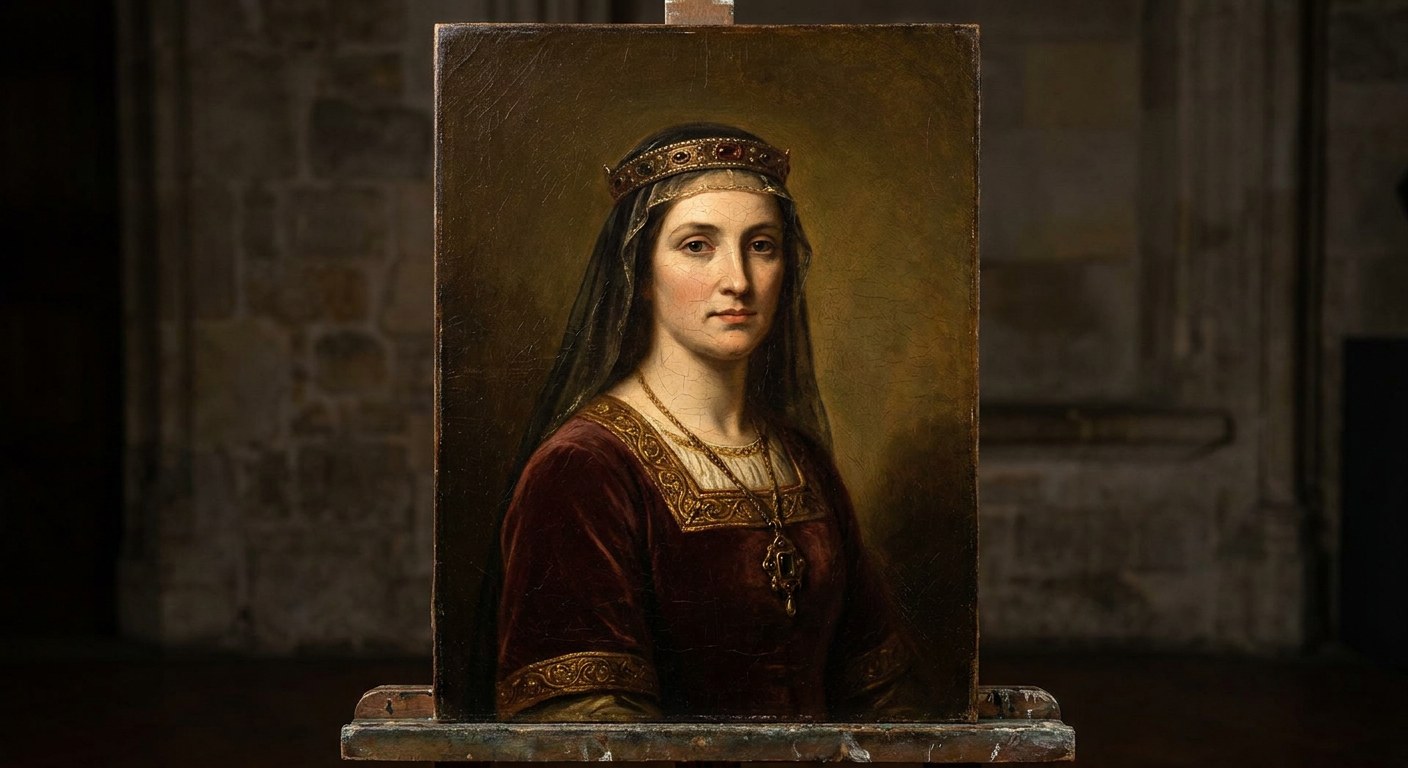
Eleanor of Aquitaine
1122 – 1204 · French · Duchess & Queen Consort
Recommended Audiobooks
Listen next from Marcus Alden

Life Lessons from Frederic Chopin
Marcus Alden · 54 min

Life Lessons from John Wesley
Marcus Alden · 52 min
Introduction
Eleanor of Aquitaine (c. 1122–1204) was one of the most powerful, wealthy, and politically consequential women of the Middle Ages. Duchess of Aquitaine in her own right, queen consort first of France and then of England, mother of three kings, patron of religious institutions, participant in the Second Crusade, royal administrator, diplomat, and regent, she stood at the center of European politics for more than six decades.
Her inheritance encompassed much of southwestern France, including Aquitaine, Gascony, and Poitou. These lands made Eleanor an exceptionally desirable dynastic partner and gave her unusual political importance. Her first marriage, to Louis VII of France, was annulled in 1152 after fifteen years and two daughters. Only weeks later, she married Henry, Duke of Normandy and Count of Anjou, who became King Henry II of England in 1154. Their union helped create the vast collection of territories often called the Angevin Empire, stretching from the Scottish border to the Pyrenees.
Eleanor’s life was neither a simple story of female empowerment nor the romantic legend later writers constructed. She operated within a patriarchal feudal society in which her authority was substantial but conditional. She experienced crusade, marital conflict, rebellion, imprisonment, bereavement, and dynastic warfare. Nevertheless, she repeatedly demonstrated political judgment, resilience, and administrative skill. In her seventies, she governed England on behalf of Richard I, raised his ransom, helped preserve his kingdom, and arranged marriages essential to the survival of the Plantagenet dynasty.
Because contemporary evidence is incomplete and often colored by clerical hostility, Eleanor has attracted myths: that she presided over “courts of love,” rode bare-breasted on crusade, murdered a royal mistress, or systematically imported troubadour culture into northern Europe. Such stories should be distinguished from her documented career. The historical Eleanor was no less remarkable: a landholder who defended her inheritance, a queen who endured nearly sixteen years of confinement, and an elder stateswoman whose final diplomatic journey helped shape the royal houses of Europe.
Quick Facts
| Category | Details |
|---|---|
| Full name | Eleanor of Aquitaine; in contemporary Latin, Alienor or Helienordis |
| Born | Probably 1122, likely in Poitiers or elsewhere in Aquitaine |
| Died | 1 April 1204 |
| Place of death | Probably Fontevraud Abbey, Anjou |
| Parents | William X, Duke of Aquitaine, and Aénor de Châtellerault |
| Title by inheritance | Duchess of Aquitaine and Gascony; Countess of Poitou |
| Queen of France | 1137–1152, as wife of Louis VII |
| Queen of England | 1154–1189, as wife of Henry II |
| First marriage | Louis VII of France, married 25 July 1137 |
| Second marriage | Henry Plantagenet, future Henry II, married 18 May 1152 |
| Children | Two daughters by Louis VII; eight children by Henry II |
| Notable children | Marie of Champagne, Richard I, Geoffrey of Brittany, Eleanor of Castile, and King John |
| Crusading role | Accompanied Louis VII on the Second Crusade, 1147–1149 |
| Imprisonment | Confined by Henry II after the rebellion of 1173–1174 until his death in 1189 |
| Dynasty | Capetian by first marriage; Plantagenet or Angevin by second |
| Burial | Fontevraud Abbey, beside Henry II and near Richard I |
| Historical significance | Dynastic ruler, queen, regent, administrator, diplomat, and political patron |
Early Life & Background
Eleanor was born around 1122, although neither her exact birth date nor birthplace is known. Poitiers is often suggested because it was the principal seat of the counts of Poitou, but she may have been born elsewhere in her family’s extensive domains. Her father, William X, was Duke of Aquitaine and Gascony and Count of Poitou. Her mother, Aénor de Châtellerault, came from an influential Poitevin family and died when Eleanor was still young.
Eleanor’s name was probably derived from her mother’s: the Latin form alia Aenor—“the other Aénor”—may have developed into Alienor. She had a younger sister, Petronilla, and a brother, William Aigret, who died in childhood along with their mother, probably in 1130.
Aquitaine was one of the largest and richest principalities in western Europe. It extended from the Loire region toward the Pyrenees and included territories whose languages, customs, and political traditions differed markedly from those of northern France. Ducal authority was uneven: powerful local lords guarded their independence, and the duchy required constant travel, negotiation, and displays of lordship.
Eleanor’s grandfather, William IX of Aquitaine, was a crusader and the earliest surviving troubadour whose works are known by name. His court belonged to a southern aristocratic culture in which lyric poetry, courtly display, and the Occitan language flourished. Although later accounts exaggerate Eleanor’s direct role in spreading “courtly love,” she grew up in an environment where aristocratic poetry and sophisticated court culture carried political as well as artistic value.
Her formal education cannot be reconstructed in detail. As the daughter of a great prince, she probably learned religion, household management, aristocratic manners, music, and some Latin. Her later ability to issue and authenticate charters, supervise officials, manage revenues, and conduct diplomacy indicates extensive practical preparation for noble rule.
William X died on pilgrimage at Santiago de Compostela on 9 April 1137. Eleanor, perhaps fifteen years old, inherited Aquitaine, Gascony, and Poitou. Recognizing the danger that an heiress of such wealth might be abducted and forcibly married, William placed her under the protection of King Louis VI of France. The king quickly arranged her marriage to his son and heir, Louis.
Rise to Prominence
Eleanor and the future Louis VII were married at Bordeaux on 25 July 1137. Soon afterward, the couple were installed as Duke and Duchess of Aquitaine at Poitiers. Louis VI died on 1 August, making the newlyweds king and queen of France.
The marriage united the French Crown with Aquitaine, but it did not permanently absorb the duchy into the royal domain. Eleanor remained its hereditary duchess, while Louis exercised authority there as her husband. The cultural and political differences between the Capetian court and Aquitaine created persistent difficulties. Louis, originally prepared for a church career before the death of his elder brother, was deeply religious and could be indecisive. Eleanor, according to contemporary observers, was energetic, forceful, and attached to her southern inheritance.
Early in the marriage, Eleanor supported the controversial union of her sister Petronilla with Raoul I, Count of Vermandois. Raoul repudiated his existing wife, prompting ecclesiastical condemnation and contributing to conflict between Louis VII and Count Theobald II of Champagne. During the war, royal forces burned the church at Vitry-en-Perthois in 1143, killing many people who had taken refuge inside. Louis was haunted by the disaster.
In 1145 Eleanor gave birth to a daughter, Marie. The absence of a son increased concern about the succession, although the marriage was not yet in immediate danger. The following year, Louis announced that he would join the Second Crusade, called after the fall of Edessa to Muslim forces in 1144. Eleanor accompanied him as Duchess of Aquitaine, along with nobles from her lands.
The crusade departed in 1147. The French army traveled through the Byzantine Empire and Asia Minor, where it suffered severe losses. At Antioch in 1148, Eleanor’s uncle Raymond of Poitiers urged Louis to campaign against Aleppo, a strategic threat to the principality. Louis instead insisted on continuing to Jerusalem. Eleanor appears to have supported Raymond’s strategy, producing a serious marital dispute. Chroniclers later embellished the episode with rumors of an improper relationship between Eleanor and her uncle, but there is no reliable evidence of incest or adultery.
The crusade ended disastrously after the failed siege of Damascus. Eleanor and Louis returned separately by sea and were reconciled through papal intervention. A second daughter, Alix, was born in 1150. Yet the marriage’s political and personal problems continued. In March 1152, a church council at Beaugency annulled it on the ground that the spouses were related within prohibited degrees of kinship. Their daughters were declared legitimate.
Eleanor recovered control of Aquitaine. On 18 May 1152, only about eight weeks after the annulment, she married Henry Plantagenet, Duke of Normandy and Count of Anjou. She was approximately eleven years older than Henry. Their marriage combined Aquitaine with Henry’s northern French possessions and his claim to the English throne. When Henry became King Henry II in December 1154, Eleanor became queen of England.
Major Achievements
Eleanor’s first great political achievement was preserving her hereditary position through two royal marriages. Although her husbands exercised authority in Aquitaine, her title and blood right remained fundamental to Plantagenet control of the duchy. Her inheritance transformed the balance of power between the Capetian kings and their Angevin rivals.
As queen of England, Eleanor participated actively in government. During the early years of Henry II’s reign, she traveled frequently through England and the continental territories. She witnessed royal charters, maintained her own household, administered dower lands, and occasionally acted while Henry was elsewhere. The surviving evidence does not support the idea that she ruled as Henry’s equal, but it clearly shows that she was more than a ceremonial consort.
Eleanor bore eight children during her marriage to Henry: William, Henry, Matilda, Richard, Geoffrey, Eleanor, Joan, and John. Five sons were born, though William died young. Through the marriages of her daughters, Eleanor became connected to the ruling houses of Saxony and Bavaria, Castile, and Sicily. Her descendants occupied thrones across Europe.
By the late 1160s, Eleanor spent increasing amounts of time in Poitou. At Poitiers she exercised ducal authority and supported Richard’s installation as Duke of Aquitaine. Her court has often been described as a center of troubadour culture. Some poets were associated with her family and domains, but evidence for a formal literary academy or “court of love” is lacking.
Her most impressive period of government came after Henry II’s death in 1189. Richard I immediately ordered his mother’s release from confinement and entrusted her with extensive authority. Before his arrival in England, Eleanor traveled through the kingdom, received oaths of loyalty, released some prisoners in the king’s name, and helped organize the coronation.
During Richard’s absence on the Third Crusade, Eleanor supported the government against political disruption caused by Chancellor William Longchamp, Prince John, and Philip II of France. When Richard was captured in 1192 by Leopold V of Austria and transferred to Emperor Henry VI, Eleanor helped raise an enormous ransom of 150,000 marks. Royal taxation, confiscated treasure, church contributions, and other levies were coordinated across the realm. She carried part of the payment to Germany and was present when Richard was released in February 1194.
Eleanor also proved an effective dynastic diplomat. In 1191 she escorted Berengaria of Navarre across the Alps and through Italy so that Berengaria could marry Richard in Cyprus. In 1200, when nearly eighty years old, Eleanor traveled to Castile and selected her granddaughter Blanche as the bride of the French heir, the future Louis VIII. Blanche later became queen of France and regent for her son, Louis IX.
Defining Moments
The first defining moment of Eleanor’s life was her inheritance in 1137. The death of her father made a teenage girl one of Europe’s greatest landholders. Her subsequent marriages were not merely personal unions but events with continental consequences.
Her participation in the Second Crusade brought her into direct contact with Byzantium, the crusader states, and the political failures of western Christendom. The dispute at Antioch damaged her marriage to Louis VII and later became a source of scandalous legend. More importantly, it exposed the differences between Eleanor’s Aquitanian interests and Louis’s religious and political priorities.
The annulment of 1152 fundamentally reshaped western European history. Had Louis and Eleanor produced a son or remained married, Aquitaine might eventually have passed to the Capetian monarchy. Instead, Eleanor’s marriage to Henry Plantagenet placed the duchy within the Angevin sphere. The resulting rivalry between the kings of France and England helped structure centuries of conflict.
Another decisive moment came in 1173, when Henry II’s sons rebelled against him. The “Young King” Henry, Richard, and Geoffrey, encouraged by Louis VII and other opponents of Henry II, resisted their father’s refusal to grant them effective control over the territories assigned to them. Eleanor supported her sons and may have helped coordinate Aquitanian opposition. She attempted to reach them dressed for travel, reportedly in male clothing, but was captured by Henry’s agents.
After the revolt failed in 1174, Henry confined Eleanor. Her captivity lasted until his death in 1189, though conditions varied. She was sometimes permitted to appear at court, including at Christmas celebrations, but remained under supervision and lacked political freedom. The confinement demonstrates both the limits placed on queens and the seriousness with which Henry viewed her influence.
Richard’s accession transformed Eleanor from prisoner to senior royal stateswoman. Her governance during his absence and her work for his release revealed skills sharpened by decades of political experience. She outlived Richard, who died in 1199, and backed John’s claim against her grandson Arthur of Brittany.
In 1202, while traveling in Aquitaine, Eleanor took refuge at Mirebeau when Arthur and his allies attempted to capture her. John’s forces relieved the castle and seized Arthur. The victory temporarily saved John’s position, although Arthur soon disappeared in John’s custody, gravely damaging the king’s reputation.
Timeline
| Year | Event |
|---|---|
| c. 1122 | Eleanor is born, probably in Poitiers or elsewhere in Aquitaine. |
| c. 1130 | Her mother, Aénor, and younger brother, William Aigret, die. |
| 1137 | William X dies on 9 April; Eleanor inherits Aquitaine, Gascony, and Poitou. |
| 1137 | Eleanor marries the future Louis VII at Bordeaux on 25 July. |
| 1137 | Louis VI dies on 1 August; Eleanor becomes queen of France. |
| 1143 | Conflict involving Petronilla’s marriage contributes to war in Champagne and the tragedy at Vitry. |
| 1145 | Eleanor gives birth to Marie, later Countess of Champagne. |
| 1147 | Eleanor and Louis VII depart on the Second Crusade. |
| 1148 | Marital and strategic conflict erupts at Antioch. |
| 1149 | Eleanor and Louis return from the eastern Mediterranean. |
| 1150 | Their second daughter, Alix, is born. |
| 1152 | The marriage to Louis is annulled at Beaugency in March. |
| 1152 | Eleanor marries Henry Plantagenet on 18 May. |
| 1154 | Henry becomes Henry II of England; Eleanor is crowned queen. |
| 1155–1166 | Eleanor bears several children, including Henry, Richard, Geoffrey, and John. |
| 1168–1172 | Eleanor spends extended periods governing in Poitou and Aquitaine. |
| 1173–1174 | Eleanor supports her sons’ rebellion against Henry II. |
| 1174 | After the revolt’s defeat, Henry confines Eleanor. |
| 1183 | Her son Henry the Young King dies. |
| 1186 | Her son Geoffrey, Duke of Brittany, dies in Paris. |
| 1189 | Henry II dies; Richard I releases Eleanor and becomes king. |
| 1190 | Richard leaves on the Third Crusade; Eleanor remains a central political figure. |
| 1191 | Eleanor escorts Berengaria of Navarre toward her marriage to Richard. |
| 1192–1194 | Eleanor helps raise Richard’s ransom and negotiates for his release. |
| 1194 | Richard returns to England after his captivity. |
| 1199 | Richard dies; Eleanor supports John’s succession. |
| 1200 | Eleanor travels to Castile and brings Blanche of Castile north for her French marriage. |
| 1202 | Besieged at Mirebeau, Eleanor is rescued by John’s forces. |
| 1204 | Eleanor dies on 1 April, probably at Fontevraud Abbey. |
Personal Life
Eleanor’s two marriages linked her to sharply different rulers. Louis VII was pious, restrained, and strongly influenced by religious considerations. Their union produced Marie and Alix but no male heir. After the annulment, both daughters remained at the French court. Marie married Henry I, Count of Champagne, and became a significant patron and political figure. Alix married Theobald V, Count of Blois.
Eleanor’s marriage to Henry II was initially politically successful and probably personally vigorous. Their first son, William, was born in 1153 but died in childhood. Henry the Young King was born in 1155; Matilda in 1156; Richard in 1157; Geoffrey in 1158; Eleanor in 1161; Joan in 1165; and John in 1166.
The couple’s relationship deteriorated as Henry’s infidelities, political centralization, and refusal to surrender meaningful power to his sons produced conflict. His best-known mistress was Rosamund Clifford, whose later legend far exceeds the evidence. The story that Eleanor poisoned Rosamund is fictitious and emerged in later tradition.
Eleanor’s bond with Richard appears to have been especially close, partly because he was designated to inherit Aquitaine. Yet she acted for the interests of the dynasty as a whole rather than simply favoring one child. She negotiated marriages, defended John’s succession, and maintained ties with daughters and grandchildren across Europe.
Her long life was marked by repeated bereavement. She outlived both husbands and all but two of her known children, Eleanor of Castile and John. By 1204, the Angevin territories were collapsing under French pressure. Eleanor withdrew to Fontevraud Abbey, where she died on 1 April.
Beliefs & Philosophy
No personal diary or philosophical treatise by Eleanor survives. Claims about her beliefs must therefore rest on charters, political actions, religious patronage, and contemporary accounts rather than imagined private reflections.
Eleanor was a conventional aristocratic Christian in public practice. She supported monasteries and churches, made pious grants, participated in crusading, and developed a close association with Fontevraud Abbey. Her religious patronage reflected both devotion and dynastic strategy: monasteries prayed for royal souls, preserved family memory, and provided respectable places of retirement and burial.
Her conduct suggests a strong belief in hereditary right. She consistently treated Aquitaine as her patrimony and supported Richard’s position there. She also embraced the dynastic obligations of medieval rulership, including marriage diplomacy, succession planning, ransom, and the defense of family territories.
She valued practical authority. During moments of crisis, she relied on travel, personal presence, written commands, financial mobilization, and negotiated loyalty. Her career shows little evidence of an abstract program for women’s independence. Instead, she used the roles available to her—heiress, duchess, wife, mother, widow, and queen mother—to exercise power.
Challenges & Controversies
Eleanor’s greatest structural challenge was that her authority was mediated by male relatives and feudal custom. Although Duchess of Aquitaine by inheritance, her husbands claimed governing rights through marriage. Her position was strongest as a widow or as the mother and representative of an adult king.
Her role in the rebellion of 1173–1174 remains controversial. Most historians accept that she supported her sons, but the extent of her planning is uncertain. Her motives may have included anger at Henry’s treatment of their sons, defense of Richard’s authority in Aquitaine, resentment of Henry’s control, or a combination of these factors.
Her relationship with Louis VII has also been distorted. Medieval chroniclers, nearly all male clerics, sometimes presented Eleanor as unruly, sexually suspect, or insufficiently submissive. Rumors about Raymond of Antioch arose in the context of marital conflict but cannot be verified. Assertions that she had affairs with Saladin or his family are chronologically impossible: Saladin was a child during the Second Crusade.
The “courts of love” associated with Eleanor and Marie of Champagne are largely literary constructions. Andreas Capellanus’s late twelfth-century De amore describes noblewomen judging romantic disputes, but it is uncertain whether these scenes reflect actual institutions. There is no firm evidence that Eleanor regularly presided over tribunals devoted to courtly love.
Popular accounts also describe Eleanor and her ladies dressing as Amazons or riding bare-breasted during the crusade. These images are products of later imagination, not contemporary documentation. Eleanor did accompany an army and probably led the Aquitanian contingent in a ceremonial or feudal sense, but she was not a battlefield commander in the modern meaning of the term.
Her support for John after Richard’s death raises harder questions. John’s reign became notorious for political failures and suspected brutality, particularly Arthur of Brittany’s disappearance. Eleanor’s backing was understandable from a dynastic perspective: John was Henry II’s surviving son, whereas Arthur was a young grandson tied to Breton interests. Nevertheless, the succession remained disputed.
Famous Quotes
No securely authenticated collection of Eleanor’s spoken words survives. Many quotations assigned to her online are modern inventions. The following statements come from documentary formulas associated with her charters or from near-contemporary reports and should be read with appropriate caution.
“Eleanor, by the grace of God, Queen of England, Duchess of Normandy and Aquitaine, and Countess of Anjou.”
This formal style, found in variants in her acts, expressed the divine sanction, rank, and territorial reach of her queenship.
“Eleanor, humble queen of England.”
Forms such as this appear in religious and diplomatic contexts. Medieval rulers often combined declarations of high office with conventional Christian humility.
“I was a queen, and I am a queen.”
A version of this sentiment is frequently attributed to Eleanor in popular culture, but it is not securely documented in a contemporary source. It endures because it captures her unusually long identification with royal authority, though it should not be presented as verified speech.
Eleanor’s surviving letters from the crisis of Richard’s captivity contain urgent appeals in her name to Pope Celestine III. Their elaborate language was probably composed with clerical assistance, but it conveys the political anguish of the queen mother:
“O most holy father, in such a great conflict of grief, I have no one left to console me.”
The letters condemn the failure to secure Richard’s freedom and invoke Eleanor’s suffering as an elderly mother. As with most royal correspondence, they represent her authorized voice rather than necessarily her exact personal phrasing.
Legacy & Influence
Eleanor’s most immediate legacy was dynastic. Her descendants included kings of England and France, rulers of Castile and Sicily, and members of many European princely houses. Through her granddaughter Blanche of Castile, she became an ancestor of Saint Louis IX of France. Through her daughter Eleanor of Castile, she contributed to the continuing royal line of Iberia.
Her lands had enormous geopolitical consequences. The marriage of Eleanor and Henry II helped create the Angevin territorial complex, placing the English monarchy in possession of much of western France. The French Crown’s efforts to dismantle that power shaped the reigns of Henry II, Richard I, and John. Aquitaine remained connected to the English Crown in varying forms for centuries, contributing to the later Anglo-French struggles that culminated in the Hundred Years’ War.
As a ruler, Eleanor illustrates how elite medieval women could exercise authority without escaping the constraints of their society. Her power flowed from inheritance, marriage, maternity, widowhood, household networks, and personal prestige. It could be curtailed—as her long imprisonment demonstrates—but it could also become indispensable during a king’s absence or a succession crisis.
Her cultural legacy is more difficult to measure. Eleanor belonged to a family and region associated with troubadour poetry, and her children presided over important aristocratic courts. Yet her reputation as the single creator or transmitter of courtly love is exaggerated. Her genuine cultural importance lies in the movement of people, customs, artistic tastes, and political ideas across the courts connected by her family.
Fontevraud became the principal dynastic burial place of the early Plantagenets. Eleanor’s painted tomb effigy depicts her reclining with an open book, an unusual image emphasizing literacy, piety, or learned dignity. The surviving effigy has become one of the most recognizable representations of a medieval queen.
Later literature repeatedly reinvented her. Shakespeare included her in King John. James Goldman’s play and film The Lion in Winter portrayed her as a brilliant, combative political strategist opposite Henry II. Historical novels, films, and television dramas have often blended fact with legend, presenting her variously as romantic heroine, feminist pioneer, schemer, or family matriarch.
Modern scholarship offers a more balanced assessment. Eleanor did not single-handedly dominate twelfth-century Europe, nor was she merely a passive dynastic bride. Her importance lay in her exceptional longevity, territorial inheritance, adaptability, and repeated ability to act at moments when Plantagenet power was most vulnerable.
Interesting Facts
- Eleanor was queen of two rival kingdoms: France and England.
- She was the wife of two kings and the mother of three crowned kings: Henry the Young King, Richard I, and John.
- Henry the Young King was crowned during his father’s lifetime but never ruled independently.
- Eleanor was probably around fifteen when she inherited Aquitaine.
- Her marriage to Henry II took place less than two months after her annulment from Louis VII.
- She accompanied a major crusading expedition across Europe and Asia Minor.
- Despite common claims, there is no credible evidence that she fought dressed as an Amazon.
- Henry II kept her under supervision for nearly sixteen years after the rebellion of 1173–1174.
- Eleanor was in her late sixties when Richard I became king and entrusted her with major responsibilities.
- She crossed the Alps in old age while helping arrange Richard’s marriage to Berengaria of Navarre.
- She participated personally in efforts to free Richard from captivity in Germany.
- At nearly eighty, she traveled to Castile to select a granddaughter for marriage into the French royal family.
- Her chosen granddaughter, Blanche of Castile, became one of medieval France’s most capable queens and regents.
- Eleanor survived a siege at Mirebeau in 1202.
- Her effigy at Fontevraud shows her holding or reading a book.
- The famous tale that she killed Rosamund Clifford with poison has no historical basis.
- Her exact birthplace and birth date remain unknown.
- Many sayings attributed to her were created centuries after her death.
Frequently Asked Questions
Why was Eleanor of Aquitaine so powerful?
Eleanor inherited Aquitaine, Gascony, and Poitou, making her one of Europe’s wealthiest heiresses. Her marriages connected these territories first to the French Crown and then to the Angevin rulers of England. Her rank, lands, children, household, and political experience gave her influence, especially as Richard I’s mother and representative.
Was Eleanor of Aquitaine a ruling duchess?
Yes. Eleanor was Duchess of Aquitaine in her own hereditary right. In practice, her husbands and sons exercised substantial authority in the duchy, and local nobles frequently resisted central control. Nonetheless, her hereditary claim remained essential to the legitimacy of Plantagenet rule there.
Why was her marriage to Louis VII annulled?
The official reason was consanguinity: Eleanor and Louis were related within degrees prohibited by church law. The couple had also become personally and politically estranged and had produced no son. Their daughters, Marie and Alix, were declared legitimate.
Did Eleanor marry Henry II for love?
The evidence does not reveal her private emotions. The marriage was politically advantageous to both partners and was arranged with remarkable speed. Attraction may have played a role, but claims of a romantic love match go beyond the surviving sources.
Did Eleanor of Aquitaine fight in the Second Crusade?
She accompanied Louis VII and brought Aquitanian nobles as part of the expedition. There is no reliable evidence that she personally fought in battle or commanded troops tactically. Her role was that of a high-ranking crusader and feudal leader.
Did Eleanor have an affair with Raymond of Antioch?
No affair can be proven. Eleanor supported her uncle Raymond’s military strategy at Antioch and spent significant time with him, provoking Louis’s jealousy and later rumors. Hostile chroniclers hinted at sexual misconduct, but the evidence is insufficient.
Why did Henry II imprison Eleanor?
Henry confined her after she supported their sons’ rebellion in 1173–1174. Because Eleanor possessed prestige and influence in Aquitaine, Henry considered her politically dangerous. Her confinement continued, with varying severity, until his death in 1189.
What did Eleanor do while Richard I was on crusade?
She helped prepare his government, maintained loyalty to him, intervened in disputes involving Prince John and royal ministers, and defended the succession. After Richard was captured, she played a central role in raising his ransom and negotiating his release.
Did Eleanor invent courtly love?
No. Courtly love is a modern label applied to diverse medieval literary conventions. Eleanor’s family and territories were associated with troubadour culture, but there is no evidence that she invented the concept or operated formal “courts of love.”
How old was Eleanor when she died?
If she was born in 1122, she was about eighty-two when she died on 1 April 1204. The uncertainty surrounding her birth means her exact age cannot be established.
Where is Eleanor of Aquitaine buried?
She was buried at Fontevraud Abbey in Anjou. Her effigy survives there near those of Henry II and Richard I, although the tombs were disturbed and the remains dispersed during the French Revolution.
Was Eleanor a feminist?
“Feminist” is an anachronistic label for a twelfth-century ruler who left no program advocating political equality between the sexes. She nevertheless provides a powerful example of a woman exercising authority, defending inherited rights, and navigating institutions designed primarily for men.
Lessons from Eleanor of Aquitaine
- Inherited opportunity still requires skill. Eleanor’s lands gave her status, but maintaining influence required negotiation, administration, and endurance.
- Political authority is often relational. She exercised power through titles, family bonds, vassals, clerics, household officials, and alliances.
- Adaptability can matter more than uninterrupted control. Eleanor moved from queen to prisoner, then from widow to regent and diplomat.
- Longevity can become a political resource. Her experience connected multiple generations and made her invaluable during crises.
- Personal presence strengthens leadership. Eleanor repeatedly traveled to secure loyalty, arrange marriages, deliver ransom, and defend territories.
- Dynastic decisions can reshape centuries. Her second marriage altered the political map of western Europe.
- Resilience does not eliminate constraint. Her career combined exceptional power with prolonged confinement and legal dependence.
- Legends should be tested against evidence. Eleanor’s documented achievements are more significant than sensational stories about Amazons, poison, or courts of love.
- Succession planning is central to stable government. Much of her later career involved preserving royal continuity amid rival claims.
- Cultural influence is rarely the work of one person. Eleanor participated in networks that spread artistic and courtly practices, but she did not create them alone.
Further Reading
- Amy Kelly, Eleanor of Aquitaine and the Four Kings. A highly influential and vivid biography, though some interpretations reflect older romantic traditions.
- Ralph V. Turner, Eleanor of Aquitaine: Queen of France, Queen of England. A detailed scholarly biography attentive to administration and political context.
- Jean Flori, Eleanor of Aquitaine: Queen and Rebel. A critical study of Eleanor’s career and the legends surrounding her.
- Alison Weir, Eleanor of Aquitaine: A Life. An accessible narrative biography that should be read alongside more specialized scholarship.
- Marion Meade, Eleanor of Aquitaine: A Biography. A popular account emphasizing Eleanor’s dramatic personal and political life.
- Douglas Boyd, Eleanor: April Queen of Aquitaine. A modern narrative treatment of her long career.
- W. L. Warren, Henry II. A classic study of Eleanor’s second husband and the Angevin political system.
- John Gillingham, Richard I. An important reassessment of Richard’s kingship and Eleanor’s role during his reign.
- D. D. R. Owen, Eleanor of Aquitaine: Queen and Legend. A concise examination of both the historical woman and her later reputation.
- Elizabeth A. R. Brown, “Eleanor of Aquitaine: Parent, Queen, and Duchess,” in scholarly collections on medieval queenship. Useful for understanding her family and political roles.
- Bonnie Wheeler and John Carmi Parsons, editors, Eleanor of Aquitaine: Lord and Lady. A collection of specialist essays on Eleanor’s government, culture, family, and image.
- Nicholas Vincent, editor, The Letters and Charters of Eleanor of Aquitaine. Essential for studying the documentary evidence associated with her rule and patronage.