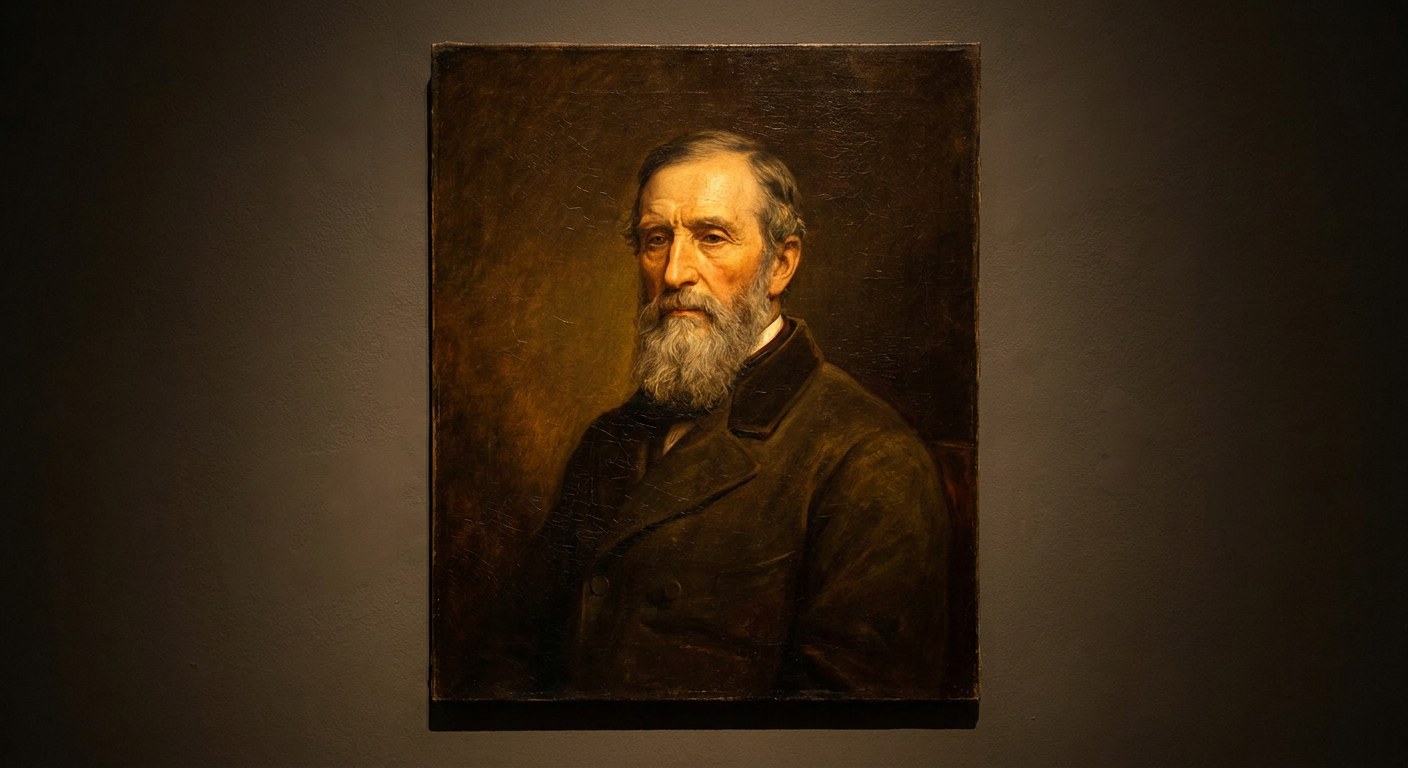
John Stuart Mill
1806 – 1873 · British · Philosopher & Political Economist
Recommended Audiobooks
Listen next from Marcus Alden

Life Lessons from Frederic Chopin
Marcus Alden · 54 min

Life Lessons from John Wesley
Marcus Alden · 52 min
1. Introduction
John Stuart Mill (1806–1873) was one of the most influential philosophers, political economists, social reformers, and public intellectuals of the nineteenth century. A leading exponent of utilitarianism and liberalism, he sought to reconcile individual freedom with social responsibility, democratic government with intellectual excellence, and economic development with justice and human well-being.
Mill matters because many questions at the center of modern public life were also his questions. When may society legitimately restrict individual behavior? Why should unpopular opinions be protected? Does democracy threaten minorities? Should women possess equal political and civil rights? Can an industrial economy produce prosperity without reducing workers to dependence? What makes a life genuinely valuable? Mill addressed these problems with unusual breadth, combining philosophy, economics, logic, psychology, political theory, and practical reform.
His most famous book, On Liberty (1859), formulated the harm principle: power may be exercised against an individual’s will primarily to prevent harm to others, not simply because society considers that person’s choices unwise or immoral. In Utilitarianism (published in book form in 1863), Mill defended the view that actions and institutions should be judged by their contribution to happiness, while arguing that human pleasures differ in quality as well as quantity. In The Subjection of Women (1869), he made one of the Victorian era’s clearest philosophical cases for legal and social equality between the sexes.
Mill was not merely an academic author. He spent thirty-five years working for the East India Company and served as a member of Parliament for Westminster from 1865 to 1868. He supported women’s suffrage, Irish land reform, freedom of expression, labor organizations, and proportional representation. Yet his legacy is not without tension. His defense of liberty existed alongside paternalistic claims about societies he considered insufficiently developed for self-government, while his long employment in Britain’s imperial administration raises enduring questions about liberalism and empire.
Few thinkers have influenced such a wide range of modern traditions. Classical liberals invoke Mill’s defense of individuality; social liberals draw on his concern with education, inequality, and human development; feminists recognize his attack on patriarchal law; economists study his synthesis and revision of classical political economy; and defenders of free speech continue to use his arguments about dissent, fallibility, and open debate.
2. Quick Facts
| Fact | Details |
|---|---|
| Born | 20 May 1806, Pentonville, London, England |
| Died | 7 May 1873, Avignon, France |
| Nationality | British |
| Known For | Utilitarianism, the harm principle, freedom of speech, liberalism, political economy, and advocacy of women’s equality |
| Occupation | Philosopher, political economist, civil servant, author, and member of Parliament |
| Era | Nineteenth-century philosophy; Victorian Britain |
3. Early Life and Education
John Stuart Mill was born on 20 May 1806 in Pentonville, then on the northern edge of London. He was the eldest child of James Mill, a Scottish historian, economist, and philosopher, and Harriet Burrow Mill. James Mill was a close associate of the utilitarian reformer Jeremy Bentham and intended his son to become an intellectual leader capable of advancing their program of rational social reform.
Mill’s education was therefore extraordinary in both rigor and intensity. He did not attend an ordinary school or university. Instead, James personally supervised a demanding course designed to cultivate analytical discipline and eliminate what he regarded as wasted time. Mill began learning Greek at about three years old. By eight, he had read substantial works by authors including Herodotus, Xenophon, and Plato and had begun Latin, arithmetic, and geometry. In adolescence he studied logic, political economy, history, chemistry, and higher mathematics. He read economists such as Adam Smith and David Ricardo and discussed their theories directly with his father.
The curriculum made Mill exceptionally learned, but it also isolated him from many experiences associated with childhood. His father was intellectually formidable, emotionally austere, and impatient with mistakes. Mill later described his education without simply condemning it: he believed it demonstrated how much children could learn, but he did not recommend its severe methods as a universal model.
At fourteen, Mill traveled to France and spent time with the family of Sir Samuel Bentham, Jeremy Bentham’s brother. He improved his French, studied science, encountered continental society, and developed a lasting affection for France. The journey widened a life that had previously been dominated by study and his father’s intellectual circle.
As a young man Mill entered the community later called the Philosophical Radicals, whose members advocated parliamentary reform, legal rationalization, freedom of discussion, and the application of utilitarian principles to government. At seventeen he helped establish the Utilitarian Society. He also contributed essays to periodicals and took part in debating societies, sharpening the argumentative skills that would characterize his mature writing.
In 1823, rather than entering one of the traditional professions, Mill joined the East India Company, where his father also worked. He began as a junior clerk in the office responsible for correspondence with the princely states of India. The position offered financial independence and eventually considerable administrative responsibility, while leaving him time to write.
4. Rise to Prominence
Mill’s early confidence was disrupted by a severe mental and emotional crisis beginning in 1826. He asked himself whether he would be happy if all the reforms he had been trained to pursue were immediately achieved. His inability to answer affirmatively left him feeling that the central purpose of his life had collapsed. He experienced prolonged depression, emotional numbness, and loss of motivation.
His recovery transformed his philosophy. Reading William Wordsworth’s poetry helped awaken his emotional life, while the writings of Samuel Taylor Coleridge encouraged him to appreciate historical development, culture, and institutions more fully. Mill did not abandon utilitarianism, but he concluded that human improvement could not rest on calculation and analysis alone. Feeling, imagination, individuality, and the cultivation of character were also essential.
During the 1830s, Mill emerged from his father’s shadow and developed a more independent form of liberalism. He edited the London and Westminster Review, wrote important essays on Bentham and Coleridge, and engaged with French thinkers, including Alexis de Tocqueville and Auguste Comte. Tocqueville’s analysis of democratic society reinforced Mill’s concern that majority opinion could suppress individuality even without direct government censorship.
A decisive personal and intellectual relationship began in 1830, when Mill met Harriet Taylor, an intelligent, reform-minded woman married to the businessman John Taylor. Mill and Harriet formed an intense friendship and intellectual partnership that attracted gossip in Victorian society. The precise nature of their relationship before her husband’s death remains uncertain, but their emotional attachment and intellectual collaboration are well documented.
Mill’s national reputation was firmly established by A System of Logic in 1843. This ambitious work examined scientific inference, causation, social science, and the relationship between evidence and general propositions. It became an important textbook and remained widely used for decades.
His Principles of Political Economy followed in 1848. Combining a synthesis of classical economics with arguments about social reform, it became one of the era’s leading economic texts. By the time On Liberty appeared in 1859, Mill was already among Britain’s most respected intellectuals.
5. Major Achievements and Contributions
The harm principle and individual liberty
Mill’s best-known contribution to political philosophy is the harm principle. In On Liberty, he argued that society may rightfully coerce a competent adult chiefly to prevent harm to other people. A person’s own physical or moral good is not, by itself, sufficient justification for compulsion. Advice, persuasion, criticism, and avoidance may be legitimate; coercion requires a stronger reason.
This principle was intended to limit both state power and what Mill called the tyranny of the majority. Social pressure, custom, and public opinion can be as oppressive as law. Mill feared that modern mass society encouraged conformity, making people reluctant to experiment with different beliefs and ways of living.
His argument was not a defense of selfish isolation. Liberty was valuable because human beings develop through responsible choice. Individuality, experimentation, and diversity help people cultivate judgment and reveal better forms of life. Mill allowed restrictions where conduct created meaningful risks to others, violated obligations, or involved people unable to exercise mature judgment, such as young children. Determining what counts as harm, however, remains one of the most debated parts of his theory.
Freedom of thought and discussion
Mill produced one of history’s most influential defenses of free expression. Suppressed opinions may be true; if false, they may contain part of the truth; and even if entirely mistaken, confronting them prevents true beliefs from becoming lifeless dogma. Because human beings are fallible, no person or majority may safely assume infallibility.
For Mill, debate was not merely a tool for discovering facts. It trained citizens to understand the reasons supporting their beliefs. An inherited opinion repeated without challenge might be correct, but it would not function as living knowledge. His argument continues to shape discussions of censorship, academic freedom, journalism, online speech, and political polarization.
Mill did not claim that words could never cause harm. He distinguished between publishing an opinion and delivering inflammatory words before an angry crowd in circumstances likely to provoke violence. Context, probability, and proximity to harm mattered.
Reforming utilitarianism
Mill inherited from Bentham and James Mill the idea that morality should promote happiness. He defined happiness in terms of pleasure and the absence of pain but rejected an overly mechanical interpretation. Pleasures differ in quality, not only intensity or duration. Intellectual, moral, and imaginative activities can be more valuable than purely bodily gratification.
His famous contrast between a dissatisfied human being and a satisfied pig expressed the claim that people acquainted with both higher and lower forms of enjoyment generally prefer those engaging their developed capacities. Critics have questioned whether this distinction is fully compatible with hedonistic utilitarianism, but it allowed Mill to connect happiness with dignity, education, autonomy, and character.
He also emphasized rules, rights, and moral sentiments more strongly than a simple act-by-act calculation would suggest. Justice and security are exceptionally important because reliable rights protect conditions necessary for human happiness.
Logic and scientific inquiry
In A System of Logic, Mill analyzed induction: the process by which investigators reason from particular observations to general conclusions. His Methods of Experimental Inquiry, often called Mill’s Methods, included the methods of agreement, difference, joint agreement and difference, residues, and concomitant variations. These were tools for identifying causal relationships by comparing cases.
Mill hoped to apply rigorous reasoning to social phenomena without pretending that human affairs were as simple as mechanical physics. His work influenced logic and scientific methodology, although later developments in statistics, probability, and philosophy of science revised many of his assumptions.
Political economy and social reform
Mill began within the classical economic tradition of Smith, Ricardo, and his father, but he became increasingly open to institutional reform. He distinguished the laws of production, which he regarded as constrained by physical and technical conditions, from the distribution of wealth, which depended on social rules and could therefore be changed.
He supported private property but did not treat existing property arrangements as sacred. He favored inheritance taxes, improved education, limits on concentrated privilege, trade unions, and experiments in worker-owned cooperatives. He believed cooperative production might eventually replace the antagonism between employers and wage laborers with a more equal association of workers.
Mill also challenged the assumption that endless economic growth was necessarily desirable. His discussion of the stationary state imagined a society in which material expansion slowed while culture, justice, leisure, and human improvement continued. This idea has attracted renewed interest among environmental and post-growth economists.
Women’s equality
Mill was one of the most prominent male advocates of women’s rights in Victorian Britain. The Subjection of Women argued that women’s legal and social inferiority was neither natural nor beneficial. Since women had lived under systematic restrictions, prevailing claims about their supposedly natural character lacked valid evidence. Only freedom and equality could reveal the range of women’s abilities.
As a member of Parliament, Mill presented a major women’s suffrage petition in 1866. In 1867 he proposed replacing the word “man” with “person” in the parliamentary reform bill, which would have opened the franchise to qualified women. The amendment was defeated, but its introduction was a landmark in British parliamentary history.
6. Key Works / Battles / Ideas
A System of Logic (1843)
Mill’s major study of reasoning presented a theory of induction and explored how causal knowledge could be developed. It also examined the possibility of social science and warned against explanations that reduced complex social outcomes to a single cause.
Principles of Political Economy (1848)
This work synthesized classical economics while moving beyond strict laissez-faire. Mill discussed production, wages, rent, international trade, taxation, property, socialism, cooperation, and the stationary state. It served as a standard economics textbook in Britain for many years.
On Liberty (1859)
Dedicated to Harriet Taylor Mill, On Liberty defended freedom of conscience, expression, association, and lifestyle. Its central themes are the harm principle, human fallibility, individuality, and resistance to social conformity. Mill described the book as a joint product of his discussions with Harriet, though scholars continue to debate the precise extent of her co-authorship.
Considerations on Representative Government (1861)
Mill defended representative institutions while examining how democracy could promote active citizenship and competent administration. He supported proportional representation and measures intended to protect minorities. More controversially, he proposed plural voting, under which better-educated citizens would receive additional votes. This reflected his fear of uninformed majorities but conflicted with strict political equality.
Utilitarianism (1861–1863)
First published in installments and then as a book, Utilitarianism explained the greatest happiness principle, qualitative differences among pleasures, moral motivation, and the connection between utility and justice. It remains one of the most widely studied texts in moral philosophy.
The Subjection of Women (1869)
This book attacked the legal domination of wives by husbands and the exclusion of women from education, careers, voting, and public authority. Mill compared marriage law to a system of subordination and argued that equality would benefit both individuals and society.
Autobiography (1873)
Published after his death, Mill’s Autobiography described his unusual education, mental crisis, intellectual development, relationship with Harriet, and participation in reform movements. It is a major source for understanding his life, though it is also a carefully constructed account of his own development.
The struggle against conformity
Underlying Mill’s individual works was a sustained battle against intellectual and social stagnation. He believed civilization required both stable institutions and people willing to question convention. His ideal society did not merely tolerate eccentricity; it recognized experiments in living as sources of personal and collective improvement.
7. Timeline of Key Events
| Year | Event |
|---|---|
| 1806 | Born on 20 May in Pentonville, London |
| 1809 | Began learning Greek under his father’s direction at about age three |
| 1820–1821 | Lived in France with Sir Samuel Bentham’s family and pursued scientific and linguistic studies |
| 1822 | Helped organize the Utilitarian Society |
| 1823 | Joined the East India Company as a junior clerk |
| 1826 | Experienced the mental crisis that reshaped his intellectual outlook |
| 1830 | Met Harriet Taylor and began their long friendship and intellectual partnership |
| 1835–1840 | Edited the London and Westminster Review and became a leading Philosophical Radical |
| 1843 | Published A System of Logic |
| 1848 | Published Principles of Political Economy |
| 1849 | John Taylor, Harriet’s husband, died |
| 1851 | Married Harriet Taylor |
| 1858 | Retired after the East India Company’s administrative role ended; Harriet died at Avignon |
| 1859 | Published On Liberty |
| 1861 | Published Considerations on Representative Government; Utilitarianism began appearing serially |
| 1863 | Published Utilitarianism in book form |
| 1865 | Elected member of Parliament for Westminster and chosen rector of the University of St Andrews |
| 1866 | Presented a women’s suffrage petition to Parliament |
| 1867 | Proposed a parliamentary amendment to enfranchise women on the same terms as men |
| 1868 | Lost his parliamentary seat in the general election |
| 1869 | Published The Subjection of Women |
| 1873 | Died at Avignon on 7 May; Autobiography was published posthumously |
| 1874 | Three Essays on Religion was published posthumously |
8. Personal Life and Character
Mill’s public prose was controlled and analytical, but his private life reveals a deeply emotional person shaped by the conflict between duty and feeling. His demanding childhood produced remarkable discipline and a lifelong capacity for work, yet it also contributed to his early psychological crisis. He became convinced that a complete human life required emotional cultivation as well as reason.
His relationship with Harriet Taylor was central to his mature life. Harriet was interested in political reform, marriage law, women’s independence, ethics, and social convention. Following John Taylor’s death in 1849, she and Mill married in 1851. Their marriage was intellectually close but short; Harriet died in Avignon in 1858, apparently from pulmonary disease.
Mill credited Harriet in unusually expansive terms, calling her the inspiration and, in some cases, virtual co-author of his best work. Scholars agree that she influenced his thinking, particularly concerning women’s rights, marriage, individuality, and social convention. They disagree about how literally his claims of joint authorship should be interpreted because relatively little manuscript evidence survives that permits exact division of their contributions.
After Harriet’s death, Mill purchased a house near the cemetery in Avignon where she was buried. He spent long periods there and worked closely with her daughter, Helen Taylor, who became his companion, housekeeper, and collaborator in political causes. Helen helped prepare some of his posthumous writings.
Mill was personally reserved and serious, but he possessed considerable moral courage. He accepted unpopular causes and did not always adjust his positions for electoral advantage. While serving in Parliament, he supported Irish land reform and defended the right of the radical atheist Charles Bradlaugh to stand for election. He also became the first member of Parliament to call publicly for women’s suffrage in the House of Commons.
9. Challenges and Controversies
Mill’s thought contains important tensions. His liberty principle appears universal, yet On Liberty excluded children and societies he described as being in a condition of “barbarism” from its full application. He claimed that despotism could be legitimate in dealing with such peoples if the goal was improvement. This paternalistic argument reflected common nineteenth-century assumptions about civilization and progress, but it sits uneasily beside his opposition to coercion.
His career at the East India Company also complicates his reputation. Mill rose to become Examiner of Indian Correspondence, a senior position involving the drafting and review of official policy dispatches. When the British government moved to abolish the Company’s governing role after the Indian Rebellion of 1857, Mill wrote a defense of the Company’s administration. He never visited India, and modern scholars debate whether his work moderated imperial policy, rationalized domination, or did both in different respects.
His democratic theory was similarly mixed. Mill supported a broad franchise, women’s suffrage, proportional representation, and public participation. Yet he feared that an uneducated majority could legislate selfishly or suppress excellence. His proposal for plural voting based on educational qualifications would have given some citizens greater electoral weight than others. Critics regard this as elitist; defenders see it as an unsuccessful attempt to combine participation with informed judgment.
Mill’s utilitarianism has also faced philosophical objections. Critics ask whether qualitative pleasures can be ranked without appealing to a value other than pleasure. Others argue that maximizing overall happiness might permit injustice toward individuals. Mill responded by connecting justice and rights to humanity’s strongest interests in security, but debate continues over whether this provides rights with sufficient protection.
His account of free expression is frequently invoked in modern disputes, sometimes too simply. Mill defended robust discussion, not the claim that every form of speech must be immune from rules or consequences. He recognized incitement, situational danger, fraud, and direct harm as relevant limits. Applying his framework to mass media, organized disinformation, harassment, and algorithmic platforms requires judgments he could not have anticipated.
Finally, Mill’s portrayal of Harriet as intellectually incomparable has generated controversy. Some early biographers minimized her contribution, whereas later scholars have sought to recover her independent voice. The surviving evidence supports significant influence and collaboration, but not every claim about the precise authorship of Mill’s works can be conclusively resolved.
10. Death and Immediate Aftermath
John Stuart Mill died on 7 May 1873 at his home in Avignon, France, after a brief illness, commonly identified as erysipelas. He was sixty-six years old, just short of his sixty-seventh birthday. He was buried beside Harriet in the Cimetière Saint-Véran at Avignon, according to the wish that had shaped his life since her death.
Mill left instructions for the publication of several manuscripts. His Autobiography appeared later in 1873 and quickly became an important record of Victorian intellectual life. Three Essays on Religion, addressing nature, religion, and theism, followed in 1874. These essays showed his distance from orthodox Christianity while also revealing his continued concern with religion’s ethical and imaginative functions.
Contemporaries recognized his death as the loss of one of Britain’s foremost thinkers and reformers. Admirers praised his intellectual honesty, public spirit, and willingness to defend unpopular positions. Critics continued to challenge his secular morality, political radicalism, and utilitarian foundations. His books, however, remained widely read in philosophy, economics, politics, and reform movements.
11. Legacy and Influence Today
Mill occupies a central place in the histories of liberalism, utilitarian ethics, democratic theory, economics, feminism, and the philosophy of science. His most enduring achievement was to present liberty not simply as freedom from government, but as a condition for human development. People need room to think, speak, associate, and live differently because autonomy and diversity contribute to both personal growth and social discovery.
Modern free-speech theory repeatedly returns to his arguments about fallibility and the value of dissent. Courts, universities, journalists, civil liberties organizations, and technology scholars debate whether the “marketplace of ideas” works as Mill hoped, especially when inequalities of power determine who can speak and be heard. Even critics usually engage with questions he framed.
His influence on liberal political thought is equally broad. Later social liberals drew on his recognition that poverty, inadequate education, dependency, and rigid customs could undermine meaningful freedom. Although he defended markets and private property, he did not regard laissez-faire as an absolute rule. His openness to cooperatives and redistributive reform makes him difficult to place neatly on a modern left-right spectrum.
In ethics, Mill remains one of the canonical utilitarians alongside Bentham and, in contemporary philosophy, thinkers who apply consequentialist reasoning to public policy, poverty, animal welfare, health, and global risk. His distinction between higher and lower pleasures continues to provoke discussion about whether well-being consists merely of agreeable mental states or includes objectively valuable activities and capabilities.
Mill’s feminism remains historically significant. His arguments against using existing social behavior as proof of natural sex differences anticipated later critiques of social conditioning. Women’s suffrage campaigners in Britain and elsewhere used his public standing and writings to strengthen demands for equality, even as later feminists criticized limits in his liberal framework.
Environmental thinkers have rediscovered his account of the stationary state. Mill imagined that society might cease treating increased production as its principal measure of progress and instead protect solitude, nature, culture, and a fair distribution of resources. Though he wrote before modern ecological economics, this passage gives his work unexpected relevance to debates about sustainability.
His legacy also requires critical examination. The exclusions in his theory of liberty and his imperial employment demonstrate how a philosophy of freedom could coexist with assumptions of European superiority. Studying Mill therefore offers not only a defense of liberal values but also a case study in liberalism’s historical blind spots.
Today, Mill’s importance lies less in providing final answers than in demanding careful distinctions: between offense and harm, persuasion and coercion, true belief and living knowledge, economic production and distributive rules, popular government and majority domination. His work endures because it treats liberty as a demanding social practice grounded in intellectual humility, open disagreement, and the development of human capacities.
12. Famous Quotes
“Over himself, over his own body and mind, the individual is sovereign.” — On Liberty (1859)
“The only freedom which deserves the name, is that of pursuing our own good in our own way, so long as we do not attempt to deprive others of theirs, or impede their efforts to obtain it.” — On Liberty (1859)
“He who knows only his own side of the case, knows little of that.” — On Liberty (1859)
“It is better to be a human being dissatisfied than a pig satisfied; better to be Socrates dissatisfied than a fool satisfied.” — Utilitarianism (1861)
“The worth of a State, in the long run, is the worth of the individuals composing it.” — On Liberty (1859)
“The legal subordination of one sex to the other—is wrong in itself, and now one of the chief hindrances to human improvement.” — The Subjection of Women (1869)
“Ask yourself whether you are happy, and you cease to be so.” — Autobiography (1873)
13. Frequently Asked Questions
What is John Stuart Mill best known for?
Mill is best known for defending individual liberty and freedom of expression in On Liberty, developing a sophisticated form of utilitarianism, and advocating women’s legal and political equality. The harm principle—his argument that coercion is chiefly justified to prevent harm to others—is his most famous political idea.
What did Mill mean by the harm principle?
He meant that society should not force competent adults to behave in a certain way merely for their own good. Coercion becomes legitimate when conduct threatens harm to others or violates obligations toward them. The principle does not eliminate regulation, but it places the burden of justification on those seeking to restrict liberty.
Was John Stuart Mill a utilitarian?
Yes. Mill believed that morality should promote happiness and reduce suffering. Unlike a crude quantitative interpretation, however, he argued that pleasures vary in quality. Intellectual, moral, and imaginative fulfillment may be superior to more immediate forms of gratification.
Did Mill support women’s suffrage?
Yes. He presented a women’s suffrage petition to Parliament in 1866 and proposed an amendment in 1867 that would have replaced the male wording of the franchise with gender-neutral language. His The Subjection of Women argued for equal legal, educational, professional, and political opportunities.
What was Mill’s relationship with Harriet Taylor?
They met in 1830 while Harriet was married to John Taylor and developed a close intellectual and emotional relationship. They married in 1851, after Taylor’s death. Mill credited Harriet with profoundly shaping his ideas, especially those concerning liberty, individuality, marriage, and women’s equality.
Was Mill a member of Parliament?
Yes. He represented Westminster in the House of Commons from 1865 to 1868. He spoke for women’s suffrage, Irish land reform, electoral reform, and other causes. His refusal to moderate controversial positions may have contributed to his electoral defeat.
How did Mill differ from Jeremy Bentham?
Both were utilitarians, but Mill gave greater weight to qualitative differences among pleasures, individual character, culture, emotional development, and stable rights. His mental crisis and engagement with Romantic writers convinced him that Bentham’s analytical framework did not capture the whole of human life.
Why is Mill controversial today?
His defenses of liberty and equality remain influential, but his paternalistic statements about colonized peoples and his work for the East India Company are widely criticized. His proposal for plural voting also appears elitist by modern democratic standards. These tensions make him an important subject in debates about liberalism, empire, and political inclusion.
14. Lessons We Can Learn
-
Protect dissent because certainty is limited. Even deeply held beliefs may be incomplete or mistaken. Listening to criticism improves both knowledge and judgment.
-
Liberty involves more than being left alone. Meaningful freedom requires opportunities to develop one’s abilities, make responsible choices, and pursue a self-directed life.
-
Combine reason with emotional development. Mill’s mental crisis taught him that analysis, achievement, and reform are insufficient without imagination, affection, beauty, and humane purpose.
-
Challenge customs presented as natural. Long-standing inequalities may reflect law, education, and power rather than unavoidable differences. Institutions should be tested by evidence and justice.
-
Examine the blind spots of admirable ideas. Mill’s involvement with empire shows that even strong defenders of freedom can exclude others from its protections. Principles must be applied consistently and critically.
15. Further Reading
- John Stuart Mill, Autobiography — Mill’s own account of his education, mental crisis, intellectual career, and relationship with Harriet Taylor.
- Nicholas Capaldi, John Stuart Mill: A Biography — A substantial modern study connecting Mill’s life with the development of his philosophy.
- Richard Reeves, John Stuart Mill: Victorian Firebrand — An accessible biography emphasizing Mill’s political courage and reforming activity.
- Stefan Collini, Public Moralists: Political Thought and Intellectual Life in Britain, 1850–1930 — A broader study that situates Mill within Victorian public and intellectual culture.
- Georgios Varouxakis and Paul Kelly, eds., John Stuart Mill: Thought and Influence — Scholarly essays examining Mill’s political, philosophical, and historical significance.
Watch and Learn
Utilitarianism: Crash Course Philosophy #36 · CrashCourse