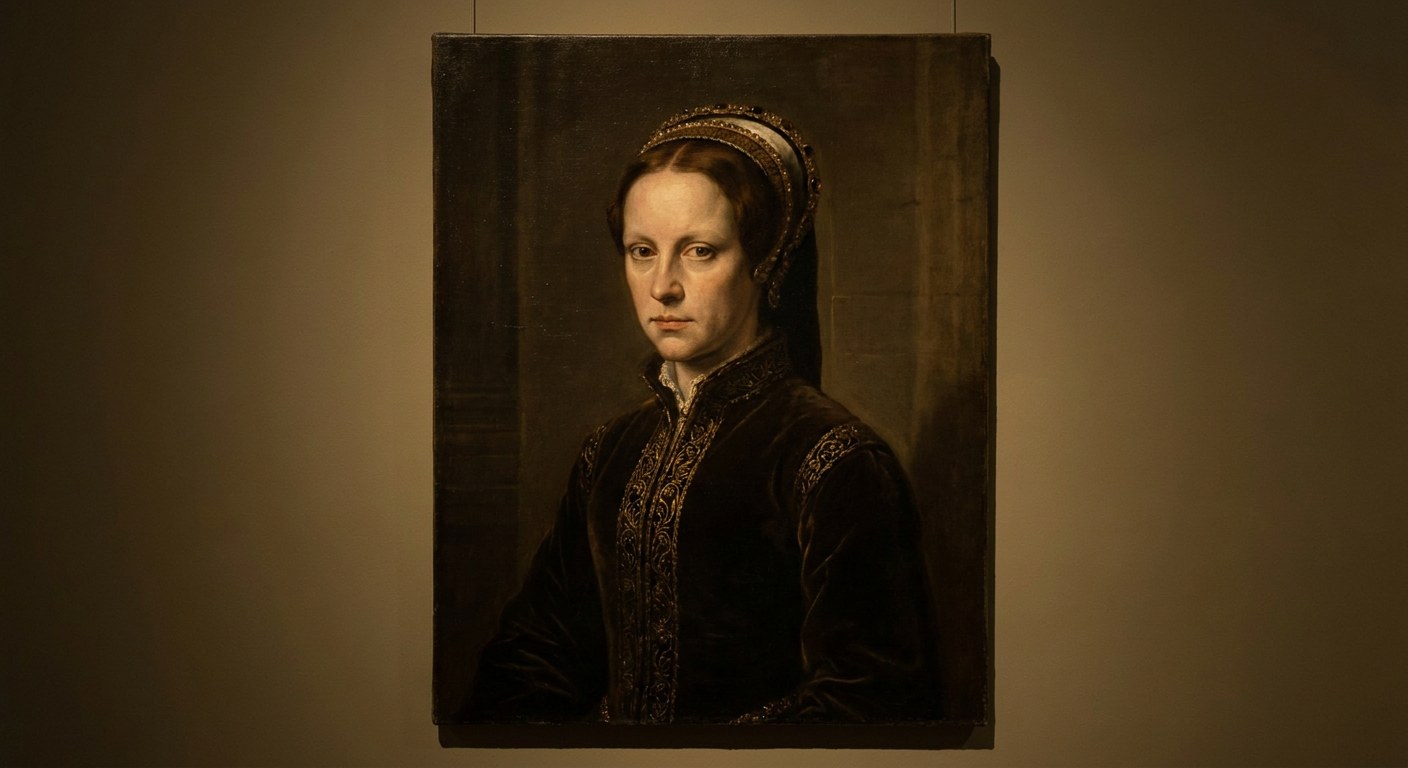
Mary I of England
1516 – 1558 · English · Queen of England
Recommended Audiobooks
Listen next from Marcus Alden

Life Lessons from Frederic Chopin
Marcus Alden · 54 min

Life Lessons from John Wesley
Marcus Alden · 52 min
Introduction
Mary I of England was the first woman to rule England in her own right and one of the most consequential—and controversial—monarchs of the Tudor age. Born on 18 February 1516 to Henry VIII and Catherine of Aragon, she passed from celebrated royal heir to declared illegitimate daughter after her father repudiated her mother and broke with the Roman Catholic Church. Her survival through years of political and religious danger helped shape the determination with which she later defended both her dynastic rights and her Catholic faith.
Mary became queen in July 1553 after defeating an attempt to place the Protestant Lady Jane Grey on the throne. Her accession was a landmark in English political history: although earlier queens had exercised power as consorts or regents, Mary was the first crowned queen regnant of England. Her reign demonstrated that a woman could inherit and wield the full authority of the Crown, thereby establishing a precedent later used by her half-sister, Elizabeth I.
As queen, Mary restored papal jurisdiction, reversed many Protestant changes introduced under Edward VI, revived Catholic worship and pursued a close alliance with Habsburg Spain through her marriage to Philip of Spain. Her government also undertook significant financial, administrative and naval reforms. Yet her reign is remembered above all for the execution of nearly 300 Protestant dissenters by burning between 1555 and 1558. These persecutions earned her the posthumous name “Bloody Mary,” a reputation amplified by Protestant writers such as John Foxe.
Mary’s five-year reign was further troubled by rebellion, factional conflict, false pregnancies, epidemic disease and the loss of Calais, England’s last major possession in France. She died childless on 17 November 1558 and was succeeded by Elizabeth. Her historical reputation remains contested: Mary was both a pioneering female sovereign and a ruler responsible for severe religious persecution; an effective administrator in several areas and a monarch whose principal religious settlement did not survive her.
Quick Facts
| Category | Details |
|---|---|
| Full name | Mary Tudor |
| Regnal name | Mary I |
| Born | 18 February 1516 |
| Birthplace | Palace of Placentia, Greenwich, England |
| Parents | Henry VIII of England and Catherine of Aragon |
| Dynasty | House of Tudor |
| Religion | Roman Catholic |
| Accession | 6 July 1553, following the death of Edward VI |
| Proclaimed queen | 19 July 1553 |
| Coronation | 1 October 1553, Westminster Abbey |
| Reign | 6 July 1553–17 November 1558 |
| Predecessor | Edward VI; Lady Jane Grey was proclaimed queen during the succession crisis |
| Successor | Elizabeth I |
| Husband | Philip of Spain, later Philip II |
| Marriage | 25 July 1554, Winchester Cathedral |
| Children | None |
| Major rebellion | Wyatt’s Rebellion, 1554 |
| Died | 17 November 1558 |
| Place of death | St James’s Palace, London |
| Burial place | Westminster Abbey |
| Best known for | Becoming England’s first queen regnant, restoring Catholicism and persecuting Protestants |
| Historical epithet | “Bloody Mary” |
Early Life & Background
Mary was born at the Palace of Placentia in Greenwich on 18 February 1516. She was the only surviving child of Henry VIII and his first wife, Catherine of Aragon. Several earlier pregnancies had ended in miscarriage, stillbirth or the early death of an infant, including a son named Henry who lived for only a few weeks in 1511. Mary’s survival therefore carried enormous dynastic importance.
Her mother was the daughter of Ferdinand II of Aragon and Isabella I of Castile, the monarchs whose marriage helped unite Spain. Catherine gave Mary a strong sense of royal dignity and a committed Catholic identity. Mary received an exceptional education under the supervision of her mother and the Spanish humanist Juan Luis Vives. She studied Latin, French, music, dancing, literature and Christian doctrine. Erasmus praised her abilities, while contemporaries admired her skill as a keyboard player.
Although Henry desired a son, Mary was initially treated as his legitimate heir. In 1525 she was sent to Ludlow Castle with a household and council that exercised authority in Wales and the Welsh Marches. She was not formally created Princess of Wales, but her position resembled that traditionally assigned to the king’s heir.
Mary’s prospects changed dramatically when Henry sought an annulment of his marriage to Catherine. He argued that Catherine’s earlier marriage to his brother, Arthur, Prince of Wales, made their union invalid under biblical law. Catherine insisted that her marriage to Arthur had never been consummated and that her marriage to Henry was lawful. Mary firmly supported her mother.
Henry’s desire to marry Anne Boleyn contributed to England’s break with papal authority. Archbishop Thomas Cranmer declared Henry’s marriage to Catherine invalid in 1533, and Anne was recognized as queen. Mary was declared illegitimate and removed from the succession. Her title of princess was withdrawn, and she was referred to as “Lady Mary.” She was also separated from Catherine and forbidden to visit her, even during Catherine’s final illness. Catherine died at Kimbolton Castle on 7 January 1536.
Mary was then forced into the household of her infant half-sister, Elizabeth, Anne Boleyn’s daughter. She resisted acknowledging Henry as supreme head of the Church of England or accepting that her parents’ marriage had been unlawful. Her defiance exposed her to the possibility of imprisonment or execution. After Anne Boleyn’s fall and execution in May 1536, Mary eventually submitted under intense pressure. In June she signed statements recognizing her father’s ecclesiastical supremacy and accepting her own illegitimacy. The capitulation deeply distressed her but allowed her to return to court.
Henry’s third wife, Jane Seymour, helped reconcile father and daughter. Jane gave birth to the future Edward VI in October 1537 but died soon afterward. Mary served as chief mourner at Jane’s funeral and became fond of Edward. Subsequent parliamentary legislation restored Mary and Elizabeth to the succession behind Edward, although both remained legally illegitimate.
Rise to Prominence
When Henry VIII died on 28 January 1547, the nine-year-old Edward VI became king. Because Edward was a minor, England was governed first by his uncle Edward Seymour, Duke of Somerset, and later by John Dudley, Duke of Northumberland. Under Edward, the English Reformation advanced rapidly. Latin services were replaced by English liturgy, clerical marriage was permitted, religious images were removed and Protestant doctrine received official support.
Mary, then in her thirties, remained the leading Catholic figure in the royal family. She continued to have Mass celebrated in her household, provoking repeated confrontations with Edward’s government. Her cousin, Emperor Charles V, exerted diplomatic pressure on England to protect her. Mary’s status, wealth and connections made it difficult for the government to act decisively against her.
Edward became seriously ill in 1553. Determined to prevent the Catholic Mary from succeeding, he drafted a succession plan known as the “Devise for the Succession.” It bypassed both Mary and Elizabeth and transferred the Crown to Lady Jane Grey, a Protestant great-granddaughter of Henry VII. Jane had recently married Guildford Dudley, the son of the Duke of Northumberland.
Edward died at Greenwich on 6 July 1553, but his death was initially concealed. Warned that Northumberland’s government intended to seize her, Mary fled to her estates in East Anglia. From Kenninghall in Norfolk, she wrote to the Privy Council asserting her lawful right to the throne. Jane was proclaimed queen in London on 10 July.
Mary gathered supporters at Framlingham Castle in Suffolk. Landowners, ordinary subjects, Catholics and many religious conservatives rallied to her, but so did people motivated primarily by loyalty to the Tudor succession rather than religion. The navy sent to prevent her escape changed sides. As support for Jane’s regime collapsed, the Privy Council proclaimed Mary queen on 19 July.
Mary entered London in triumph on 3 August 1553, accompanied by Elizabeth. Her victory was achieved with relatively little fighting and reflected the strength of hereditary legitimacy. Lady Jane Grey, Northumberland and their principal supporters were imprisoned. Northumberland was executed in August, while Jane was initially spared.
Mary was crowned at Westminster Abbey on 1 October 1553. The ceremony had to affirm that the authority of a queen regnant was equivalent to that of a king. Her accession settled the immediate succession crisis, but it raised new questions about female sovereignty, marriage, foreign influence and the religious future of England.
Major Achievements
Mary’s most fundamental achievement was establishing the practical legitimacy of female monarchy in England. The failed attempt to exclude her partly reflected assumptions about women’s supposed inability to govern. By securing the throne through political resolve and popular support, she demonstrated that hereditary right could outweigh gender. Elizabeth I later benefited from this precedent.
Mary’s government also restored relations with Rome. Parliament repealed much of the religious legislation enacted under Edward VI, and the traditional Latin Mass, clerical celibacy and Catholic ceremonies returned. In November 1554 Cardinal Reginald Pole, serving as papal legate, formally reconciled England with the papacy. Parliament received absolution for the kingdom’s schism. The settlement protected much of the former monastic property already transferred to lay owners, which helped secure political consent.
The Marian Church pursued an energetic program of Catholic renewal. Bishops conducted visitations, preaching was encouraged and plans were made to improve clerical education. Pole promoted the establishment of seminaries and stricter pastoral standards. Nicholas Ridley’s former college at Oxford was refounded as Trinity College in 1555, while Sir Thomas Pope founded St John’s College, Oxford, in the same Catholic climate. Mary and Pole envisioned a disciplined, educated clergy capable of reviving traditional religion.
Her reign also produced important administrative reforms. The Crown’s finances had been weakened by war, inflation and the debasement of the coinage under Henry VIII and Edward VI. Mary’s ministers prepared plans for recoinage, improved revenue collection and reorganized customs duties. The full restoration of the currency was implemented under Elizabeth, but much of the technical preparation originated in Mary’s reign.
The 1558 Book of Rates revised customs valuations and increased the Crown’s income from trade. Administrative procedures in the Exchequer and royal household were examined, while commissions investigated Crown lands and revenues. Mary’s council included capable officials such as William Paulet, Marquess of Winchester, and William Petre, ensuring continuity despite religious change.
Naval administration also improved. Her government ordered the repair and construction of ships, reorganized naval finance and developed facilities that contributed to later Elizabethan maritime strength. Six new vessels were launched during the reign, and naval supply systems became more effective. These measures complicate the older picture of Mary’s government as uniformly unsuccessful.
Overseas commerce expanded as well. In 1555 Mary granted a royal charter to the Company of Merchant Adventurers to New Lands, commonly known as the Muscovy Company. The company developed trade with Russia following the voyage of Richard Chancellor, who reached the court of Ivan IV. This became an important step in the growth of English chartered commerce.
Defining Moments
Mary’s confrontation with Henry VIII was one of the formative experiences of her life. Between 1533 and 1536 she lost her title, household and access to her mother. The pressure eventually placed upon her by Henry’s ministers taught her how vulnerable royal status could be. It also connected personal loyalty to Catherine with loyalty to Catholicism, making religious compromise emotionally as well as doctrinally difficult.
Her triumph in the succession crisis of July 1553 was the defining political victory of her career. Mary acted quickly, established a secure base and appealed directly to the principle of hereditary right. The rapid collapse of Jane Grey’s government showed that elite planning could not easily overturn a succession sanctioned by statute and accepted by much of the country.
The decision to marry Philip of Spain created the greatest domestic crisis of Mary’s reign. Philip was the son of Emperor Charles V and heir to extensive Habsburg territories. Mary believed the marriage would provide Catholic partnership, diplomatic security and the possibility of an heir. Many English subjects, however, feared domination by Spain.
Thomas Wyatt the Younger led a rebellion in Kent in January 1554, while related conspiracies were planned elsewhere. Wyatt’s force reached the outskirts of London, and the government appeared endangered. Mary addressed the citizens at the Guildhall on 1 February, declaring that she was married to the realm and would not surrender their interests. London remained loyal, and Wyatt was defeated and captured on 7 February.
The rebellion sealed Lady Jane Grey’s fate. Although Jane had not led the uprising, her continued existence made her a possible focus for opposition. Jane and Guildford Dudley were executed on 12 February 1554. Wyatt was executed in April. Elizabeth was imprisoned in the Tower of London on suspicion of involvement, but no decisive evidence was found. She was later placed under house arrest at Woodstock.
Mary married Philip at Winchester Cathedral on 25 July 1554. The marriage treaty carefully limited his powers: he received the title of king but could not independently appoint foreigners to English offices, alter the succession or involve England automatically in Habsburg wars. Mary appears to have been emotionally devoted to him, but Philip spent considerable periods outside England.
In September 1554 Mary believed she was pregnant. Her abdomen enlarged, and elaborate preparations were made for a royal birth in the spring of 1555. No child appeared, and by summer the pregnancy was recognized as false, possibly caused by hormonal illness, ovarian disease or psychological factors. A second apparent pregnancy in 1557–1558 also ended without a birth. The absence of an heir meant that the Protestant Elizabeth remained the likely successor.
Another defining moment was the revival of medieval heresy laws in late 1554. The first Protestant executions began in February 1555. Prominent victims included John Rogers, Bishop John Hooper, Hugh Latimer, Nicholas Ridley and Archbishop Thomas Cranmer. Cranmer had issued several recantations, but at his execution in Oxford on 21 March 1556 he dramatically repudiated them and placed the hand that had signed them into the flames.
In 1557 England entered Philip’s war against France after French support for the exile Thomas Stafford and his seizure of Scarborough Castle contributed to tensions. English and Habsburg forces won a notable victory at Saint-Quentin in August, but in January 1558 France captured Calais. England had held the town since Edward III’s conquest in 1347. Its loss was a profound symbolic blow, although maintaining it had long been expensive.
Timeline
| Year | Event |
|---|---|
| 1516 | Mary is born at Greenwich on 18 February. |
| 1525 | She is sent to Ludlow with a household and council associated with the governance of Wales. |
| 1527 | Henry VIII’s effort to annul his marriage to Catherine of Aragon becomes public. |
| 1533 | Henry marries Anne Boleyn; his marriage to Catherine is declared invalid, and Mary loses her status as legitimate princess. |
| 1534 | The Act of Supremacy recognizes Henry as supreme head of the Church of England. |
| 1536 | Catherine of Aragon dies; Mary submits to Henry’s religious supremacy and her designation as illegitimate. |
| 1537 | Edward, Mary’s half-brother, is born; Mary serves as chief mourner at Jane Seymour’s funeral. |
| 1544 | The Third Succession Act restores Mary and Elizabeth to the line of succession after Edward. |
| 1547 | Henry VIII dies, and Edward VI becomes king. |
| 1549–1552 | Mary repeatedly clashes with Edward’s government over her continued celebration of the Mass. |
| 1553 | Edward dies on 6 July; Lady Jane Grey is proclaimed queen, but Mary secures the throne and is proclaimed on 19 July. |
| 1553 | Mary enters London on 3 August and is crowned on 1 October. |
| 1554 | Wyatt’s Rebellion is defeated; Jane Grey is executed; Mary marries Philip of Spain on 25 July. |
| 1554 | Cardinal Pole reconciles England with Rome in November. |
| 1555 | Protestant burnings begin; Mary’s first apparent pregnancy proves false. |
| 1556 | Thomas Cranmer is burned at Oxford; Philip becomes king of Spain. |
| 1557 | England enters war against France; English forces participate in victory at Saint-Quentin. |
| 1558 | Calais falls to France in January; Mary dies on 17 November. |
| 1558 | Elizabeth I succeeds Mary. |
| 1563 | John Foxe publishes the first English edition of Actes and Monuments, shaping Mary’s posthumous reputation. |
Personal Life
Mary was small in stature and, in youth, was described as attractive, well educated and accomplished. She enjoyed music, dancing, cards, fine clothing and court ceremony. Royal accounts record her generosity toward servants and dependants. She maintained strong friendships, particularly with women who had served Catherine of Aragon or supported Mary during her years of disgrace.
Her health was frequently poor. She experienced headaches, digestive problems, irregular or absent menstruation and prolonged episodes of illness. Modern suggestions about her condition include ovarian cysts, uterine disease, endocrine disorders, depression or cancer, but no diagnosis can be established with certainty.
Before becoming queen, Mary was linked to several possible husbands, including the future Charles V, Francis I of France, Francis’s son Henry, and William, Duke of Cleves. These negotiations served diplomatic purposes and repeatedly came to nothing.
Her marriage to Philip was politically calculated but personally significant. Mary was thirty-eight and Philip twenty-seven when they married. Surviving evidence suggests that Philip treated her with formal courtesy, while Mary became deeply attached to him. He did not share her intensity of feeling and left England in 1555, returning in 1557 mainly to obtain English support against France.
Mary’s false pregnancies caused both physical strain and public humiliation. Hopes for a Catholic Tudor heir dominated her marriage and foreign policy. When no child was born, Mary’s political project became increasingly fragile.
She died at St James’s Palace on 17 November 1558, probably from influenza, cancer or another chronic disease during an epidemic. Cardinal Pole died the same day. Mary was buried in Westminster Abbey on 14 December. Elizabeth was later buried in the same tomb, above which James I placed an inscription commemorating both sisters.
Beliefs & Philosophy
Mary’s Catholicism was the central principle of her life. It drew upon childhood instruction, humanist education, attachment to Catherine of Aragon and conviction that religious unity was essential to political order. She regarded papal communion and the sacraments of the traditional Church as matters of eternal salvation, not merely ceremonial preference.
Like most sixteenth-century European rulers, Mary did not support modern religious toleration. Governments commonly treated doctrinal dissent as both spiritual error and a threat to social stability. Catholic and Protestant regimes alike punished religious opponents, though this context explains rather than excuses Mary’s policies.
Her ideas of monarchy combined hereditary legitimacy, divine sanction and personal duty. During Wyatt’s Rebellion she portrayed herself as bound to the kingdom regardless of marriage. Yet she also accepted contemporary expectations concerning wives and husbands, creating tension between her sovereign authority and her relationship with Philip.
Mary’s policies show that she did not simply seek to reconstruct the pre-1530 Church unchanged. She and Cardinal Pole supported internal Catholic reform through preaching, education, clerical discipline and pastoral care. Their project anticipated some principles associated with the wider Catholic Reformation, even though it was cut short by their deaths.
Challenges & Controversies
The Marian persecution is the greatest controversy of the reign. Approximately 280 Protestants—men and women, clergy and laypeople—were burned for heresy between 1555 and 1558. The largest concentrations occurred in London and southeastern England, especially Essex, Kent and Sussex. Others died in prison or fled into exile.
Mary approved the restoration and enforcement of the heresy laws. Bishops and local authorities conducted trials, while the secular government carried out sentences. Responsibility was distributed across institutions, but the policy belonged to her regime and had her support. The number and public nature of the burnings made them politically damaging and strengthened Protestant resistance.
John Foxe’s Actes and Monuments, popularly called the Book of Martyrs, preserved detailed accounts of the victims. Published in English in 1563 and repeatedly expanded, it became highly influential in Elizabethan England. Foxe’s work had a strong Protestant purpose and contained errors and rhetorical embellishments, but much of its documentation is valuable. It ensured that the burnings would dominate Mary’s memory.
Her Spanish marriage was another source of controversy. Critics feared that England would become a Habsburg dependency. The marriage treaty prevented many of the anticipated abuses, and Philip exercised less domestic authority than opponents had predicted. Nevertheless, his influence contributed to England’s entry into war with France.
The loss of Calais damaged Mary’s reputation. According to a later report, she said that when she died, “Calais” would be found written on her heart. The remark may be apocryphal, but it captures the importance attached to the loss. Strategically, Calais was costly and difficult to defend; emotionally, it represented more than two centuries of English power in France.
Mary’s treatment of Jane Grey and Elizabeth also remains debated. Jane was a reluctant participant in the 1553 succession scheme, and Mary initially showed clemency. After Wyatt’s Rebellion, however, Jane’s existence was judged intolerably dangerous. Elizabeth survived because evidence of treason was insufficient and because Mary hesitated to execute a fellow Tudor without proof. Even so, Elizabeth’s imprisonment intensified hostility between their supporters.
Mary’s reign was also challenged by harvest failures, inflation and epidemic illness. Her government inherited serious structural problems from previous reigns and lacked enough time to complete its reforms. Her death after only five years allowed later Protestant historians to portray the reign as an isolated and unsuccessful interruption between Edward VI and Elizabeth I.
Famous Quotes
Many statements attributed to Mary survive through diplomatic reports or later histories rather than verbatim transcripts. Their wording should therefore be treated cautiously.
“I am already bound unto an husband, which is the kingdom of England.”
Mary reportedly expressed this idea during her Guildhall speech amid Wyatt’s Rebellion in February 1554, emphasizing her obligation to the realm.
“If I be otherwise deceived therein, I will be revenged to the uttermost.”
This declaration appeared in Mary’s 1553 correspondence asserting her hereditary right and warning those supporting Jane Grey’s claim.
“When I am dead and opened, you shall find Calais lying in my heart.”
The famous lament over the loss of Calais was recorded only in later accounts and may not be authentic, but it reflects the emotional and political impact of the defeat.
“Her Majesty is a woman, and therefore is to be borne withal.”
A version of this statement is often associated with discussions of Mary’s rule, although its attribution and exact context are uncertain. It also illustrates the gendered assumptions surrounding female monarchy.
Legacy & Influence
Mary’s immediate religious legacy appeared to vanish. Elizabeth I restored royal supremacy over the English Church in 1559 and introduced a Protestant religious settlement. England never again returned to papal obedience. Many Marian clergy were removed, while returning Protestant exiles became influential in the Elizabethan Church.
Yet Mary’s Catholic restoration was not entirely ineffective. The speed with which traditional worship returned suggests that Catholic practices remained popular in many communities. Her reign revealed that the English Reformation was neither linear nor universally accepted. Historians now recognize the vitality of Marian Catholicism and the seriousness of its reform program.
Mary also transformed the constitutional position of women. Her successful accession, coronation and exercise of royal powers established that a woman could be monarch without deriving authority from a husband. The marriage treaty with Philip distinguished between Mary’s sovereign power and his status as royal consort. Elizabeth inherited a political system that had already confronted many practical problems of female rule.
Financial and naval policies begun under Mary contributed to later developments. Customs reform increased revenue, plans for currency stabilization aided Elizabeth’s recoinage, and investment in ships and administration strengthened the navy. The Muscovy Company encouraged the expansion of English overseas trade.
Nevertheless, the burnings remain inseparable from Mary’s reputation. The epithet “Bloody Mary” is polemical, but it reflects a real and deliberate campaign of persecution. Comparisons with other Tudor rulers show that Mary was not uniquely violent: Henry VIII executed religious dissenters and alleged traitors, while Elizabeth’s government executed Catholics and suppressed rebellion. Even so, Mary’s concentrated use of public burning for heresy produced an especially powerful cultural memory.
Modern scholarship offers a more balanced assessment without erasing the victims. Mary was not simply a fanatical failure, nor should she be idealized as a misunderstood reformer. She was a resilient and capable dynastic politician whose government achieved meaningful reforms, but whose religious policies inflicted suffering and ultimately failed to secure England’s return to Catholicism.
Interesting Facts
- Mary was the only surviving child of Catherine of Aragon’s marriage to Henry VIII.
- She could read and write Latin and had knowledge of French and Spanish.
- Before 1553, England had never accepted a crowned woman ruling in her own right.
- Empress Matilda had claimed the English throne in the twelfth century but was never crowned as reigning queen.
- Mary’s support in East Anglia during the 1553 crisis included both Catholics and Protestants loyal to hereditary succession.
- Lady Jane Grey’s effective rule lasted only nine days between her proclamation and Mary’s proclamation.
- Mary was thirty-seven when she became queen and thirty-eight when she married Philip.
- The marriage treaty prevented Philip from automatically inheriting England if Mary died first.
- Coins and official documents named both Philip and Mary during their marriage.
- Roughly 800 English Protestants escaped abroad during Mary’s reign, many settling in cities such as Geneva, Frankfurt and Strasbourg.
- Mary’s government chartered the Muscovy Company, a pioneer of English trade with Russia.
- Cardinal Reginald Pole, Mary’s principal ecclesiastical partner, died on the same day as she did.
- Mary and Elizabeth share a tomb in Westminster Abbey despite their sharply different religious settlements.
- The cocktail and folklore figure called “Bloody Mary” acquired the name centuries after Mary’s death; the exact connection to the queen is uncertain.
Frequently Asked Questions
Why was Mary I called “Bloody Mary”?
The nickname arose from her government’s execution of approximately 280 Protestants for heresy between 1555 and 1558. Protestant writers, especially John Foxe, publicized the suffering of the victims and shaped Mary’s posthumous image. The epithet was not her normal title during her lifetime.
Was Mary I the first queen of England?
She was the first woman to be crowned and generally accepted as queen regnant of England—that is, a queen ruling by hereditary right rather than as the wife of a king. Empress Matilda had earlier fought for the throne, while Lady Jane Grey was proclaimed queen in 1553, but neither received a coronation or achieved Mary’s effective rule.
How did Mary defeat Lady Jane Grey?
Mary escaped to East Anglia, asserted her legal right and gathered support at Framlingham Castle. The Privy Council, navy, nobility and local population increasingly deserted Jane’s government. On 19 July 1553 the council proclaimed Mary queen, ending Jane’s brief rule.
Why did Mary marry Philip of Spain?
Mary wanted a Catholic husband of appropriate royal rank, an alliance with the Habsburg dynasty and, above all, an heir who could preserve a Catholic succession. The marriage was unpopular because many English people feared foreign domination.
Did Philip rule England?
Philip held the title of king jointly with Mary, and his portrait and name appeared alongside hers on official instruments. However, the marriage treaty restricted his authority. Sovereign power derived from Mary, and Philip could not independently control English appointments, laws or succession.
Did Mary I have children?
No. She experienced at least one apparent pregnancy, beginning in 1554, and possibly another in 1557. Neither produced a child. Their precise medical causes remain unknown.
How many Protestants were executed under Mary?
Historians generally estimate that about 280 people were burned for heresy. The total varies slightly according to definitions and surviving records. Many more went into exile, and some died in prison.
Why did England lose Calais?
France attacked Calais in January 1558 during war between France and the Habsburg alliance. The English defenses were underprepared, and French forces led by Francis, Duke of Guise, captured the town rapidly. Its loss ended more than two centuries of English rule there.
What caused Mary’s death?
The cause is uncertain. Contemporary England suffered an epidemic, possibly influenza, while Mary had experienced chronic health problems. Historians have proposed influenza, ovarian or uterine cancer, and other illnesses, but no diagnosis can be proven.
Who succeeded Mary I?
Her half-sister Elizabeth succeeded her on 17 November 1558. Elizabeth reversed the restoration of papal authority and established a Protestant Church of England under royal supremacy.
Lessons from Mary I of England
- Legitimacy can outweigh organized power: Mary defeated a government-backed succession plan because her hereditary claim commanded broad support.
- Personal experience can shape public policy: Her treatment during Henry VIII’s marital crisis reinforced her uncompromising attachment to Catholicism.
- Political symbolism matters: The Spanish marriage and loss of Calais damaged Mary partly because of what they appeared to represent.
- Reform requires time and continuity: Several financial, educational and naval initiatives survived, but her religious restoration collapsed after her early death.
- Persecution can strengthen the cause it seeks to destroy: The Protestant burnings created martyrs and deepened opposition to Catholic restoration.
- Historical reputations are constructed: Foxe’s influential narrative shaped Mary’s image for centuries, though modern scholarship has added complexity.
- Context is essential but not exculpatory: Religious coercion was widespread in sixteenth-century Europe, yet Mary remains responsible for the policies enacted in her name.
- Precedents may outlast policies: Her Catholic settlement failed, but her demonstration that a woman could govern as sovereign permanently altered English monarchy.
Further Reading
- Anna Whitelock, Mary Tudor: England’s First Queen
- Linda Porter, Mary Tudor: The First Queen
- Judith M. Richards, Mary Tudor
- David Loades, Mary Tudor: A Life
- Eamon Duffy, Fires of Faith: Catholic England under Mary Tudor
- Eamon Duffy, The Stripping of the Altars: Traditional Religion in England, 1400–1580
- John Edwards, Mary I: England’s Catholic Queen
- Susan Doran and Thomas S. Freeman, eds., Mary Tudor: Old and New Perspectives
- Alice Hunt and Anna Whitelock, eds., Tudor Queenship: The Reigns of Mary and Elizabeth
- John Foxe, Actes and Monuments, consulted critically as a major Protestant primary source
- Alexander Samson, Mary and Philip: The Marriage of Tudor England and Habsburg Spain
- The National Archives, United Kingdom, collections relating to the Tudor monarchy and Marian government