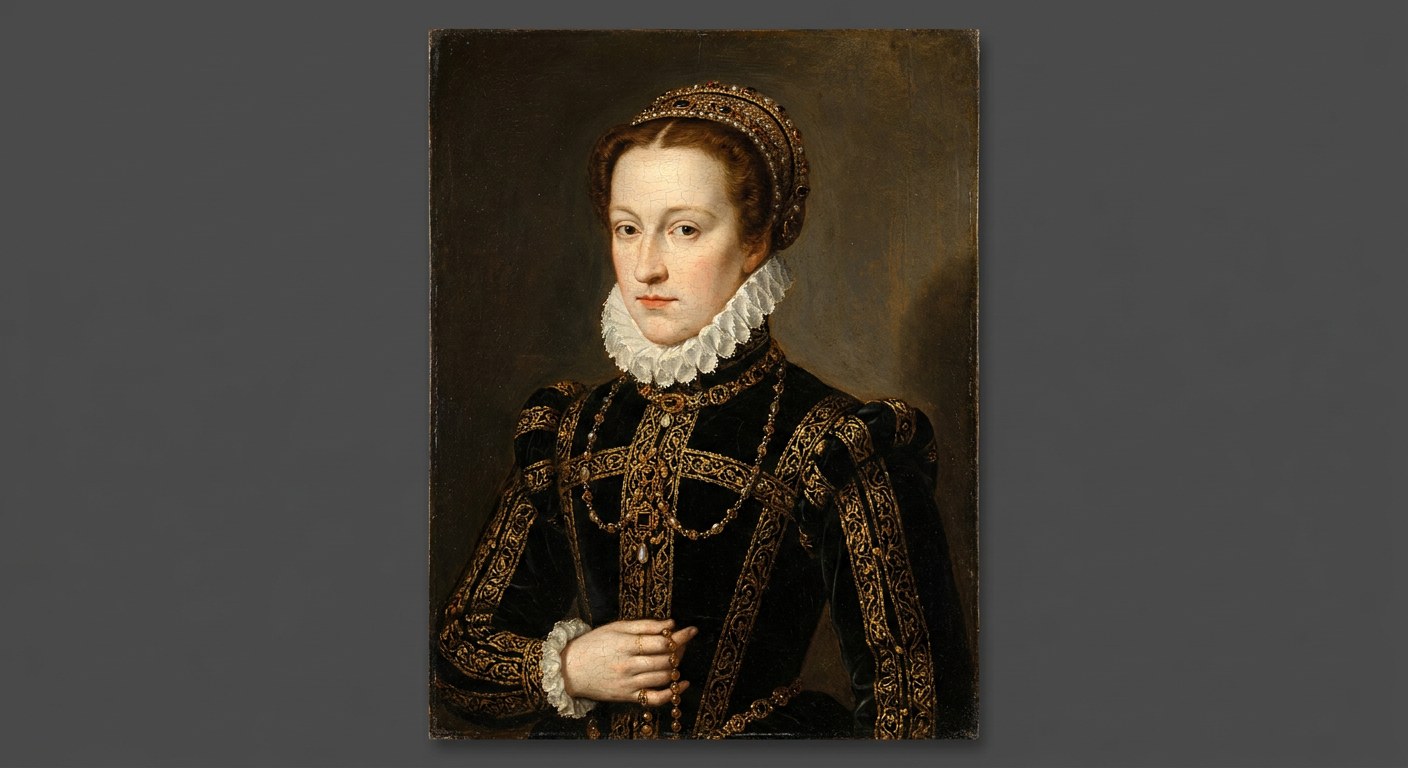
Mary, Queen of Scots
1542 – 1587 · Scottish · Queen of Scots
Recommended Audiobooks
Listen next from Marcus Alden

Life Lessons from Frederic Chopin
Marcus Alden · 54 min

Life Lessons from John Wesley
Marcus Alden · 52 min
Introduction
Mary, Queen of Scots—Mary Stuart—was one of the most consequential and contested monarchs of sixteenth-century Europe. Born at Linlithgow Palace on 8 December 1542, she became queen of Scotland when she was only six days old. Her life unfolded at the intersection of dynastic ambition, religious reformation, aristocratic factionalism and the rivalry between Scotland, England and France.
Raised at the French court and briefly queen consort of France, Mary returned to Scotland in 1561 as a French-educated Catholic ruler of a kingdom transformed by the Protestant Reformation. Her personal charm, political resilience and hereditary claim to the English throne made her a figure of international significance. Yet her reign was destabilized by conflicts among Scotland’s nobles, disputes over religion and succession, and the disastrous consequences of her marriages to Henry Stuart, Lord Darnley, and James Hepburn, Earl of Bothwell.
Forced to abdicate in 1567, Mary escaped imprisonment the following year and sought protection in England. Instead, Elizabeth I detained her for nearly nineteen years. As a Catholic claimant to the English crown, Mary became the focus of plots against Elizabeth, whether or not she had approved each conspiracy attributed to her. Her implication in the Babington Plot led to her trial and execution at Fotheringhay Castle on 8 February 1587.
Mary’s reputation has never been settled. To admirers, she was a courageous, cultivated and unjustly persecuted queen. To critics, she was an ineffective ruler whose political misjudgments contributed to her fall. Historians continue to debate her involvement in the murder of Darnley, the authenticity of the “Casket Letters,” her relationship with Bothwell and the fairness of her English captivity and trial. Her dramatic life has inspired centuries of scholarship, literature, opera, theatre, film and political mythology.
Quick Facts
| Category | Details |
|---|---|
| Full name | Mary Stuart, also spelled Mary Stewart |
| Common title | Mary, Queen of Scots |
| Born | 8 December 1542 |
| Birthplace | Linlithgow Palace, West Lothian, Scotland |
| Parents | James V of Scotland and Mary of Guise |
| Became queen | 14 December 1542 |
| Reign in Scotland | 14 December 1542–24 July 1567 |
| Coronation | 9 September 1543 at Stirling Castle |
| Queen consort of France | 10 July 1559–5 December 1560 |
| First husband | Francis II of France |
| Second husband | Henry Stuart, Lord Darnley |
| Third husband | James Hepburn, 4th Earl of Bothwell |
| Child | James VI of Scotland, later James I of England |
| Religion | Roman Catholic |
| Abdication | 24 July 1567, in favor of James VI |
| English captivity | May 1568–February 1587 |
| Died | 8 February 1587 |
| Place of death | Fotheringhay Castle, Northamptonshire, England |
| Cause of death | Execution by beheading |
| Original burial | Peterborough Cathedral |
| Final burial place | Westminster Abbey, London |
Early Life & Background
Mary was the only surviving legitimate child of James V of Scotland and his French second wife, Mary of Guise. She was born at Linlithgow Palace while her father’s government was suffering the consequences of war with England. James V died at Falkland Palace on 14 December 1542, possibly from illness aggravated by the Scottish defeat at Solway Moss. The six-day-old Mary consequently inherited the Scottish crown.
Scotland was initially governed by James Hamilton, 2nd Earl of Arran, who served as regent. The infant queen was crowned at Stirling Castle on 9 September 1543. Her accession intensified a struggle over Scotland’s diplomatic future. Henry VIII of England hoped to unite the two kingdoms by arranging a marriage between Mary and his son, the future Edward VI. The Treaty of Greenwich in 1543 proposed that marriage, but the Scottish Parliament later rejected the agreement amid fears of English domination.
Henry VIII responded with a series of destructive military campaigns known as the “Rough Wooing.” English forces attacked Edinburgh, Leith and other Scottish towns, while Mary was moved among secure residences for her protection. The conflict strengthened Scotland’s traditional alliance with France, known as the Auld Alliance.
In 1548 the Scots agreed that Mary would marry Francis, dauphin of France and son of Henry II and Catherine de’ Medici. In return, France provided military assistance against England. Five-year-old Mary sailed from Dumbarton in August 1548 and entered one of Europe’s most sophisticated royal courts.
Mary spent approximately thirteen years in France. She received an education appropriate to a Renaissance princess, learning French, Latin and some Italian and Spanish, as well as music, poetry, embroidery, horsemanship and courtly etiquette. French became her primary written language, although she also spoke Scots. Contemporary observers generally regarded her as intelligent, poised, physically graceful and unusually tall for a woman of her period.
Her upbringing also reinforced her Catholic faith and French cultural identity. She was surrounded by her powerful Guise relatives, including her uncles Francis, Duke of Guise, and Charles, Cardinal of Lorraine. This background later complicated her rule in Scotland, where Protestantism was becoming politically dominant.
Mary married Francis at Notre-Dame Cathedral in Paris on 24 April 1558. Their marriage united the Scottish crown with the heir to France and appeared to give Mary a brilliant dynastic future. It also drew her more deeply into the rivalry over the English succession.
Rise to Prominence
When the Catholic queen Mary I of England died on 17 November 1558, Elizabeth I succeeded her. Many Catholics considered Elizabeth illegitimate because the Catholic Church did not recognize Henry VIII’s annulment of his marriage to Catherine of Aragon or his subsequent marriage to Anne Boleyn. As a granddaughter of Margaret Tudor, Henry VIII’s elder sister, Mary Stuart possessed a strong hereditary claim to the English throne.
The French royal court proclaimed Francis and Mary king and queen of England and Ireland and displayed the English royal arms alongside their own. This assertion alarmed Elizabeth and established a lasting source of tension between the two queens. Although Mary later moderated her public claim, she refused to ratify the 1560 Treaty of Edinburgh, which required France and Scotland to recognize Elizabeth’s title.
Francis became Francis II of France on 10 July 1559, making Mary queen consort. The young royal couple stood at the center of French politics, although effective power rested heavily with Mary’s Guise relatives. Their ascendancy provoked opposition among French nobles and helped fuel the unrest surrounding the Amboise conspiracy of 1560.
Mary’s position changed abruptly when Francis II died on 5 December 1560 after a serious infection, probably associated with an abscess near the ear. Their marriage had produced no children. The widowed Mary, still only eighteen, no longer held a commanding place at the French court. Her mother had also died in Scotland in June 1560.
During Mary’s absence, the Scottish Reformation Parliament of 1560 had rejected papal authority and adopted a Protestant confession of faith. Mary therefore returned not to the Catholic kingdom she had left as a child, but to a politically fragmented country in which influential nobles and Protestant reformers had reshaped religious life.
She landed at Leith on 19 August 1561. Her return began the most important and difficult phase of her career: the attempt to govern Scotland personally while preserving her religion, authority and dynastic interests.
Major Achievements
Mary’s reign is often judged through the crises that destroyed it, but her government also recorded meaningful achievements. Her first years in Scotland were comparatively stable. Working with her Protestant half-brother James Stewart—created Earl of Moray in 1562—and the experienced secretary William Maitland of Lethington, she pursued a policy of practical religious compromise.
Although Mary remained a committed Catholic and heard Mass privately, she did not initially attempt to reverse the Protestant Reformation by force. She accepted the political reality of the reformed kirk while protecting her own worship. This restraint disappointed Catholic powers and angered hard-line Protestant leaders such as John Knox, but it helped prevent an immediate religious civil war.
Mary also demonstrated personal courage and energy. In 1562 she led a campaign in northeastern Scotland against George Gordon, 4th Earl of Huntly, whose regional power threatened royal authority. Huntly’s forces were defeated at the Battle of Corrichie on 28 October, and the crown temporarily strengthened its influence in the north.
Her court encouraged music, poetry, pageantry, fashion and continental artistic forms. Having grown up in France, Mary introduced a cosmopolitan style into Scottish court life. Surviving examples of her needlework, many produced during her later captivity, reveal both technical skill and an ability to use visual symbols for political and personal expression.
Her most enduring dynastic achievement was the birth of her son, James, at Edinburgh Castle on 19 June 1566. Crowned James VI after her abdication, he survived a turbulent minority and ruled Scotland for decades. In 1603 he inherited the English and Irish crowns as James I, creating a union of the crowns under the Stuart dynasty. Although Mary never secured the English succession for herself, her bloodline achieved the objective that had shaped much of her political career.
Mary’s story also contributed to later debates about monarchical legitimacy. Her captivity and execution raised fundamental questions about whether one sovereign could lawfully judge and execute another, especially an anointed monarch who claimed not to be subject to English law.
Defining Moments
One defining moment came with Mary’s refusal to ratify the Treaty of Edinburgh. The treaty ended French and English intervention in Scotland in 1560 and required recognition of Elizabeth I’s legitimacy. Mary’s refusal preserved her own claim but deepened English suspicion. It also left the relationship between the two queens unresolved.
A second turning point was Mary’s marriage to Henry Stuart, Lord Darnley, at Holyrood Palace on 29 July 1565. Darnley was her first cousin and, like Mary, a grandchild of Margaret Tudor. Their marriage reinforced the Stuart claim to England and produced an heir. Yet Darnley proved vain, unstable and politically ambitious. He demanded the “crown matrimonial,” which would have given him continuing royal authority, but Mary resisted.
The marriage helped provoke the Chaseabout Raid, a failed rebellion led by Moray and other Protestant nobles. Mary initially defeated the opposition, but relations within her court deteriorated. Darnley became jealous of David Riccio, Mary’s Italian secretary. On 9 March 1566, conspirators allied with Darnley stabbed Riccio to death in Mary’s presence at Holyroodhouse. Mary was heavily pregnant. She later escaped with Darnley, temporarily outmaneuvering the conspirators, but the murder destroyed what remained of their marriage.
Darnley himself was killed during the night of 9–10 February 1567. He had been staying at Kirk o’ Field in Edinburgh while recovering from illness. An explosion destroyed the house, but Darnley and a servant were found outside, apparently murdered rather than killed by the blast. Suspicion centered on James Hepburn, Earl of Bothwell, a powerful noble close to Mary.
Bothwell was tried and acquitted on 12 April after proceedings widely considered inadequate. On 24 April he intercepted Mary near Edinburgh and took her to Dunbar Castle. Whether Mary went unwillingly, was abducted and sexually assaulted, or had some prior understanding with Bothwell remains disputed. Bothwell divorced his wife, and he and Mary married according to Protestant rites on 15 May 1567.
The marriage was politically disastrous. Many nobles who had previously supported Bothwell rebelled, claiming to act on behalf of the infant prince and against Darnley’s suspected murderer. At Carberry Hill on 15 June 1567, Mary surrendered to the confederate lords after Bothwell fled. She was imprisoned at Loch Leven Castle and compelled to abdicate on 24 July in favor of her thirteen-month-old son. Moray became regent.
Mary escaped from Loch Leven on 2 May 1568 and gathered an army, but her supporters were defeated at the Battle of Langside near Glasgow on 13 May. Rather than seeking safety in France, she crossed the Solway Firth into England, expecting assistance from Elizabeth I.
Elizabeth refused to restore Mary without an inquiry into Darnley’s murder. At conferences held at York and Westminster, Mary’s enemies produced the “Casket Letters,” documents allegedly written by Mary to Bothwell and said to show adultery and complicity in murder. Their authenticity and interpretation remain among the central controversies of Mary’s life. The inquiry reached no formal verdict, but Mary was not released.
Her final defining moment was the Babington Plot of 1586, a Catholic conspiracy to assassinate Elizabeth and free Mary. English agents intercepted coded correspondence between Mary and Anthony Babington. A letter attributed to Mary appeared to approve the conspirators’ plans, although the evidence passed through the hands of Sir Francis Walsingham’s intelligence network. Mary was tried at Fotheringhay Castle in October 1586, convicted of treason and condemned to death.
Timeline
| Year | Event |
|---|---|
| 1542 | Mary is born at Linlithgow Palace on 8 December and becomes queen on 14 December after the death of James V. |
| 1543 | Crowned queen of Scots at Stirling Castle on 9 September. |
| 1544–1551 | Scotland suffers English invasions during the Rough Wooing. |
| 1548 | Betrothed to Francis, dauphin of France; sails to France in August. |
| 1558 | Marries Francis at Notre-Dame Cathedral on 24 April; Mary I of England dies in November, intensifying Mary Stuart’s English claim. |
| 1559 | Francis becomes Francis II; Mary becomes queen consort of France. |
| 1560 | Mary’s mother dies in June; the Scottish Reformation Parliament meets; Francis II dies on 5 December. |
| 1561 | Returns to Scotland, landing at Leith on 19 August. |
| 1562 | Royal forces defeat the Earl of Huntly at Corrichie. |
| 1565 | Marries Henry Stuart, Lord Darnley, on 29 July; the Chaseabout Raid follows. |
| 1566 | David Riccio is murdered on 9 March; Prince James is born on 19 June. |
| 1567 | Darnley is murdered in February; Mary marries Bothwell in May; surrenders at Carberry Hill in June; abdicates on 24 July. |
| 1568 | Escapes Loch Leven; loses the Battle of Langside; enters England and is detained. |
| 1568–1569 | English commissioners investigate accusations concerning Darnley’s murder and the Casket Letters. |
| 1570 | Pope Pius V excommunicates Elizabeth I, increasing English fears surrounding Mary. |
| 1571 | The Ridolfi Plot seeks foreign intervention and Mary’s elevation to the English throne. |
| 1583 | The Throckmorton Plot further associates Mary’s cause with plans against Elizabeth. |
| 1586 | Mary is implicated in the Babington Plot, tried at Fotherhay—now usually spelled Fotheringhay—and convicted. |
| 1587 | Executed at Fotheringhay Castle on 8 February. |
| 1612 | James VI and I has Mary’s remains transferred from Peterborough to Westminster Abbey. |
Personal Life
Mary’s private life was inseparable from dynastic politics. Her first marriage, to Francis II, was arranged during childhood to reinforce the Franco-Scottish alliance. Contemporary evidence suggests affection between them, though both were young and Francis was frequently ill. His death left Mary a widow before her nineteenth birthday.
After returning to Scotland, Mary’s choice of a second husband became an international issue. Elizabeth I suggested several possible matches without firmly endorsing one. Mary’s marriage to Darnley united two descendants of Margaret Tudor and strengthened the hereditary claim of their future children to England. Personally and politically, however, the union rapidly collapsed.
Their son James was baptized in a Catholic ceremony at Stirling in December 1566. Darnley did not attend. After Mary’s abdication, mother and son never met again. James was raised as a Protestant king under successive regents and learned to treat his mother’s cause cautiously. He protested her death diplomatically but did not risk war with England to save her.
Mary’s third marriage, to Bothwell, remains the most controversial. The circumstances preceding it included his alleged abduction of Mary and possible sexual violence, but surviving evidence does not permit a definitive reconstruction of her intentions. The marriage isolated her from much of the political nation and helped bring about her overthrow.
During captivity Mary maintained a substantial household, corresponded widely and sought negotiations for her release. Her health deteriorated; she experienced recurrent pain, limited mobility and periods of serious illness. Needlework became an important occupation. Her embroidered images—including imprisoned birds, plants and symbolic animals—have often been interpreted as coded reflections on captivity, queenship and betrayal.
Beliefs & Philosophy
Mary’s identity was grounded in hereditary monarchy. She believed that her authority came through lawful birth and divine sanction, not popular approval. Her refusal to accept the legitimacy of her forced abdication reflected a broader conviction that subjects had no right to depose an anointed sovereign.
She remained a Roman Catholic throughout her life. Yet her record in Scotland was more pragmatic than the confessional conflicts of the age might suggest. She tolerated the established Protestant order while insisting on the right to celebrate Mass in her own household. Her confrontations with John Knox arose partly because Knox regarded Catholic worship as idolatrous and criticized female rule, whereas Mary defended royal authority and freedom of conscience for herself.
Her outlook was also dynastic and international. She understood marriage, bloodline and succession as instruments of statecraft. Her claim to England was not merely personal ambition; by sixteenth-century standards, it was a serious hereditary claim supported by many Catholics and complicated by questions surrounding Elizabeth’s legitimacy.
In captivity, Mary increasingly presented herself as a Catholic sufferer and lawful sovereign persecuted by rebels and an illegitimate rival. At her execution she rejected the charge that she had plotted Elizabeth’s death and embraced a consciously Catholic death, praying in Latin and affirming her faith. This conduct helped establish the later image of Mary as a martyr, although the Catholic Church has never formally canonized her.
Challenges & Controversies
Mary inherited profound structural problems. Scotland’s monarchy had limited financial resources, while powerful noble families controlled regional networks of land, armed followers and patronage. The Protestant Reformation had altered institutions and political loyalties before she returned from France. As a Catholic woman raised abroad, Mary faced distrust on several fronts.
Gender shaped reactions to her rule. John Knox’s The First Blast of the Trumpet Against the Monstruous Regiment of Women, published in 1558, attacked female sovereignty in general. Although originally aimed chiefly at Catholic queens such as Mary I of England and Mary of Guise, its arguments complicated Knox’s relationship with Mary Stuart. Yet gender alone does not explain her fall; other sixteenth-century queens, including Elizabeth I, also exercised substantial authority through political skill and carefully managed patronage.
The murder of Darnley is the greatest controversy surrounding Mary. She was unhappy in the marriage and had discussed ways of separating from him, but no conclusive evidence proves that she ordered his death. Her rapid marriage to Bothwell created an appearance of guilt and appalled contemporaries. Nevertheless, appearance, political responsibility and criminal complicity are not identical.
The Casket Letters supposedly included eight letters, love sonnets and marriage contracts discovered in a silver casket belonging to Bothwell. The originals disappeared, and the surviving texts exist through copies and translations. Mary’s opponents treated them as proof; her defenders alleged forgery or alteration. Modern historians remain divided, with many concluding that the surviving record cannot establish their authenticity beyond doubt.
Mary’s treatment in England also raises legal and ethical questions. She entered the country seeking aid but was held without a normal criminal conviction for most of nineteen years. Elizabeth faced a genuine security problem: plots repeatedly invoked Mary’s name, and foreign Catholic powers threatened England. At the same time, prolonged detention prevented Mary from freely defending or pursuing her rights.
The Babington correspondence provided the immediate basis for execution. Walsingham’s agents had infiltrated the communication channel, deciphered messages and may have added a postscript designed to identify conspirators. Most historians accept that Mary approved some form of rescue plan and knew that Elizabeth’s assassination was contemplated, but the precise degree of entrapment and manipulation remains debated.
Mary’s trial was politically predetermined to a significant degree. She denied that, as a foreign anointed queen, she was subject to English treason law. She had no defense counsel and limited access to evidence. Elizabeth hesitated before signing the death warrant, fearing both international reaction and the precedent of executing a monarch. Once the sentence was carried out, she claimed that her secretary, William Davison, had dispatched the warrant without authorization, though her exact intentions remain disputed.
Famous Quotes
Because Mary’s writings survive in multiple languages, translations vary. Some popular sayings attributed to her are later traditions rather than securely documented statements.
“In my end is my beginning.”
This English rendering of En ma fin est mon commencement is traditionally associated with Mary and appears in symbolic designs connected with her. Its precise personal use and meaning remain subjects of interpretation.
“I was born a queen, and I will die a queen.”
A sentiment attributed to Mary in accounts of her final imprisonment, expressing her insistence that forced abdication had not erased her royal identity. The exact wording varies by source.
“I die a true woman to my religion, and like a true Scottish woman and a true French woman.”
Reported from the period surrounding her execution. As with many early modern deathbed and scaffold sayings, the wording depends upon contemporary accounts.
“Into thy hands, O Lord, I commend my spirit.”
Mary reportedly repeated the Latin prayer In manus tuas, Domine, commendo spiritum meum at her execution on 8 February 1587. It derives from Psalm 31 and the Gospel of Luke and was a traditional Christian prayer at death.
“Remember that the theatre of the world is wider than the realm of England.”
This statement is attributed to Mary during her trial, when she challenged the authority of an English court over a foreign queen. Surviving versions differ, but the sentiment reflects her defense.
Legacy & Influence
Mary’s immediate political career ended in defeat, but her dynasty triumphed. Her son became James VI of Scotland and, after Elizabeth I died childless in 1603, James I of England and Ireland. The crowns remained institutionally separate, but their union under one monarch reshaped British history. Every subsequent British monarch has descended from Mary Stuart.
Her execution established a troubling precedent. The judicial killing of an anointed queen helped make conceivable the later trial and execution of her grandson Charles I in 1649, even though the circumstances were very different. Mary’s death also strengthened Catholic portrayals of Elizabethan England as a persecuting regime.
In historical memory, Mary became a remarkably flexible symbol. Catholic writers portrayed her as a martyr. Scottish and English Protestants often represented her as dangerous, immoral or politically reckless. Romantic writers transformed her into a beautiful tragic heroine betrayed by ambitious men. Friedrich Schiller’s play Maria Stuart and Gaetano Donizetti’s opera Maria Stuarda dramatized her confrontation with Elizabeth, even though the two queens never met in person.
Modern scholarship has moved beyond simple verdicts of saint or schemer. Historians examine the constraints of female monarchy, the instability of the Scottish state, the international Reformation and the evidentiary problems surrounding the Casket Letters. Mary is increasingly understood as a capable but uneven ruler whose early moderation was undermined by poor marital choices, factional conflict, limited resources and circumstances that offered little room for error.
Her cultural afterlife remains immense. Novels, biographies, films, television dramas, portraits and exhibitions continue to reinterpret her. The contrast between Mary and Elizabeth—Catholic and Protestant, hereditary claimant and established ruler, captive and captor—has become one of history’s most enduring paired narratives, even though popular retellings often exaggerate their personal rivalry.
Interesting Facts
- Mary became queen at six days old, making her one of the youngest monarchs in European history.
- She was approximately five feet eleven inches tall, unusually tall by the standards of sixteenth-century Europe.
- Her family name was Stewart, but the French spelling “Stuart” became associated with her after her upbringing in France.
- Mary and Elizabeth I corresponded but never met face to face.
- Four girls named Mary—Mary Beaton, Mary Seton, Mary Fleming and Mary Livingston—accompanied the young queen to France and became known as the “Four Marys.”
- Mary was skilled in riding, dancing, music and needlework.
- She was queen regnant of Scotland and, for about seventeen months, queen consort of France.
- Her son was separated from her during infancy and never saw her again.
- Bothwell fled Scotland after Mary’s surrender. He was later imprisoned in Denmark and died in 1578.
- Mary’s execution required more than one blow of the axe; contemporary accounts usually describe two main blows followed by further cutting.
- A small dog was reportedly discovered beneath her clothing after her execution, though some details of the story may have been embellished.
- Her first burial took place at Peterborough Cathedral in August 1587.
- In 1612 James VI and I ordered her reburial in Westminster Abbey, where her elaborate tomb stands near that of Elizabeth I.
- Mary’s personal emblems frequently used images of crowns, birds, flowers and imprisonment.
- The meeting between Mary and Elizabeth depicted in many plays, operas and films is fictional.
Frequently Asked Questions
Why was Mary called “Queen of Scots” rather than “Queen of Scotland”?
“King of Scots” and “Queen of Scots” were traditional Scottish royal titles emphasizing rule over a people rather than simply possession of territory. Mary’s official Latin style included Scotorum Regina, meaning “Queen of the Scots.”
How old was Mary when she became queen?
She was six days old. Mary was born on 8 December 1542, and her father, James V, died on 14 December.
Was Mary, Queen of Scots, legally queen of England?
Mary possessed a strong hereditary claim as a great-granddaughter of Henry VII through Margaret Tudor. However, Henry VIII’s succession arrangements excluded the Scottish line, and Elizabeth I was recognized as queen by English law and government. Catholics who regarded Elizabeth as illegitimate often considered Mary the rightful heir or even the rightful queen, but Mary never ruled England.
Did Mary murder Lord Darnley?
No conclusive evidence proves that Mary planned or ordered Darnley’s murder. Her enemies accused her, and the Casket Letters were presented as evidence of complicity. Their authenticity is disputed. Her marriage to Bothwell, the principal suspect, gravely damaged her reputation, but historians continue to disagree about her knowledge and responsibility.
Was Mary kidnapped by Bothwell?
Bothwell intercepted Mary on 24 April 1567 and took her to Dunbar Castle. Contemporary and later sources differ over whether the abduction was genuine, staged or followed by coercion and sexual assault. The evidence is insufficient for certainty.
Why did Mary abdicate?
After surrendering at Carberry Hill, Mary was imprisoned at Loch Leven Castle by rebel nobles. Under pressure and probably threats, she signed documents on 24 July 1567 relinquishing the crown to her infant son, James VI. She later maintained that the abdication was invalid because it had been forced.
Why did Elizabeth I imprison Mary?
Elizabeth feared that Mary’s presence could encourage domestic rebellion, foreign invasion and Catholic plots. She also refused to restore Mary to Scotland until allegations concerning Darnley’s death had been examined. What began as protective detention became a captivity lasting almost nineteen years.
Did Mary and Elizabeth ever meet?
No. Despite proposals for a meeting and their extensive political relationship, they never encountered one another in person.
Why was Mary executed?
Mary was convicted of participating in the Babington Plot, which sought her release, a Catholic uprising and the assassination of Elizabeth I. Intercepted coded letters appeared to show her approval. She was tried in October 1586 and executed on 8 February 1587.
How did Mary behave at her execution?
Accounts describe her as composed and ceremonially prepared. She affirmed her Catholic faith, prayed in Latin, forgave the executioners and maintained her royal dignity. Her clothing included red, a color associated in Catholic culture with martyrdom, though interpretations of her choice vary.
What happened to Mary’s son?
James VI was crowned king of Scots in July 1567. He became an effective adult ruler and succeeded Elizabeth I in 1603 as James I of England and Ireland. He died in 1625.
Is Mary, Queen of Scots, considered a Catholic saint?
No. Catholics have often remembered her as a martyr, but the Roman Catholic Church has not canonized or beatified her.
Lessons from Mary Queen of Scots
- Legitimacy alone does not guarantee political power. Mary possessed royal blood and an international claim, but authority depended on institutions, alliances and control of resources.
- Personal relationships can become matters of state. Her marriages affected religion, diplomacy, succession and the loyalty of powerful nobles.
- Compromise requires durable support. Mary’s initial religious moderation reduced immediate conflict, but it lacked a stable political settlement accepted by all factions.
- Perception can be as damaging as proof. Her marriage to Bothwell created an appearance of complicity in Darnley’s murder that she could never overcome.
- Written communication carries permanent risks. The Casket Letters and Babington correspondence—whether authentic, altered or manipulated—shaped Mary’s fate.
- Political refuge may become political captivity. Mary entered England expecting help and instead spent almost nineteen years under restraint.
- Symbolic behavior matters in public life. Mary carefully presented herself as a queen during imprisonment, trial and execution.
- Historical evidence must be tested critically. Copies, translations, partisan chronicles and missing originals make confident judgments about Mary unusually difficult.
- Gender affects the exercise and interpretation of power. Mary’s decisions were judged within assumptions about queenship, marriage, obedience and female authority.
- Defeat can coexist with long-term influence. Mary lost her throne, yet her descendants inherited the crowns of Scotland and England.
Further Reading
- John Guy, Queen of Scots: The True Life of Mary Stuart.
- Jenny Wormald, Mary, Queen of Scots: Politics, Passion and a Kingdom Lost.
- Antonia Fraser, Mary Queen of Scots.
- Retha M. Warnicke, Mary Queen of Scots.
- Susan Doran, Elizabeth I and Her Circle.
- Jane E. A. Dawson, Scotland Re-Formed, 1488–1587.
- Michael Lynch, Scotland: A New History.
- Rosalind K. Marshall, Mary of Guise.
- George Buchanan, Detection of the Actions of Mary Queen of Scots—an influential but deeply partisan contemporary work.
- John Knox, The History of the Reformation in Scotland—an essential Protestant account that must also be read critically.
- The National Records of Scotland, for digitized state papers and educational resources.
- The National Library of Scotland, for manuscripts, maps and material relating to Mary’s reign.
- The Royal Collection Trust, for portraits and objects associated with Mary Stuart.
- Westminster Abbey and Historic Environment Scotland, for information on Mary’s tomb, palaces and principal Scottish sites.