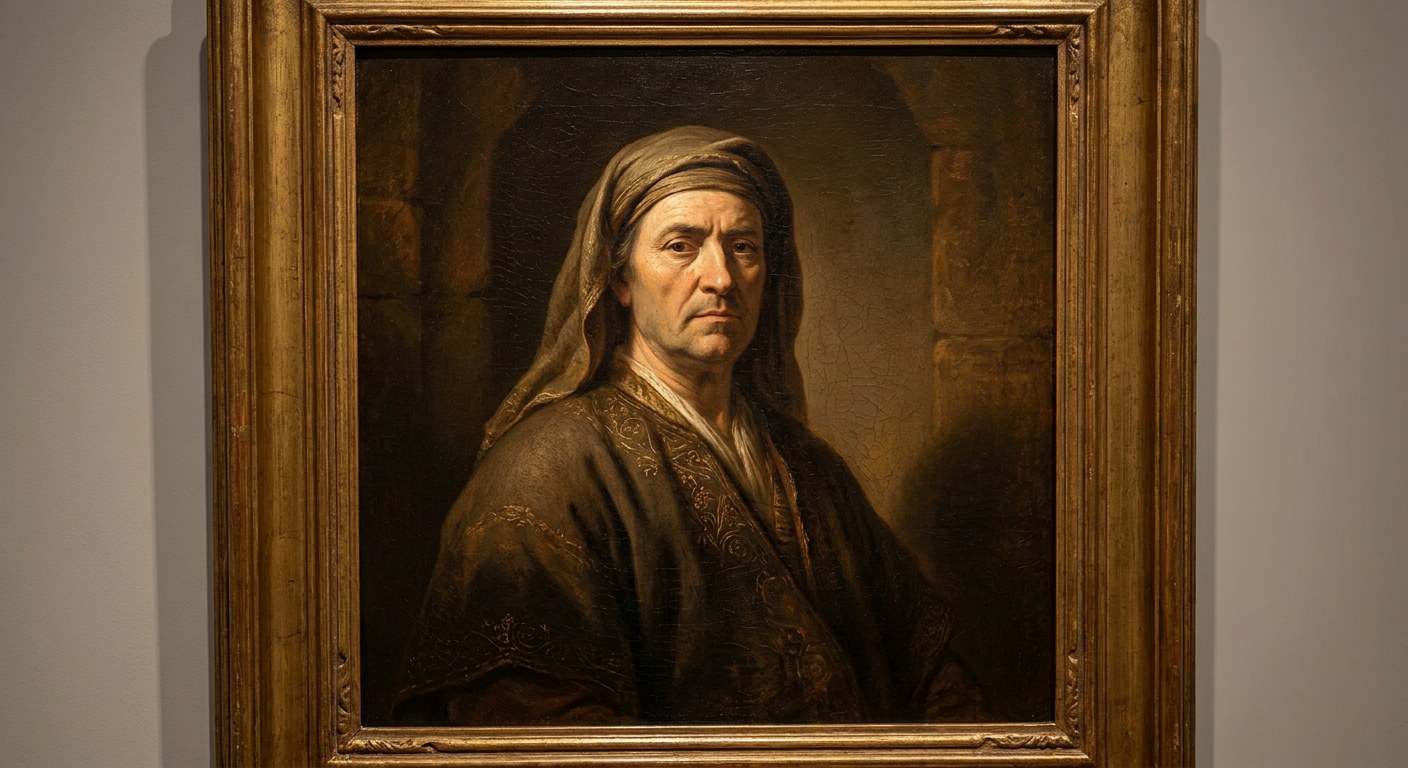
Zoroaster
Dates unknown · Ancient Iranian · Prophet & Religious Reformer
Recommended Audiobooks
Listen next from Marcus Alden

Life Lessons from Frederic Chopin
Marcus Alden · 54 min

Life Lessons from John Wesley
Marcus Alden · 52 min
Introduction
Zoroaster, also known by his Iranian name Zarathustra, was an ancient Iranian prophet and religious thinker whose teachings formed the foundation of Zoroastrianism. He proclaimed devotion to Ahura Mazda, the Wise Lord, and presented human life as a morally consequential struggle in which every person must choose between truth and falsehood. His hymns emphasize good thought, responsible action, justice, care for the created world and confidence in the ultimate defeat of evil.
Few founders of major religious traditions are surrounded by as much chronological uncertainty. Scholars generally accept Zoroaster as a historical individual, but they disagree sharply about when and where he lived. Older traditions placed him only a few centuries before Alexander the Great, while linguistic and historical evidence has led many modern specialists to place him much earlier—often somewhere between about 1500 and 1000 BCE. His homeland was probably in the eastern or northeastern Iranian cultural world, not necessarily in the western Persian heartland with which Zoroastrianism later became associated.
The most important evidence for Zoroaster is the Gathas, seventeen difficult and highly poetic hymns preserved within the Avesta, the sacred literature of Zoroastrianism. They are composed in Old Avestan, an archaic Iranian language closely related to the language of the ancient Indian Rigveda. Zoroastrian tradition and most scholars attribute the core of these hymns to Zoroaster himself.
Zoroaster matters not only as the ancestral prophet of a living religion but also as one of the earliest known thinkers to articulate a systematic moral vision centered on individual choice, cosmic justice and the eventual renewal of existence. Ideas associated with later Zoroastrianism—including judgment after death, resurrection, heaven and hell, a final savior and the defeat of evil—have often been compared with Jewish, Christian and Islamic teachings. Direct lines of influence remain debated, but Zoroastrianism unquestionably became one of the great religious traditions of the ancient Near East and Iran.
Quick Facts
| Fact | Details |
|---|---|
| Born | Date unknown; often placed approximately 1500–1000 BCE |
| Died | Date and circumstances unknown |
| Nationality | Ancient Iranian; modern nationality is anachronistic |
| Known For | Foundational prophet of Zoroastrianism and composer of the Gathas |
| Occupation | Prophet, priest, poet and religious reformer |
| Era | Ancient Iranian world, probably the second millennium BCE |
Early Life and Education
No contemporary biography of Zoroaster survives. What can be said about his early life comes from three different kinds of evidence: the Gathas, younger portions of the Avesta and much later Middle Persian Zoroastrian writings. These sources must be used carefully. The Gathas are close to Zoroaster's own voice but contain few straightforward biographical details. Later texts provide fuller stories, yet they were written or compiled many centuries after his lifetime and blend religious memory, theology and legend.
His Avestan name was Zarathushtra, conventionally rendered Zarathustra. The Greek form Zōroastrēs produced the familiar English name Zoroaster. The original meaning of Zarathushtra is disputed, although many linguistic interpretations connect part of the name with camels. This would fit the pastoral society reflected in the oldest Iranian texts.
Zoroaster belonged to the Spitama family or clan and is consequently called Zarathushtra Spitama. Later tradition names his father as Pourushaspa and his mother as Dughdova. These names may preserve genuine memories, but the narratives surrounding them were substantially elaborated over time.
The Gathas suggest that Zoroaster lived among pastoral communities for whom cattle, horses, herding and agriculture were central. His world was organized around households, clans and tribal rulers rather than large cities or imperial administrations. The hymns contain no clear references to the Achaemenid Persian Empire, Babylonian urban life or other features that would securely place him in the sixth century BCE.
His command of ritual language indicates a priestly education. Zoroaster calls himself a zaotar, a ritual priest who recited sacred formulas during worship. He understood inherited Indo-Iranian religious concepts, sacrificial customs and poetic composition. Old Avestan poetry is highly technical, employing traditional meters, formulas and wordplay. Composing the Gathas would therefore have required years of oral training.
Zoroaster did not simply reject everything inherited from earlier Iranian religion. He reinterpreted its language and ritual world. Some traditional divine beings and concepts were incorporated into his teaching, while others were condemned or subordinated. He opposed the daevas, beings whose name is related to the Vedic Sanskrit devas but who became demons in Zoroastrianism. The precise relationship between his reforms and earlier Iranian religious practice remains one of the major questions in the study of Zoroastrian origins.
Later Zoroastrian biographies describe extraordinary signs surrounding his birth and childhood. They claim that he laughed rather than cried at birth and survived attempts by evil forces to kill him. These stories express his sacred status within the tradition but cannot be treated as independently verified historical events.
Rise to Prominence
According to later tradition, Zoroaster received his decisive revelation at the age of thirty. While participating in a ritual near a river, he encountered Vohu Manah, or Good Mind, who led him into the presence of Ahura Mazda and other divine beings. Zoroaster then began proclaiming the wisdom he had received.
The Gathas do describe intense encounters with Ahura Mazda and repeated appeals for divine understanding. They present Zoroaster as a religious teacher seeking answers about truth, justice, creation and the proper way to worship. Whether these passages refer to a single revelatory event or to a longer process of spiritual insight is impossible to determine.
His preaching apparently met resistance. The hymns speak bitterly of hostile priests, violent rulers and followers of deceit. Zoroaster criticizes the karapans and kavis, terms generally associated with ritual specialists and political elites who opposed him. He condemns cruelty, predatory warfare and practices that harmed cattle and peaceful communities. The conflict appears to have been both theological and social: Zoroaster's religious claims challenged established authorities and their ritual practices.
Later accounts say that he left his homeland after years of rejection. His first convert outside his immediate family was said to be his cousin Maidhyoi-maonha. Eventually he gained the support of a ruler named Kavi Vishtaspa. In the Gathas, Vishtaspa is a real and valued patron, and his acceptance of Zoroaster's teaching was probably crucial to the movement's survival.
Tradition embellishes the conversion of Vishtaspa with court debates, imprisonment, miracles and the healing of the king's horse. The historical core is more modest: Zoroaster seems to have found protection at the court of an eastern Iranian ruler, after which members of the ruler's family and entourage supported his message.
Vishtaspa should not automatically be identified with Hystaspes, the father of the Achaemenid king Darius I. The names are linguistically equivalent, but the society and language of the Gathas appear considerably older than the Achaemenid period. Their identification was once influential because it supplied Zoroaster with a sixth-century BCE date, but most specialists now reject or seriously question it.
Major Achievements and Contributions
Zoroaster's greatest achievement was the creation—or radical transformation—of a religious worldview in which morality stood at the center of cosmic existence. He taught that human decisions are not insignificant episodes. Thoughts, words and actions align a person either with truth and order or with falsehood and destruction.
Devotion to Ahura Mazda
At the heart of the Gathas is Ahura Mazda, the Wise Lord. Zoroaster praises Ahura Mazda as the supreme source of wisdom, goodness and the order of existence. The precise classification of early Zoroastrianism as monotheistic, dualistic or something between those categories is debated. The Gathas elevate Ahura Mazda above all others, but they also refer to spiritual powers and to a profound opposition between beneficent and destructive principles.
Asha and Druj
The fundamental moral and cosmic contrast is between asha and druj. Asha can mean truth, right order, justice or reality as it ought to be. Druj means lie, deception or disorder. These are not merely abstract doctrines. People advance asha through honest speech, wise judgment, productive labor and care for the community. They serve druj through violence, deceit and destructive choices.
Moral Freedom
Zoroaster's hymns call on hearers to listen, reflect and choose. This emphasis on discernment is one of his most influential contributions. Although divine wisdom guides humanity, each person bears responsibility for deciding between better and worse ways of living. The moral life therefore involves active judgment rather than passive submission.
The Two Spirits
The Gathas describe two opposed mainyus, often translated as spirits or mentalities. One is beneficent and the other destructive. They choose differently in thought, word and deed. Later Zoroastrianism developed this opposition into the cosmic conflict between Spenta Mainyu, the beneficent spirit, and Angra Mainyu or Ahriman, the destructive spirit.
Scholars disagree about how fully developed this dualism was in Zoroaster's own theology. Some understand the two spirits as primordial powers; others interpret them as contrasting modes of choice under Ahura Mazda's supremacy. What is clear is that Zoroaster refused to attribute evil directly to the perfectly wise and good Lord.
The Amesha Spentas
Zoroaster's theology includes concepts later known as the Amesha Spentas, the Beneficent Immortals. These include Good Mind, Truth or Best Order, Desirable Dominion, Beneficent Devotion, Wholeness and Immortality. They can be understood simultaneously as divine beings, qualities of Ahura Mazda and virtues that human beings should embody. This union of theology and ethics is characteristic of Zoroastrian thought.
Judgment and Renewal
The Gathas anticipate judgment according to one's choices and refer to the Chinvat Bridge, the bridge of judgment. Later tradition explains that the soul crosses this bridge after death: it becomes broad for the righteous and narrow for the wicked. Zoroastrian teaching also developed a doctrine of frashokereti, the final renovation in which creation is purified, evil is defeated and the dead are raised.
Not every detail of the later system appears explicitly in the Gathas. Nevertheless, Zoroaster's hymns clearly express confidence that truth will ultimately triumph and that moral conduct has consequences beyond immediate earthly life.
Religious Community and Practice
Zoroaster established a community defined by shared worship and ethical commitment. Zoroastrian prayer later became associated with the maxim good thoughts, good words and good deeds. Although that exact English formula is not a direct sentence from the Gathas, it accurately summarizes a recurring Zoroastrian triad.
Fire became the most visible symbol of Zoroastrian worship because it represents light, purity and divine truth. Zoroastrians do not worship fire itself; they pray in its presence as a sacred sign of Ahura Mazda's order. The fully developed fire-temple system belongs to later periods, so it should not simply be projected into Zoroaster's lifetime.
Key Works / Battles / Ideas
The Gathas
Zoroaster's principal surviving work is the Gathas, meaning songs or hymns. They consist of seventeen hymns containing approximately 238 stanzas. They are preserved in five groups within chapters 28–34, 43–46, 47–50, 51 and 53 of the Yasna, the central Zoroastrian liturgy.
The five metrical groups are:
- Ahunavaiti Gatha — Yasna 28–34
- Ushtavaiti Gatha — Yasna 43–46
- Spenta Mainyu Gatha — Yasna 47–50
- Vohu Khshathra Gatha — Yasna 51
- Vahishtoishti Gatha — Yasna 53
The Gathas are not a biography or systematic theological handbook. They are liturgical poems filled with prayers, questions, appeals, warnings and declarations. Their compressed grammar and obscure vocabulary make them exceptionally difficult to translate. Interpretations often depend on comparisons with Vedic Sanskrit and on the later Zoroastrian tradition.
The Yasna Haptanghaiti, or Worship in Seven Chapters, is also written in Old Avestan and belongs to the oldest layer of the Avesta. It reflects a religious world close to that of the Gathas but is generally not regarded as Zoroaster's personal composition.
Central Ideas
Zoroaster's essential ideas may be summarized as follows:
- Ahura Mazda is the supremely wise and good Lord.
- Existence is marked by conflict between truth and falsehood.
- Human beings possess meaningful moral choice.
- Good thought must lead to truthful speech and constructive action.
- Justice ultimately prevails, even if evil appears powerful temporarily.
- The material world is fundamentally worthy of care rather than rejection.
- Worship must be joined to ethical conduct.
Zoroaster fought no securely documented military battles. His struggle was intellectual, ethical and religious. The Gathas portray him confronting hostile authorities and defending communities threatened by violence, but later accounts of wars fought on behalf of the faith cannot be independently reconstructed.
Timeline of Key Events
Because Zoroaster's dates are unknown, this timeline combines scholarly estimates with relative dates preserved in tradition.
| Year | Event |
|---|---|
| c. 1500–1000 BCE | Broad period in which many modern scholars place Zoroaster's life; estimates vary substantially |
| Unknown | Born into the Spitama family in the eastern or northeastern Iranian cultural world |
| Childhood and youth | Receives priestly and poetic training within an oral religious tradition |
| Traditionally age 30 | Experiences a revelation associated with Vohu Manah and Ahura Mazda |
| Following years | Preaches his message and faces opposition from priests and local rulers |
| Unknown | Gains his first followers, including members of his family and community |
| Unknown | Receives the patronage of Kavi Vishtaspa, strengthening the new religious movement |
| Unknown | Composes or recites the hymns later preserved as the Gathas |
| Unknown | Dies; later tradition assigns him an age of 77 years and 40 days, but this is not historically verifiable |
| c. 6th–4th centuries BCE | Zoroastrian ideas are associated with the Iranian imperial world, although the exact religion of early Achaemenid rulers remains debated |
| 3rd–7th centuries CE | Under the Sasanian Empire, Zoroastrian institutions and scriptural traditions are systematized |
| 7th century CE onward | Islamic conquest transforms Iran's religious landscape; Zoroastrian communities persist in Iran and later flourish among the Parsis of India |
Personal Life and Character
The Gathas reveal more about Zoroaster's concerns than about his domestic life. They present a speaker who is questioning, persistent and deeply committed to justice. He repeatedly asks Ahura Mazda for wisdom, expresses frustration at opposition and seeks protection for followers who support truth.
Zoroaster was not portrayed as an isolated contemplative. His message addressed herders, householders, rulers, priests and families. He sought a functioning moral community and valued productive life in the material world. Later Zoroastrian tradition strongly favored marriage, family, agriculture and responsible participation in society over withdrawal from it.
Later sources identify his wife as Hvovi, a daughter of Frashaoshtra, one of his supporters. They also assign him several children, commonly named Isat-vastra, Urvatat-nara, Hvare-chithra, Freni, Thriti and Pouruchista. Yasna 53 addresses a marriage involving Pouruchista, described as Zoroaster's youngest daughter, which may preserve an authentic family association. Much of the complete genealogy, however, comes from later tradition.
His character in the Gathas is neither serene nor remote. He pleads, argues and condemns. He is compassionate toward the vulnerable but uncompromising toward those he sees as allies of deceit. His concern for cattle reflects both the economic realities of pastoral life and a broader conviction that good creation should be protected from violence.
Zoroaster's attitude toward ritual was reformist rather than simply anti-ritual. He remained a priest and framed his teachings within worship. His criticism was directed at practices connected with falsehood, cruelty or intoxicated violence. Claims that he completely prohibited animal sacrifice or the ritual drink haoma go beyond what the oldest evidence can securely demonstrate.
Challenges and Controversies
The greatest controversy is Zoroaster's date. Traditional Zoroastrian chronologies, influenced by calculations from the Hellenistic period, placed him 258 years before Alexander the Great, suggesting a sixth-century BCE setting. Some ancient Greek writers placed him thousands of years earlier, but their dates were symbolic and inconsistent.
Modern linguistic analysis shows that Old Avestan is close in age and structure to Vedic Sanskrit. The social world of the Gathas also resembles an early pastoral society rather than an imperial Persian state. These observations have encouraged dates in the second millennium BCE, commonly around 1200 BCE or within the wider range of 1500–1000 BCE. No consensus year exists.
His birthplace is similarly disputed. Suggestions include regions in present-day northeastern Iran, Afghanistan, Turkmenistan, Uzbekistan and farther north in Central Asia. Later tradition associated him with western Iran or Azerbaijan, but the linguistic and geographic environment of the early Avesta points more strongly eastward.
The extent of Zoroaster's monotheism is another debate. He clearly gives Ahura Mazda supreme status. Yet the existence of other sacred beings and the opposition of the two spirits complicate modern categories. Calling him simply the first monotheist may be appealing but risks imposing a later definition on an ancient Iranian text.
Claims about Zoroastrian influence on Judaism, Christianity and Islam also require caution. During the Achaemenid, Parthian and Sasanian periods, Iranian and Jewish communities lived under shared political systems and interacted culturally. Similarities include angels, demons, resurrection, final judgment and a world-renovating savior. Influence is plausible in some areas, but scholars differ over its timing, direction and scale. Similar ideas can also develop independently or through complex exchanges that leave no simple documentary trail.
Even Zoroaster's historical existence has occasionally been questioned, with some scholars proposing that the name represented a priestly title or legendary founder. The personal voice of the Gathas, references to relatives and patrons, and the coherence of their mission have persuaded most specialists that a historical teacher stands behind the tradition.
Death and Immediate Aftermath
No reliable contemporary account records Zoroaster's death. Later tradition says that he lived to the age of 77 years and 40 days. In one well-known story, he was killed by an enemy priest while praying in a fire sanctuary during an invasion by hostile forces. Versions identify the killer as Turbaratur or Bratrok-resh. Some accounts add that Zoroaster killed his attacker with a thrown prayer bead or sacred object as he died.
These dramatic details appear in sources far removed from his lifetime and cannot be verified. Because elaborate temple institutions probably postdated him, the setting of the story may reflect later Zoroastrian practice rather than historical reality.
The movement nevertheless survived, probably because it had gained influential patrons and established communities. Followers transmitted the Gathas orally with extraordinary precision. For centuries, priests memorized the texts as part of ritual performance. The surviving Avesta represents only a portion of the literature later Zoroastrian tradition believed had once existed, but its oldest hymns preserve language from a remarkably early period.
Zoroaster's death did not produce a clearly documented succession comparable to the leadership histories of some later religions. Authority remained embedded in priestly families, ritual communities and patronage networks. Over time, his teachings interacted with other Iranian beliefs and developed into the broader Zoroastrian tradition known from the Younger Avesta and Middle Persian literature.
Legacy and Influence Today
Zoroastrianism eventually became closely connected with major Iranian empires. The Achaemenid kings invoked Ahura Mazda in royal inscriptions, although the exact relationship between their religion and the fully developed Zoroastrian tradition remains debated. Under the Sasanian Empire, Zoroastrianism received strong royal support and developed influential priestly institutions.
Following the Arab conquest of Iran in the seventh century CE, Islam gradually became dominant. Zoroastrians remained in Iran despite legal, economic and social pressures. From roughly the eighth to tenth centuries, groups of Iranian Zoroastrians migrated to western India. Their descendants became known as Parsis, meaning Persians.
Today, Zoroastrian communities survive principally in India, Iran and a global diaspora that includes North America, Britain, Australia and other regions. Their numbers are relatively small, and communities debate questions of intermarriage, conversion, ritual adaptation and cultural preservation. Nevertheless, they maintain temples, festivals, charitable institutions and liturgical traditions rooted in the ancient Avesta.
Zoroaster's philosophical legacy extends beyond formal religion. His insistence that people choose between truth and falsehood gives his teaching a continuing ethical relevance. The maxim of good thoughts, good words and good deeds remains one of the clearest expressions of a practical morality linking inner intention with public conduct.
His name also entered Western intellectual history in transformed ways. Greek and Roman authors treated Zoroaster as an ancient sage, astrologer or magician. Renaissance and Enlightenment writers used him as a symbol of primeval wisdom. Mozart's The Magic Flute includes the wise priest Sarastro, whose name echoes Zoroaster.
The German philosopher Friedrich Nietzsche made Zarathustra the fictional speaker of Thus Spoke Zarathustra. Nietzsche's character is not an accurate presentation of the Iranian prophet or Zoroastrian theology. Nietzsche selected him because he regarded the historical Zarathustra as an early teacher who placed morality at the center of cosmic order; the literary figure was then used to announce Nietzsche's own radical critique of conventional morality.
Composer Richard Strauss drew on Nietzsche's book for the tone poem Also sprach Zarathustra, whose opening became one of the best-known passages in orchestral music. These modern appropriations greatly increased recognition of Zoroaster's name, even while often obscuring his actual teachings.
Zoroaster remains important to historians of philosophy and religion because the Gathas preserve one of humanity's earliest identifiable prophetic voices. They ask enduring questions: What is the source of evil? Does justice ultimately prevail? How should a person choose when surrounded by deception? What duties do people owe to one another and to the living world? His answers arose in an ancient pastoral society, but their moral urgency continues to resonate.
Famous Quotes
The following passages are translated from the Gathas, which Zoroastrian tradition and most scholars attribute to Zoroaster. Wording differs among translators because Old Avestan is exceptionally difficult. Verse references are provided rather than presenting later popular sayings as verbatim quotations.
Hear with your ears the best things; look upon them with clear thought, for decision between the two ways, each person for oneself before the great reckoning.
— Yasna 30.2
Now the two primal spirits, who reveal themselves as twins, are the better and the bad in thought, word and action. Between these two the wise choose rightly, but not the foolish.
— Yasna 30.3
When these two spirits first came together, they established life and non-life, and how existence shall be at the end: the worst for the followers of deceit, but the best dwelling for the truthful.
— Yasna 30.4
May we be those who make existence splendid, O Wise Lord, through truth and good mind.
— Yasna 30.9
This I ask you, tell me truly, Lord: who was the first father of truth at its birth? Who established the path of the sun and stars?
— Yasna 44.3
This I ask you, tell me truly, Lord: who upheld the earth below and the heavens from falling? Who created the waters and the plants?
— Yasna 44.4
Truth is the best good and it is happiness. Happiness belongs to the one who is truthful for the sake of the best truth.
— Yasna 27.14, the Ashem Vohu prayer preserved in the Old Avestan liturgy
Frequently Asked Questions
When was Zoroaster born?
His birth year is unknown. Many modern scholars place him broadly between about 1500 and 1000 BCE, although dates outside that range continue to be proposed. The often-repeated date of 628 or 660 BCE comes from later chronological traditions rather than contemporary evidence.
Are Zoroaster and Zarathustra the same person?
Yes. Zarathustra is a closer rendering of his ancient Iranian name, Zarathushtra. Zoroaster comes from the Greek form of that name. Both refer to the foundational prophet of Zoroastrianism.
Where did Zoroaster live?
He probably lived in the eastern or northeastern Iranian cultural world, which encompassed parts of modern Iran, Afghanistan and Central Asia. His precise birthplace is unknown. Later western Iranian traditions are less consistent with the language and pastoral setting of the Gathas.
Did Zoroaster write the Avesta?
Not the entire Avesta. The seventeen Gathas are traditionally attributed to him and are widely regarded as preserving his own teachings. Other Avestan texts were composed by priests and communities over subsequent generations and centuries.
Was Zoroaster the first monotheist?
That description is disputed. He proclaimed Ahura Mazda as the supremely wise and good Lord, making his theology strongly focused on one supreme deity. However, the Gathas also recognize other spiritual beings and opposing forces. Modern categories such as monotheism and dualism do not perfectly capture his ancient worldview.
Did Zoroaster teach that there were two gods?
The Gathas describe two opposed spirits or mentalities, one beneficent and one destructive. Later Zoroastrianism developed a pronounced conflict between Ahura Mazda and Angra Mainyu. Yet Ahura Mazda is not merely an evil spirit's equal counterpart: he is associated with wisdom, truth and ultimate victory. The exact nature of Zoroaster's original dualism remains debated.
Did Zoroastrianism influence Christianity and Islam?
Zoroastrian, Jewish, Christian and later Islamic communities shared regions and political worlds for centuries. Similarities in teachings about judgment, resurrection, angels, demons and the end of history make some influence plausible. Scholars caution, however, that the evidence does not support a simple claim that all such ideas were directly borrowed from Zoroastrianism.
Are there still Zoroastrians today?
Yes. Living communities exist in India, Iran and the worldwide diaspora. Indian Zoroastrians are commonly known as Parsis. Although the global population is small, Zoroastrians continue to preserve their prayers, festivals, ethical traditions and sacred fires.
Lessons We Can Learn
- Moral choices matter. Zoroaster taught that thoughts, speech and actions shape both personal character and the wider world.
- Truth requires active commitment. Asha is more than factual accuracy; it includes justice, integrity and the proper ordering of life.
- Reflection should precede belief. The Gathas ask listeners to hear carefully, use clear thought and choose responsibly.
- Good intentions must become constructive action. Ethical life unites good thought with truthful words and deeds that benefit others.
- Hope can coexist with struggle. Zoroaster recognized the reality of violence and deceit while maintaining that goodness and justice would ultimately triumph.
Further Reading
- Mary Boyce, Zoroastrians: Their Religious Beliefs and Practices (Routledge, 1979).
- Jenny Rose, Zoroastrianism: An Introduction (I.B. Tauris, 2011).
- Stanley Insler, The Gāthās of Zarathustra (Brill, 1975).
- Helmut Humbach, The Gāthās of Zarathushtra and the Other Old Avestan Texts (Carl Winter, 1991).
- Michael Stausberg and Yuhan Sohrab-Dinshaw Vevaina, eds., The Wiley Blackwell Companion to Zoroastrianism (Wiley Blackwell, 2015).
Watch and Learn
Zoroastrianism Explained · Cogito