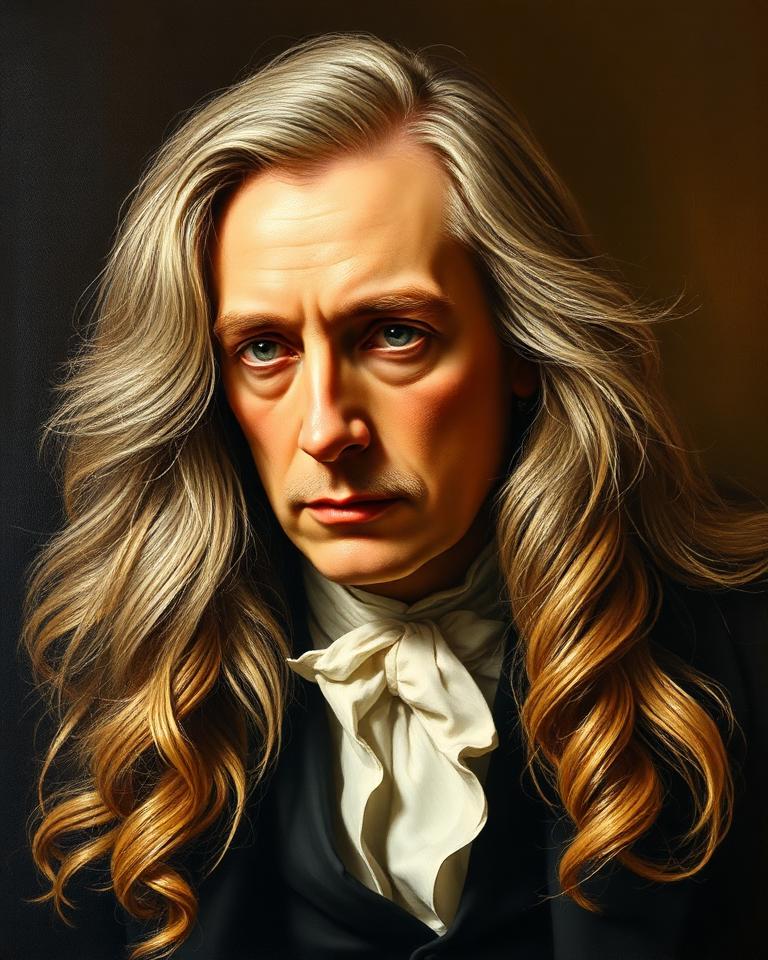
Quick Facts
- Years
- 1811 – 1886
- Category
- Artists & Composers
- Subcategory
- Classical Music
- Nationality
- Hungarian
- Occupation
- Virtuoso & Composer
Franz Liszt
1811 – 1886 · Hungarian · Virtuoso & Composer
Audiobook

Life Lessons from Franz Liszt
Marcus Alden · 53 min
Franz Liszt (1811–1886) was a Hungarian pianist, composer, conductor, teacher, and writer whose career transformed European musical life. Celebrated as perhaps the nineteenth century’s most dazzling piano virtuoso, he expanded the instrument’s technique, expressive range, and public prestige. His recitals helped establish the model of the solo celebrity performer, while the intense audience response later nicknamed “Lisztomania” foreshadowed modern celebrity culture.
Liszt was more than a showman. His compositions include the Hungarian Rhapsodies, Transcendental Études, Années de pèlerinage, Piano Sonata in B minor, two piano concertos, sacred works, songs, and orchestral symphonic poems. In Weimar, he championed experimental music and conducted works by younger or controversial composers. His orchestral writing helped popularize program music, while his daring late pieces anticipated aspects of impressionism, atonality, and twentieth-century modernism.
He also taught many pianists without charging fees, supported fellow musicians, and made influential transcriptions that brought orchestral and operatic repertory into homes and salons. His life encompassed extraordinary fame, complicated relationships, religious devotion, professional rivalry, and recurring controversy over national identity and artistic taste. Liszt remains studied because he united virtuosity, composition, advocacy, education, and innovation on an exceptional scale.
Quick Facts
| Field | Information |
|---|---|
| Full Name | Franz Liszt; baptized Franciscus Liszt; Hungarian form: Liszt Ferenc |
| Common Name(s) | Franz Liszt, Ferenc Liszt, Abbé Liszt |
| Born | October 22, 1811 |
| Died | July 31, 1886 |
| Age at Death | 74 |
| Birthplace | Doborján, Kingdom of Hungary, Austrian Empire; now Raiding, Austria |
| Nationality | Hungarian; a subject of the Habsburg monarchy |
| Occupation | Pianist, composer, conductor, teacher, writer |
| Historical Era | Romantic era |
| Famous For | Transforming piano performance; solo recitals; Hungarian Rhapsodies; Piano Sonata in B minor; symphonic poems |
| Political Affiliation | No formal party affiliation; publicly identified with Hungary and supported selected national and charitable causes |
| Religion | Roman Catholic; received minor orders in 1865 |
| Education | Taught by his father Adam Liszt; piano with Carl Czerny and composition with Antonio Salieri in Vienna; largely privately educated |
| Parents | Adam Liszt and Anna Maria Lager |
| Spouse(s) | Never married |
| Children | Blandine, Cosima, and Daniel Liszt, with Countess Marie d’Agoult |
| Major Works | Années de pèlerinage, Transcendental Études, Hungarian Rhapsodies, Piano Sonata in B minor, two piano concertos, Dante Symphony, Faust Symphony, Christus, Via crucis |
| Major Achievements | International virtuoso career; development of the modern solo recital; creation and promotion of the symphonic poem; leadership in Weimar; influential teaching and musical advocacy |
Early Life
Liszt was born in Doborján, a German-speaking village in western Hungary. His father, Adam Liszt, administered estates belonging to the Esterházy family and was an amateur musician who had encountered Joseph Haydn’s musical world. His mother, Anna Maria Lager, came from an Austrian family. Franz grew up speaking German more readily than Hungarian, a fact later used by critics to question his Hungarian identity. National identity in the multilingual Habsburg lands, however, was not determined solely by language.
Adam recognized his son’s unusual musical ability early and became his first piano teacher. Liszt performed publicly as a child in western Hungary. Hungarian aristocrats reportedly helped finance further training after hearing him play, enabling the family to move to Vienna in 1822.
In Vienna, Liszt studied piano with Carl Czerny, a former pupil of Beethoven, and composition with Antonio Salieri. Czerny refined the boy’s technical discipline and later recalled teaching him without payment. Liszt met Beethoven in Vienna, although the familiar story that Beethoven ceremonially kissed and blessed him is not securely documented.
The family moved to Paris in 1823. The Conservatoire refused Liszt admission because its director, Luigi Cherubini, enforced restrictions against foreign students. He instead studied privately, including composition lessons with Ferdinando Paer and Anton Reicha. He toured as a prodigy in France and England and composed the one-act opera Don Sanche, performed in Paris in 1825.
Adam Liszt died in 1827 while father and son were at Boulogne-sur-Mer. The sixteen-year-old returned to Paris, supported himself and his mother by teaching, and experienced emotional and religious uncertainty. The intellectual climate of post-revolutionary Paris—Catholic revival, utopian socialism, republican thought, Romantic literature, and public virtuosity—became crucial to his development.
Rise to Prominence
After his father’s death, Liszt briefly withdrew from concert life. A frustrated attachment to his pupil Caroline de Saint-Cricq deepened his despondency; her father opposed the relationship. Liszt read widely and formed friendships with writers and artists. The Revolution of 1830 stimulated his political imagination, although his projected Revolutionary Symphony remained unfinished.
Three encounters redirected his career. Niccolò Paganini’s Paris performances in 1831 inspired Liszt to seek an equivalent level of transcendental virtuosity on the piano. Hector Berlioz demonstrated the possibilities of program music and imaginative orchestration. Frédéric Chopin offered a different model: poetic concentration, harmonic subtlety, and idiomatic keyboard writing.
Liszt’s relationship with the married writer Countess Marie d’Agoult began in the 1830s. They left Paris in 1835 and lived or traveled in Switzerland and Italy. Their experiences entered the works later collected in Années de pèlerinage. They had three children, but the relationship deteriorated and ended during the 1840s.
Between 1839 and 1847, Liszt toured Europe on an extraordinary scale, appearing from Britain and Iberia to Russia and the Ottoman Empire. He often played entire concerts alone, increasingly using the term “recital.” He performed from memory, positioned the piano to reveal his profile and the instrument’s sound, and presented music by Bach, Beethoven, Schubert, Chopin, and others alongside his own works.
His theatrical presence, technical command, and extensive publicity generated intense enthusiasm. Heinrich Heine called the phenomenon “Lisztomania” in 1844, partly admiringly and partly satirically. Liszt also gave many benefit concerts, including performances supporting charitable causes and the proposed Beethoven monument in Bonn. By the time he ended regular touring in 1847, he was one of Europe’s most famous musicians.
Major Achievements
Transforming Piano Technique and Performance
Liszt developed techniques involving rapid octaves, wide leaps, layered textures, repeated notes, and orchestral sonorities. These were not merely athletic devices: in his best works, technical difficulty serves drama, color, and structural transformation. His public recitals helped establish the pianist as an autonomous concert artist rather than an accompanist or one participant in a mixed program.
The long-term impact is visible in modern recital culture, memorized performance, and the virtuoso repertory. Later pianists from Ferruccio Busoni to Vladimir Horowitz inherited a professional model that Liszt helped define.
Creating a Monumental Piano Repertory
Liszt repeatedly revised his music, often transforming youthful display pieces into mature compositions. The 1851 Transcendental Études balance extreme technique with poetic characterization. The three volumes of Années de pèlerinage translate landscapes, literature, visual art, spirituality, and memory into musical form.
The Piano Sonata in B minor, completed in 1853 and dedicated to Robert Schumann, integrates several movements into one continuous architecture through thematic transformation. Initially controversial, it became a central Romantic piano work and a major subject of analytical scholarship.
Advancing Program Music and the Symphonic Poem
At Weimar, Liszt developed a group of orchestral works he called symphonic poems, including Tasso, Les Préludes, and Mazeppa. These one-movement pieces drew on literary, historical, or philosophical subjects and relied on recurring themes transformed across contrasting episodes.
Liszt did not invent every element of program music, but he gave the symphonic poem a recognizable name and influential form. Richard Strauss, Bedřich Smetana, Camille Saint-Saëns, and others adapted the genre to their own purposes.
Championing Other Composers
Liszt used his fame to promote music that institutions resisted. In Weimar he conducted the premiere of Wagner’s Lohengrin in 1850 while Wagner lived in exile. He advocated Berlioz, Schumann, Schubert, and emerging composers, and his transcriptions widened access to their works.
His generosity mattered because nineteenth-century careers depended heavily on patrons, performers, and publishers. Liszt’s support could give an unfamiliar composition public legitimacy, even when his advocacy attracted criticism.
Teaching a European School of Pianists
Liszt’s later masterclasses attracted students from across Europe and the United States. He generally taught interpretation, style, rhythm, tone, and character rather than prescribing a rigid technical system. Notable pupils included Hans von Bülow, Carl Tausig, Moriz Rosenthal, Arthur Friedheim, Sophie Menter, and Frederic Lamond.
He normally charged no tuition in his mature years. Through these students, his interpretive ideas entered later conservatories and concert traditions.
Exploring the Musical Future
Late works such as Nuages gris, Unstern!, Bagatelle sans tonalité, and Via crucis use sparse textures, unresolved harmony, augmented sonorities, and unusual tonal relationships. They often reject the triumphant rhetoric associated with his virtuoso image.
These pieces were little understood in his lifetime, but later musicians heard anticipations of impressionism and modernism. Claims that Liszt “invented atonality” overstate the case; nevertheless, his harmonic experiments significantly weakened conventional tonal expectations.
Leadership and Work
Liszt’s most important institutional leadership came in Weimar, where he served as Kapellmeister in Extraordinary from 1848. Rather than treating the court theater as a museum, he turned it into a laboratory for contemporary music. He planned festivals, rehearsed orchestras, conducted premieres, revised scores, wrote essays, and built alliances among artists associated with the “New German School.”
His leadership was charismatic and mission-driven. He trusted intuition, literary association, and thematic transformation more than strict adherence to inherited forms. He was remarkably generous with time, recommendations, money, and lessons. Students recalled warmth and humor, but also sharp criticism of careless playing or empty display.
Liszt’s strengths included imagination, courage, social skill, and willingness to promote others. His weaknesses included uneven administration, overcommitment, and dependence on complicated personal networks. Princess Carolyne zu Sayn-Wittgenstein strongly influenced his Weimar years, encouraged large-scale composition, and assisted his literary projects; scholars debate how much she contributed to prose published under his name.
Opposition within the court and theater intensified. After the hostile reception of Peter Cornelius’s The Barber of Baghdad in 1858, Liszt resigned his active Weimar post. The episode exposed the limits of charismatic leadership when institutional support was fragile.
Personal Life
Liszt never married. His relationship with Marie d’Agoult produced Blandine, Cosima, and Daniel. Because both parents traveled and later separated, the children were often cared for by Liszt’s mother and governesses. His attempts to control their upbringing strained family relations. Daniel died in 1859, aged twenty, and Blandine died in 1862 after childbirth. Cosima first married Hans von Bülow and later left him for Richard Wagner, whom she married in 1870.
Liszt met Princess Carolyne zu Sayn-Wittgenstein in Kyiv in 1847. She separated from her husband and joined Liszt in Weimar. They hoped to marry, but annulment and church-law proceedings failed; a planned wedding in Rome in 1861 was canceled. Their intimate partnership diminished, though they remained connected.
Friends and associates included Berlioz, Chopin, Wagner, George Sand, Eugène Delacroix, and many aristocratic patrons. These relationships could be affectionate but unstable. Liszt’s support for Wagner survived serious tensions, including Wagner’s relationship with Cosima and disagreements over money, religion, and artistic politics.
Contemporaries described Liszt as magnetic, witty, generous, and capable of emotional extremes. He enjoyed literature, travel, art, conversation, and cigars. In later life he followed a “threefold existence,” dividing time among Rome, Weimar, and Budapest.
His health declined with age. He experienced eye trouble, dropsy or edema, heart problems, insomnia, and reduced mobility. After traveling to Bayreuth in 1886, he developed pneumonia and died there on July 31.
Philosophy and Beliefs
Liszt’s worldview combined Romantic individualism, social concern, Hungarian patriotism, and Catholic spirituality. As a young man he encountered Saint-Simonian ideas about artists serving society. He believed music could educate, elevate, console, and contribute to moral progress.
His political position was not systematic. He sympathized with oppressed peoples and celebrated heroic or revolutionary subjects, yet maintained close relationships with courts and aristocrats. He supported Hungary symbolically and materially, notably after the devastating Pest flood of 1838. He did not become an active party politician.
Religion remained central, though his personal life did not always conform to Catholic moral teaching. In Rome he received the tonsure and four minor orders in 1865, after which “Abbé Liszt” became a common title. He was not ordained a priest and therefore could not celebrate Mass. Major sacred compositions—including the Missa solennis, Christus, and Via crucis—expressed his ambition to renew church music by joining tradition with modern harmony.
His ethics as a musician emphasized artistic service. Free teaching, benefit concerts, advocacy, and transcriptions were practical expressions of his belief that fame created responsibilities as well as privileges.
Challenges and Controversies
Liszt’s virtuoso reputation often overshadowed his composition. Critics accused him of theatricality, vulgarity, bombast, and formal looseness. Admirers answered that his dramatic rhetoric opened new expressive possibilities. Modern assessments usually distinguish uneven occasional works from compositions of lasting structural and harmonic importance.
The “War of the Romantics” divided supporters of Liszt and Wagner from critics associated with more classically oriented values, especially the critic Eduard Hanslick and composers later linked with Johannes Brahms. The camps were never perfectly uniform, but debate over program music versus “absolute” music shaped Liszt’s reception.
His Hungarian Rhapsodies raise questions about nationalism and cultural labeling. Liszt often treated the urban Hungarian-Gypsy or verbunkos idiom performed by Romani bands as ancient Hungarian national music. Later ethnomusicologists, particularly Béla Bartók, distinguished those styles from older Magyar peasant traditions. The rhapsodies remain important, but their titles reflect nineteenth-century assumptions rather than modern ethnographic precision.
Liszt’s relationships also attracted scandal. Marie d’Agoult was married when they eloped, while Carolyne remained legally married during most of their partnership. His image as a romantic seducer contains both evidence and exaggeration; sensational anecdotes are not always verifiable.
Questions surround his writings because Carolyne and others may have shaped or drafted some essays. His book Des Bohémiens et de leur musique en Hongrie also contained offensive generalizations and, especially in its later edition, antisemitic passages. Scholars debate responsibility for particular wording, but publication under Liszt’s name remains part of his record.
His death generated a smaller controversy. Some observers believed his illness received inadequate attention during the Bayreuth Festival. Pneumonia is the documented immediate illness, while claims of deliberate neglect are interpretive rather than established fact.
Legacy
Liszt permanently changed expectations of what a pianist could be: virtuoso, interpreter, composer, intellectual, celebrity, teacher, and cultural organizer. His technique shaped modern pianism, while his thematic transformation influenced Wagner, Strauss, Saint-Saëns, César Franck, and many others. His late harmony helped prepare listeners for Debussy, Bartók, and later experimentation.
His legacy survives through the Franz Liszt Academy of Music in Budapest, founded in 1875 as the Royal Hungarian National Academy of Music with Liszt as its first president. The Liszt Ferenc Memorial Museum occupies his former Budapest apartment. Museums and memorial sites also exist in Weimar and at his birthplace in Raiding. Statues stand in Budapest, Weimar, Bayreuth, and other cities.
The International Franz Liszt Piano Competition in Utrecht and other competitions bearing his name sustain his repertory. The Liszt Society and scholarly institutions publish research, recordings, and critical editions. Budapest’s international airport was renamed Budapest Ferenc Liszt International Airport in 2011.
Modern performers no longer treat him solely as a composer of flamboyant showpieces. Sacred music, songs, chamber works, orchestral scores, and austere late pieces increasingly reveal a complex artist whose career linked the worlds of Beethoven and early modernism.
Interesting Facts
- Liszt was born in a region that is now part of Austria but identified himself as Hungarian.
- German was his strongest everyday language; he never became fluent in Hungarian.
- The Paris Conservatoire rejected him under its policy toward foreign pupils.
- His only completed opera, Don Sanche, premiered when he was thirteen.
- Paganini inspired him to pursue unprecedented pianistic mastery.
- He helped popularize the word “recital” for a solo public performance.
- He normally performed from memory, unusual at the beginning of his career.
- Heinrich Heine coined “Lisztomania” to describe the frenzy around his concerts.
- Liszt gave many performances for charitable purposes.
- He made solo-piano transcriptions of all nine Beethoven symphonies.
- He conducted the premiere of Wagner’s Lohengrin.
- His daughter Cosima became Richard Wagner’s second wife.
- Liszt received Catholic minor orders but was never a priest.
- He taught advanced students without charging tuition during his later career.
- He divided his final decades among Rome, Weimar, and Budapest.
- The familiar opening of Les Préludes became widely reused in later popular culture.
- Bagatelle sans tonalité carries a title meaning “Bagatelle without tonality.”
- He died in Bayreuth during the festival established by Wagner.
Famous Quotes
Quotations are translated from several languages; wording varies by edition.
- “My piano is to me what his frigate is to the seaman, his horse to the Arab.” — From an 1837 essay, “On the Situation of Artists and Their Condition in Society.” Liszt presents the instrument as an inseparable vehicle of identity and action.
- “The concert is myself.” — Reported from his 1839 discussion of giving a soliloque musical in Rome. It captures the emerging concept of the solo recital, although English wording varies.
- “Génie oblige.” — A maxim associated with Liszt’s teaching and correspondence: genius carries obligations. It summarizes his belief in service and responsibility.
- “Music embodies feeling without forcing it to contend and combine with thought.” — From Liszt’s writings on music’s expressive character; translations differ. It contrasts musical immediacy with discursive language.
- “Truth is a great flirt.” — From Liszt’s correspondence in translation. The remark reflects his ironic awareness that certainty can be elusive.
- “I carry a deep sadness of the heart which must now and then break out in sound.” — From a letter, often translated with slight variations. It connects composition with private emotional release.
- “In Hungary I am regarded as a foreigner; in Germany as a Hungarian.” — From correspondence, in translation. It expresses his complicated position within nineteenth-century national categories.
- “All that one can do is to remain faithful to one’s ideal.” — Commonly cited from his letters; exact English wording varies. It reflects his persistence amid criticism.
- “Beware of missing chances; otherwise it may be altogether too late some day.” — Attributed to a letter to a pupil or associate; translation and context vary, so it should be treated cautiously.
- “The supreme task of the musician is to shed light into the depths of the human heart.” — Widely attributed to Liszt, but a secure primary-source location is often omitted; attribution is disputed.
Timeline
- 1811 — Born at Doborján on October 22.
- 1820 — Gives notable childhood performances in western Hungary.
- 1822 — Moves to Vienna; studies with Czerny and Salieri.
- 1823 — Moves to Paris after touring German cities.
- 1824 — Makes London appearances.
- 1825 — Don Sanche premieres at the Paris Opéra.
- 1827 — Adam Liszt dies; Franz settles in Paris as a teacher.
- 1830 — The July Revolution stimulates his political and artistic thought.
- 1831 — Hears Paganini in Paris and begins intensive technical renewal.
- 1832 — Meets and admires Chopin and Berlioz within Parisian artistic circles.
- 1833 — Relationship with Marie d’Agoult develops.
- 1835 — Leaves Paris with Marie; daughter Blandine is born.
- 1837 — Daughter Cosima is born; Liszt participates in the celebrated “duel” with Sigismond Thalberg.
- 1838 — Gives benefit concerts after the Pest flood.
- 1839 — Son Daniel is born; begins years of intensive European touring.
- 1842 — Appointed Kapellmeister in Extraordinary at Weimar.
- 1844 — Heine uses the term “Lisztomania.”
- 1847 — Meets Princess Carolyne in Kyiv and ends regular virtuoso touring.
- 1848 — Settles in Weimar and begins concentrated orchestral and compositional work.
- 1850 — Conducts the premiere of Wagner’s Lohengrin.
- 1851 — Publishes the final version of the Transcendental Études.
- 1853 — Completes the Piano Sonata in B minor.
- 1854 — Introduces the term “symphonic poem” for his orchestral works.
- 1857 — Conducts the premiere of the Faust Symphony.
- 1858 — Resigns active Weimar duties after theater conflict.
- 1859 — Son Daniel dies.
- 1861 — Moves to Rome; planned marriage to Carolyne is canceled.
- 1862 — Daughter Blandine dies.
- 1865 — Receives Catholic minor orders.
- 1867 — Hungarian Coronation Mass is performed in Budapest.
- 1869 — Resumes regular teaching periods in Weimar.
- 1870 — Cosima marries Richard Wagner.
- 1875 — Becomes first president of Hungary’s new national music academy.
- 1877 — Samson and Delilah receives its first fully staged production in Weimar through Liszt’s advocacy.
- 1881 — Suffers a serious fall, followed by worsening health.
- 1883 — Composes Bagatelle sans tonalité.
- 1886 — Travels through Europe, becomes ill in Bayreuth, and dies on July 31.
Frequently Asked Questions
Why is Franz Liszt important?
Liszt reshaped both piano playing and musical culture. He expanded keyboard technique, made the solo recital a major public institution, and established a model of the internationally touring virtuoso. As a composer, he advanced thematic transformation, program music, and the symphonic poem. As a conductor and advocate, he promoted Wagner, Berlioz, Schumann, and other composers whose works met resistance. His later compositions experimented with harmony and texture in ways that anticipated twentieth-century music. Few musicians have combined performance, composition, teaching, institutional leadership, philanthropy, and advocacy so extensively.
Was Liszt the greatest pianist of all time?
No objective ranking is possible, especially because Liszt lived before sound recording. Contemporary testimony consistently describes extraordinary power, color, sight-reading, memory, and stage presence. He was compared with rivals such as Sigismond Thalberg and later Anton Rubinstein, but his broad cultural impact surpassed ordinary virtuoso competition. Claims that he was definitively the “greatest ever” belong to reputation rather than demonstrable fact. What can be said securely is that he was among the most influential pianists in history and fundamentally altered expectations of the instrument.
What is Liszt’s most famous composition?
There is no single answer. The Hungarian Rhapsody No. 2 is perhaps his most recognizable work in popular culture, partly through cartoons and arrangements. Liebesträume No. 3 and La campanella are also widely known. Among musicians and scholars, the Piano Sonata in B minor is often regarded as his greatest large-scale piano composition. The Transcendental Études, Années de pèlerinage, Faust Symphony, and Les Préludes are central to evaluating his artistic range.
What was “Lisztomania”?
“Lisztomania” was Heinrich Heine’s 1844 term for the intense excitement surrounding Liszt’s performances. Audiences sought souvenirs, crowded concert halls, and reacted visibly to his playing and appearance. Some later accounts exaggerate the phenomenon, and Heine’s language was satirical as well as descriptive. Nevertheless, Liszt’s fame was exceptional. His tours, publicity, portrait circulation, stagecraft, and charismatic performance made him an early example of international celebrity culture centered on a musical performer.
Did Liszt invent the piano recital?
Liszt did not invent solo keyboard performance from nothing, and other pianists gave comparable concerts. He did, however, popularize the term “recital” and made the full-length solo piano program a prestigious, repeatable institution. He performed from memory, presented repertory spanning several composers, and arranged the instrument to project both sound and profile. His example strongly influenced modern recital conventions. It is therefore more accurate to say he helped create and standardize the modern piano recital than to claim sole invention.
Was Franz Liszt Hungarian or Austrian?
Liszt was born in the Kingdom of Hungary, then part of the Austrian Empire, in a village now located in Austria. He consistently identified himself as Hungarian and held legal ties to Hungary, though his family background and primary language were German-speaking. He spent much of his career in France, Germany, Italy, and elsewhere. Modern national categories can oversimplify the multilingual Habsburg world. “Hungarian composer born in the Austrian Empire” is broadly accurate when accompanied by this historical context.
Could Liszt speak Hungarian?
Liszt never became fluent in Hungarian. He primarily spoke and wrote in German and French, and he also used Italian. This linguistic limitation became controversial as Hungarian nationalism grew. Yet he publicly identified with Hungary, raised funds for Hungarian causes, composed works intended as Hungarian, and accepted leadership of the national music academy. Language is important, but nineteenth-century identity could also involve birthplace, legal status, family memory, political sympathy, and cultural allegiance.
Was Liszt a priest?
No. Liszt received the tonsure and four minor orders in the Roman Catholic Church in 1865. This entitled him to clerical dress and the honorific “Abbé,” but he was not ordained to the priesthood and could not celebrate Mass or administer priestly sacraments. His religious commitment was nevertheless serious. He lived for periods in Rome and composed ambitious sacred works, seeking reform that would combine Catholic tradition with contemporary musical language.
Did Liszt marry Princess Carolyne?
No. Liszt and Princess Carolyne zu Sayn-Wittgenstein lived as partners after meeting in 1847. Because Carolyne was already married, they pursued an annulment through Catholic and political authorities. A wedding planned in Rome for October 22, 1861, was stopped at the last moment when the case was reopened. The exact combination of family intervention, legal obstacles, and Vatican procedure remains complex. They never married, and their domestic partnership later diminished, although they continued corresponding.
Who were Liszt’s children?
Liszt and Countess Marie d’Agoult had three children: Blandine, Cosima, and Daniel. Daniel died in 1859 at age twenty. Blandine married Émile Ollivier, later a French statesman, and died in 1862 following childbirth. Cosima married Liszt’s pupil Hans von Bülow, then began a relationship with Richard Wagner. After divorcing Bülow, she married Wagner in 1870 and later directed the Bayreuth Festival. Liszt loved his children, but absences, guardianship arrangements, and his controlling decisions complicated family relationships.
What was Liszt’s relationship with Wagner?
Liszt was Wagner’s advocate, conductor, financial supporter, friend, and eventually father-in-law. He conducted the 1850 premiere of Lohengrin while Wagner was exiled and promoted his music when it remained controversial. Their relationship was not always easy. Liszt sometimes disapproved of Wagner’s demands and of his affair with Cosima, then married to Hans von Bülow. Yet artistic and family ties endured. Liszt visited Bayreuth in his final year and died there during the festival season.
Why are Liszt’s works so difficult?
Liszt wrote for his own exceptional abilities and sought to make the piano suggest an orchestra. His music may require rapid octaves, large leaps, wide chords, independent layers, delicate voicing, and control across extreme dynamics. Difficulty also arises from interpretation: performers must shape flexible tempos, long structures, and contrasting characters without reducing the music to display. Some pieces were designed partly for spectacle, while others use virtuosity to express literary, spiritual, or dramatic ideas. Liszt often revised early works to make their musical purpose clearer.
What are the Hungarian Rhapsodies based on?
The rhapsodies draw largely on nineteenth-century Hungarian urban and verbunkos styles, often mediated through performances by Romani musicians. Liszt admired those performers and mistakenly treated much of their repertory as ancient Magyar national music. Later researchers such as Bartók and Kodály distinguished this tradition from older Hungarian peasant song. The works therefore represent a powerful Romantic construction of Hungarian identity rather than an ethnographically exact collection of folk music. They also raise modern questions about cultural attribution and stereotypes.
What is thematic transformation?
Thematic transformation is a technique in which a musical idea changes rhythm, harmony, tempo, register, or character while remaining recognizable. Liszt used it to link contrasting sections and create unity in works such as the Piano Sonata in B minor, symphonic poems, and concertos. A forceful motif might later become lyrical, ceremonial, or tragic. The method has precedents in Beethoven, Schubert, and Berlioz, but Liszt made it central to large-scale form. Wagner and later composers developed related procedures.
Why did Liszt stop touring?
Liszt ended his regular virtuoso touring in 1847 while still at the height of his fame. Exhaustion, desire for sustained composition, and his new partnership with Carolyne all contributed. Settling in Weimar gave him access to an orchestra, theater, and court position, allowing him to revise major piano works and develop orchestral music. He continued to perform on selected occasions, often for charity or artistic causes, but no longer maintained the relentless commercial circuit of the 1840s.
How did Liszt die?
Liszt died in Bayreuth on July 31, 1886, aged seventy-four. He had been in declining health and developed pneumonia after arriving for the Bayreuth Festival. Other chronic conditions, including heart and circulatory problems, likely reduced his resilience. Some contemporaries later complained that he had received insufficient attention amid festival activity, but allegations of deliberate neglect are not established. He was buried in Bayreuth, despite later discussion about moving his remains elsewhere.
Lessons We Can Learn
- Mastery requires reinvention. After hearing Paganini, Liszt rebuilt his technique rather than relying on childhood success. Modern professionals likewise benefit from deliberate retraining.
- Use visibility to help others. Liszt spent cultural capital promoting Wagner, Berlioz, Schubert, and young pianists. Influence becomes more valuable when shared.
- Technique should serve meaning. His strongest études make difficulty express landscape, drama, or emotion. Skill matters most when connected to purpose.
- Adapt setbacks into new paths. Rejection by the Paris Conservatoire did not end his education; private study created an alternative route.
- Revise without embarrassment. Liszt repeatedly rewrote compositions over decades. Improvement may require abandoning an earlier, successful version.
- Build institutions, not only a career. His work in Weimar and Budapest created opportunities extending beyond his own performances.
- Give knowledge generously. Free masterclasses allowed Liszt’s experience to benefit new generations. Mentorship can be a durable form of leadership.
- Identity can be complex. His Hungarian allegiance coexisted with German language and international residence. Modern biographies should resist simplistic labels.
- Question inherited assumptions. His misunderstanding of Hungarian and Romani musical traditions shows why artistic admiration should be joined to careful research.
- Continue experimenting late in life. Liszt’s austere final works rejected the style that made him famous. Creative growth need not end with public success.
Related Historical Figures
- Niccolò Paganini — His violin virtuosity inspired Liszt’s radical redevelopment of piano technique.
- Carl Czerny — Liszt’s principal Vienna piano teacher and an important link to Beethoven’s tradition.
- Frédéric Chopin — Friend, colleague, and contrasting model of Romantic piano composition in Paris.
- Hector Berlioz — Friend whose programmatic and orchestral imagination influenced Liszt.
- Marie d’Agoult — Writer, partner, travel companion, and mother of Liszt’s three children.
- Princess Carolyne zu Sayn-Wittgenstein — Liszt’s long-term partner and major intellectual influence during the Weimar period.
- Richard Wagner — Composer championed by Liszt and later married to Liszt’s daughter Cosima.
- Cosima Wagner — Liszt’s daughter, first wife of Hans von Bülow, second wife of Wagner, and director of Bayreuth.
- Hans von Bülow — Liszt’s pupil, conductor, son-in-law, and major interpreter of nineteenth-century music.
- Johannes Brahms — Composer associated with the opposing side in debates over program music and the New German School.
Watch and Learn
Liszt: The Years of Pilgrimage · The Great Composers
Related Historical Figures