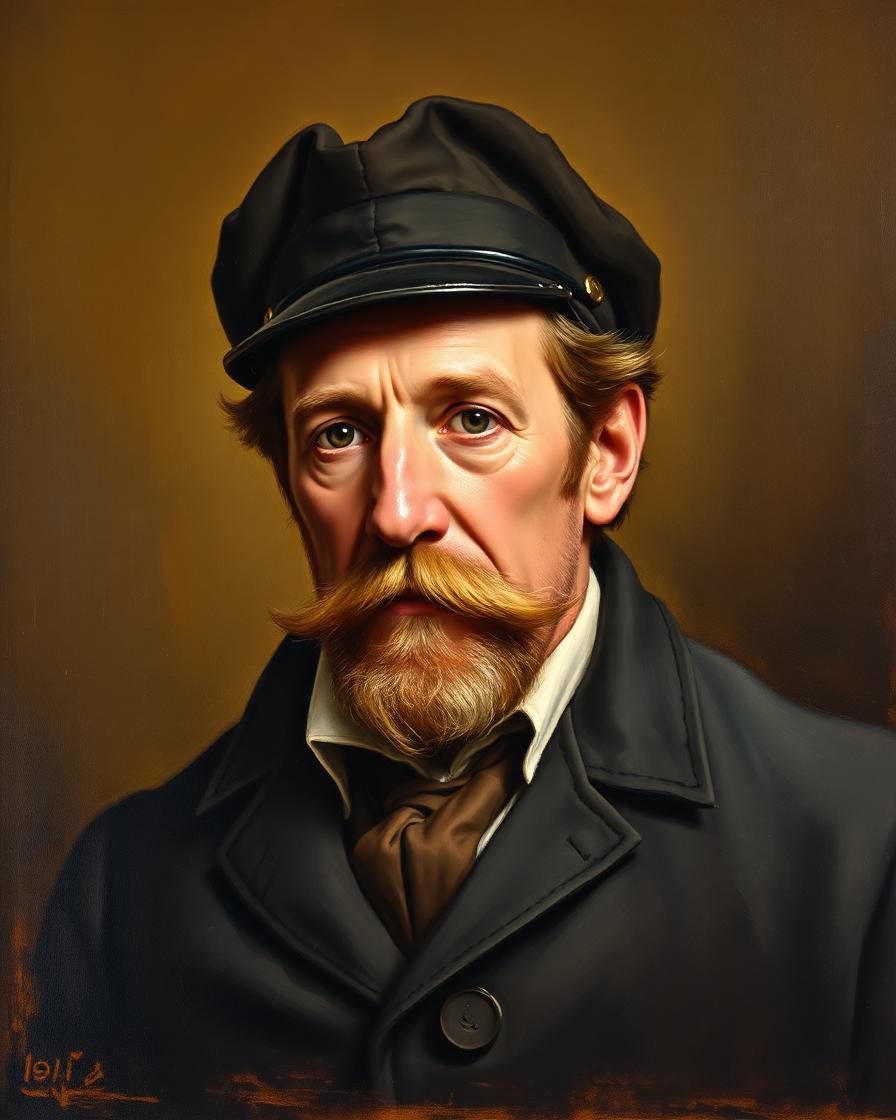
Quick Facts
- Years
- 1813 – 1873
- Category
- Explorers & Adventurers
- Nationality
- Scottish
- Occupation
- Missionary & Explorer
David Livingstone
1813 – 1873 · Scottish · Missionary & Explorer
Audiobook

Life Lessons from David Livingstone
Marcus Alden
David Livingstone was a Scottish physician, Protestant missionary, explorer, author, and antislavery campaigner whose journeys helped transform European knowledge of south-central Africa. Born into a working-class family in 1813, he combined factory labor with intensive study before training in medicine and joining the London Missionary Society. Between 1841 and his death in 1873, he traveled through regions then poorly mapped by Europeans, crossed southern Africa from the Atlantic to the Indian Ocean, publicized Mosi-oa-Tunya—renamed Victoria Falls by him—and investigated the Zambezi River system and the watersheds associated with the Nile and Congo.
Livingstone became one of Victorian Britain’s most celebrated public figures. His books and lectures brought African geography, commerce, missionary work, and the violence of the slave trade before a mass audience. His geographical conclusions were not always correct, and expeditions under his leadership suffered serious logistical and human costs. Moreover, his conviction that Christianity, commerce, and European influence would benefit Africa reflected paternalistic assumptions associated with his era.
Nevertheless, Livingstone’s journals provide important evidence about nineteenth-century African societies, environments, and long-distance trade. His reports strengthened British opposition to the East African slave trade, while his fame shaped later missionary, scientific, and imperial activity. He remains studied both for his remarkable endurance and humanitarian convictions and for the contradictions between exploration, mission, and empire.
Quick Facts
| Field | Details |
|---|---|
| Full Name | David Livingstone |
| Common Name(s) | David Livingstone; Dr. Livingstone |
| Born | 19 March 1813 |
| Died | 1 May 1873 |
| Age at Death | 60 |
| Birthplace | Blantyre, Lanarkshire, Scotland |
| Nationality | Scottish; British |
| Occupation | Missionary, physician, explorer, author, antislavery campaigner |
| Historical Era | Victorian era; nineteenth-century African exploration |
| Famous For | Crossing southern Africa; reporting Victoria Falls; exploring the Zambezi region; campaigning against the slave trade; Stanley’s search for him |
| Political Affiliation | None recorded |
| Religion | Congregationalist Protestant Christianity; missionary of the London Missionary Society until 1857 |
| Education | Anderson’s College, Glasgow; medical studies in Glasgow and London; licensed by the Faculty of Physicians and Surgeons of Glasgow |
| Parents | Neil Livingstone and Agnes Hunter Livingstone |
| Spouse(s) | Mary Moffat Livingstone, married 1845 |
| Children | Six: Robert, Agnes, Thomas, Elizabeth, William Oswell, and Anna Mary |
| Major Works | Missionary Travels and Researches in South Africa (1857); Narrative of an Expedition to the Zambesi and Its Tributaries (1865, with Charles Livingstone); journals published posthumously as The Last Journals of David Livingstone (1874) |
| Major Achievements | Transcontinental African journey; extensive mapping and scientific observation; European publication of Victoria Falls; Zambezi and Shire exploration; exposure of the East African slave trade |
Early Life
David Livingstone was born on 19 March 1813 in Blantyre, an industrial village on the River Clyde. His parents, Neil Livingstone and Agnes Hunter, raised their children in a crowded tenement connected to Henry Monteith’s cotton works. Neil, a tea salesman and committed Christian, distributed religious literature and emphasized morality, self-discipline, and education.
At ten, David began working as a cotton piecer. His factory day could extend from early morning until evening, yet he attended the works school and studied independently. Accounts of his youth describe him reading Latin, science, theology, and travel literature, sometimes placing a book on the spinning machinery so that he could read while working. The central point is well documented: his education was achieved alongside demanding industrial labor.
Livingstone developed interests that were not always comfortably aligned with his father’s outlook. Neil distrusted some scientific writing as irreligious; David came to believe that scientific investigation and Christianity could support one another. This synthesis became fundamental to his career.
After saving wages, Livingstone entered Anderson’s College in Glasgow in 1836. He studied medicine, chemistry, and anatomy while also receiving theological instruction. He initially hoped to serve in China, but the First Opium War made that plan impractical. The London Missionary Society accepted him, and he completed further medical and missionary preparation in London. Although he was not regarded as an especially gifted preacher, his medical abilities and determination were valuable qualifications.
In November 1840, Livingstone received a medical license from the Faculty of Physicians and Surgeons of Glasgow. He was ordained soon afterward and sailed for southern Africa in December. His formation reflected the historical forces of industrial Scotland, evangelical revival, expanding scientific inquiry, and Britain’s growing global reach.
Rise to Prominence
Livingstone arrived at Cape Town in March 1841 and continued north to Robert Moffat’s mission at Kuruman. Moffat, an experienced missionary, had spoken of populous regions farther inland where few missionaries worked. Livingstone was attracted by the prospect of moving beyond established stations.
He worked at Mabotsa among Tswana-speaking communities and survived a lion attack in 1844. The animal badly injured his left arm, producing lasting weakness. In 1845 he married Moffat’s daughter Mary, who had grown up in southern Africa and possessed linguistic and practical knowledge essential to missionary life.
Livingstone established or served at stations including Mabotsa, Chonuane, and Kolobeng. His principal African ally in this period was Sechele I, ruler of the Bakwena. Sechele converted to Christianity, although relations between missionary teaching and local political and marital customs were complicated. Livingstone made few formal converts and increasingly concluded that a fixed mission station was not his best field of work.
In 1849, traveling with William Cotton Oswell and African guides, Livingstone reached Lake Ngami. In 1851 he reached the upper Zambezi. These journeys persuaded him that river routes and wider commercial connections might weaken slave trading and open the interior to missionaries.
His defining journey began in 1853. With support from Sekeletu, ruler of the Makololo, and accompanied by African expedition members, Livingstone traveled from Linyanti westward to Luanda on the Atlantic coast. Rather than return by sea, he retraced his route and then traveled east along the Zambezi, reaching Quelimane on the Indian Ocean in 1856. He became the first known European to complete such a transcontinental crossing across southern Africa.
During that journey, in November 1855, local guides brought him to Mosi-oa-Tunya, “the Smoke That Thunders.” He named the waterfall Victoria Falls in honor of Queen Victoria. His return to Britain in late 1856 brought extraordinary fame. Missionary Travels and Researches in South Africa, published in 1857, became a bestseller and established him as an explorer, scientific observer, and moral advocate.
Major Achievements
The Transcontinental Crossing of Southern Africa
From 1853 to 1856, Livingstone traveled from the upper Zambezi region to Luanda and then eastward to Quelimane. The expedition relied heavily on African companions, guides, rulers, and trading networks. Livingstone’s own narrative sometimes gave greater prominence to the European traveler than to this collective infrastructure, a limitation modern historians emphasize.
The journey mattered because it connected geographical observations across a vast portion of the continent. Livingstone recorded rivers, elevations, diseases, plants, animals, political relationships, and trade. His measurements were imperfect, but they substantially expanded European cartographic knowledge.
Its long-term impact was mixed. The crossing inspired scientific and missionary interest, but the routes he hoped would sustain benevolent commerce did not immediately meet his expectations. Knowledge generated by exploration could also be used by imperial and commercial actors whose goals differed from his.
European Publication of Mosi-oa-Tunya
On 16 November 1855, Livingstone viewed Mosi-oa-Tunya on the Zambezi and renamed it Victoria Falls. He was neither its discoverer in any absolute sense nor the first person to know it; African communities had known the site for generations. He was, however, the first European known to describe it extensively and bring it to broad European attention.
His vivid account made the waterfall a symbol of African natural grandeur. Today the transboundary site in Zambia and Zimbabwe is recognized by UNESCO. Both names remain in use, and the naming history illustrates how exploration narratives could obscure existing African knowledge.
Mapping Rivers and Watersheds
Livingstone investigated the Zambezi, Shire, Lake Malawi—then called Lake Nyasa in European sources—and later lakes Mweru and Bangweulu. He used astronomical observations and carried scientific instruments, while recording geology, hydrology, flora, fauna, and disease.
The government-backed Zambezi Expedition of 1858–1864 established that the Kebrabasa, now Cahora Bassa, rapids obstructed easy navigation of the middle Zambezi. The expedition explored the Shire River and reached Lake Malawi in 1859. These findings corrected optimistic assumptions, including Livingstone’s own.
During his final expedition, he tried to identify the Nile’s sources. He mistakenly suspected that the Lualaba might flow north into the Nile; it is part of the Congo system. Although his principal hypothesis failed, his observations contributed to the eventual clarification of central African drainage.
Campaigning Against the Slave Trade
Livingstone regarded slave trading as a profound moral evil. He witnessed raids, captive caravans, devastated settlements, and the commercial networks linking the interior to coastal markets. His writings translated these observations into arguments for British audiences.
He promoted “Christianity, commerce, and civilization,” believing legitimate trade and missionary activity could replace slave-based commerce. The formula was morally serious but also paternalistic, treating European social and economic forms as universal solutions.
In 1871 he witnessed the aftermath of, or was present during, a massacre at Nyangwe in which armed traders and their followers killed many people in a market. His report, later publicized, intensified outrage. Historians caution that precise responsibility and casualty figures are difficult to establish, but the violence itself is well attested. His posthumous reputation helped build political pressure that contributed to Britain’s 1873 action against the Zanzibar slave market.
Influential Books and Journals
Missionary Travels combined autobiography, geography, natural history, ethnography, and antislavery argument. Its success allowed Livingstone to address audiences far beyond missionary circles.
The 1865 Narrative of an Expedition to the Zambesi and Its Tributaries, written with his brother Charles, documented the troubled government expedition. After Livingstone’s death, Horace Waller edited The Last Journals of David Livingstone in Central Africa.
These works remain important but must be read critically. They preserve detailed observations while reflecting Victorian racial hierarchies, missionary purposes, editorial choices, and an explorer-centered viewpoint.
Leadership and Work
Livingstone led through personal endurance, moral conviction, and willingness to share physical hardship. He walked long distances, treated illness, repaired equipment, took observations, and negotiated with African leaders. He preferred relatively small traveling parties and often opposed unnecessary violence.
His methods depended on African expertise. Figures such as Chuma and Susi interpreted languages, negotiated routes, managed supplies, and preserved his papers. Rulers including Sechele and Sekeletu supplied political support and personnel. Livingstone’s achievements cannot accurately be understood as solitary exploits.
His strongest qualities included courage, observational discipline, adaptability, and sustained opposition to slavery. He could earn loyalty from companions, and he often expressed respect for African intelligence and social organization beyond the prejudices common in European writing.
His weaknesses were equally consequential. He could be stubborn, secretive, impatient, and poor at administration. During the Zambezi Expedition he clashed with colleagues, including physician and naturalist John Kirk and artist Thomas Baines. He did not always communicate clear plans, and his confidence in the navigability and commercial potential of the Zambezi proved misplaced.
Livingstone also took severe risks with his own health and that of companions. His leadership worked better in mobile exploration than in a large, multidisciplinary government expedition requiring budgets, schedules, and institutional accountability.
Personal Life
Livingstone married Mary Moffat at Kuruman on 9 January 1845. Mary was the daughter of missionaries Robert and Mary Moffat. She shared difficult station life and periods of travel, but the marriage endured repeated long separations as David pursued exploration.
They had six children: Robert, Agnes, Thomas, Elizabeth, William Oswell, and Anna Mary. Elizabeth died in infancy. The children spent significant periods in Britain because travel and disease made family life in the interior dangerous. Livingstone loved his family, but his priorities imposed heavy costs on them. His letters reveal affection alongside guilt and an inability to abandon his vocation.
Mary joined the Zambezi Expedition in 1862 and died of fever at Shupanga on the Zambezi on 27 April. She was buried there. Her death deeply affected Livingstone, who wrote of her devotion and his grief.
Livingstone formed important friendships with William Cotton Oswell, James Young, and other supporters. His relationships with expedition colleagues were more uneven. Henry Morton Stanley met him at Ujiji in 1871 and supplied him, but Livingstone declined to leave Africa.
Physically, he endured malaria, dysentery, bleeding, malnutrition, and the lasting effects of the lion injury. He frequently used quinine and experimented with treatments. By his final years he was severely weakened, though he continued keeping notes whenever possible.
Philosophy and Beliefs
Livingstone’s worldview joined evangelical Christianity, medicine, science, exploration, and humanitarian reform. He viewed missionary service less as preaching alone than as healing, teaching, traveling, and opening routes for other workers.
His religious faith was persistent but not rigidly detached from evidence. He studied natural processes and rejected the idea that science necessarily threatened belief. His journals often framed perseverance as obedience to divine duty.
Ethically, opposition to slavery was the central public cause of his mature career. He believed economic alternatives could undermine slave trading. Yet his idea of “civilization” was distinctly Victorian and European. It assumed that Christianity, wage labor, commerce, and technological development represented progress for African societies.
He was not a party politician, nor did he formulate a systematic political theory. He often criticized Portuguese practices and slave-trading interests, while relying on British power to advance humanitarian goals. This confidence in British intervention helped connect his legacy to later imperial expansion, even though he did not advocate the colonial partition that followed after his death.
Challenges and Controversies
The Zambezi Expedition was Livingstone’s most conspicuous failure. Sponsored by the British government, it aimed to test navigation, promote trade, advance science, and support missions. Rapids blocked the intended route, steam vessels proved unsuitable in places, illness was persistent, and internal disputes damaged morale. The government recalled the expedition in 1863; it ended in 1864.
Critics considered Livingstone an ineffective commander who blamed others and failed to manage specialists. Defenders note the exceptional environmental difficulties, incomplete maps, unreliable technology, and conflicting official goals. Both interpretations have merit: conditions were formidable, but his management deficiencies worsened them.
His geographical judgment also failed in the search for the Nile. He discounted evidence favoring Lake Victoria and pursued waters that ultimately belonged to the Congo basin. The error illustrates both the limits of contemporary geographical knowledge and his attachment to a preferred theory.
Livingstone’s relationship to imperialism remains debated. Admirers distinguish his humanitarian and missionary intentions from later colonial conquest. Critics argue that his language of opening Africa, commercial development, and civilizational uplift helped legitimize European intervention. His information undeniably made regions more legible to outsiders, although the political partition of Africa accelerated after his death and cannot simply be attributed to him.
His fame also encouraged the myth of a lone white discoverer. African companions, hosts, and intellectual contributions were often minimized. Modern scholarship restores Chuma, Susi, Sechele, Sekeletu, guides, porters, and local informants to the story.
Finally, the famous Stanley greeting—“Dr. Livingstone, I presume?”—has uncertain documentary foundations. Stanley published it, but the relevant diary pages are missing, and Livingstone’s surviving account does not quote the phrase. It may be authentic, polished in retrospect, or invented.
Legacy
Livingstone died in Chief Chitambo’s village near Lake Bangweulu on 1 May 1873. Chuma, Susi, and their companions removed and buried his heart and internal organs, preserved his body, and carried it hundreds of miles to the coast. Returned to Britain, he was buried in Westminster Abbey on 18 April 1874.
His death intensified his status as a Protestant and humanitarian hero. Missionary societies invoked his example, geographical organizations honored his fieldwork, and antislavery activists used his testimony. His writings influenced public pressure surrounding the closure of Zanzibar’s open slave market in 1873, though that outcome resulted from many African and international actors.
Livingstone’s name survives in places and institutions, including the city of Livingstone in Zambia, the David Livingstone Birthplace museum in Blantyre, Scotland, and statues in Glasgow, Edinburgh, London, and near Victoria Falls. Westminster Abbey commemorates him, and sites associated with his travels are preserved across Africa.
Modern assessments are more critical than Victorian memorials. Museums and historians increasingly explain his dependence on African collaborators, the costs to his family and expeditions, his mistaken conclusions, and the relationship between missionary exploration and empire. He remains relevant because his life brings together industrialization, religion, science, African history, slavery, humanitarianism, celebrity culture, and colonial power.
Interesting Facts
- Livingstone began full-time cotton-mill work at the age of ten.
- He studied while employed and used his wages to finance higher education.
- His first intended mission field was China, not Africa.
- A lion attack in 1844 permanently damaged his left arm.
- He married Mary Moffat, who had been raised in southern Africa.
- Sechele I was his most prominent convert and later spread Christianity independently.
- Livingstone reached Lake Ngami in 1849 with William Cotton Oswell and African guides.
- He crossed southern Africa from the Atlantic to the Indian Ocean between 1853 and 1856.
- He named Mosi-oa-Tunya “Victoria Falls” in 1855.
- Missionary Travels became a major Victorian bestseller.
- He resigned from the London Missionary Society in 1857 after disagreements over his exploratory role.
- The British government funded his Zambezi Expedition.
- Mary Livingstone died beside the Zambezi in 1862.
- Livingstone met Henry Morton Stanley at Ujiji in 1871.
- He refused Stanley’s invitation to return immediately to Europe.
- He incorrectly believed the Lualaba might be connected to the Nile.
- His final field notebooks included writing across old newspaper pages because paper was scarce.
- Chuma and Susi helped preserve his journals and return his body to the coast.
- His heart was buried in Africa, while his embalmed body was buried in Westminster Abbey.
- His surname is spelled “Livingstone,” with an final “e.”
Famous Quotes
-
“I will open up a path into the interior, or perish.” Written in a letter in 1853 as he prepared for wider exploration. It expresses his determination, although “opening” language also reflects the outsider-centered assumptions of the period.
-
“The smoke does at times assume the form of columns, and they are left at a slant by the wind.” From his description of Mosi-oa-Tunya in Missionary Travels. It records his attempt to explain the waterfall’s immense spray.
-
“Scenes so lovely must have been gazed upon by angels in their flight.” From his published account of the falls. It conveys Victorian religious awe rather than a claim that the landscape was previously unknown.
-
“The end of the geographical feat is only the beginning of the enterprise.” Associated with his 1857 public address at Cambridge. He meant exploration should lead to missionary and humanitarian work.
-
“I go back to Africa to try to make an open path for commerce and Christianity.” From his Cambridge address. It summarizes his proposed alliance of trade and mission.
-
“I am prepared to go anywhere, provided it be forward.” Recorded in Missionary Travels in connection with his plans. It has become a concise statement of his persistence.
-
“All I can add in my loneliness, is, may Heaven’s rich blessing come down on every one—American, English, or Turk—who will help to heal this open sore of the world.” Written at Ujiji in 1871 concerning the slave trade. The words were later inscribed on his Westminster Abbey memorial.
-
“We ought to encourage the Africans to cultivate for our markets, as the most effectual means, next to the Gospel, of their elevation.” From Missionary Travels. It illustrates both his antislavery economic strategy and his paternalistic conception of development.
-
“I shall open up a path to the interior, or perish.” A common variant of his 1853 wording. It should not be treated as a separate quotation.
-
“Dr. Livingstone, I presume?” Attributed to Henry Morton Stanley, not Livingstone, at Ujiji in 1871. Its authenticity is disputed because Stanley’s immediate diary evidence is missing and Livingstone did not record the exact words.
Timeline
- 1813 — Born at Blantyre, Scotland, on 19 March.
- 1823 — Begins work in the local cotton mill.
- 1836 — Enters Anderson’s College in Glasgow.
- 1838 — Accepted for missionary preparation by the London Missionary Society.
- 1840 — Receives his medical license, is ordained, and sails for southern Africa.
- 1841 — Arrives at Cape Town and travels to Kuruman.
- 1844 — Seriously injured by a lion at Mabotsa.
- 1845 — Marries Mary Moffat.
- 1847 — Establishes work at Kolobeng among the Bakwena.
- 1849 — Reaches Lake Ngami.
- 1851 — Reaches the upper Zambezi.
- 1852 — Sends Mary and their children to Britain.
- 1853 — Leaves Linyanti for the Atlantic coast.
- 1854 — Reaches Luanda.
- 1855 — Views Mosi-oa-Tunya and names it Victoria Falls.
- 1856 — Reaches Quelimane and returns to Britain.
- 1857 — Publishes Missionary Travels; resigns from the London Missionary Society.
- 1858 — Begins the British government’s Zambezi Expedition.
- 1859 — Expedition reaches Lake Malawi.
- 1862 — Mary Livingstone dies at Shupanga.
- 1863 — Government recalls the Zambezi Expedition.
- 1864 — Returns to Britain.
- 1865 — Publishes the Zambezi expedition narrative with Charles Livingstone.
- 1866 — Lands at Zanzibar and begins his final expedition.
- 1867 — Reaches Lake Mweru.
- 1868 — Reaches Lake Bangweulu.
- 1869 — Arrives at Ujiji and explores around Lake Tanganyika.
- 1871 — Witnesses violence at Nyangwe; meets Henry Morton Stanley at Ujiji.
- 1872 — Continues searching in the Bangweulu region despite severe illness.
- 1873 — Dies at Chitambo’s village on 1 May.
- 1874 — Buried in Westminster Abbey; his final journals are published.
Frequently Asked Questions
Who was David Livingstone?
David Livingstone was a Scottish missionary, trained physician, explorer, author, and antislavery campaigner. From 1841 until 1873 he worked and traveled mainly in southern and central Africa. He became famous for crossing the continent from the Atlantic to the Indian Ocean, describing major river and lake systems for European audiences, and denouncing slave trading. Although often depicted as a solitary explorer, he relied on African guides, diplomats, porters, rulers, and colleagues. His career is historically important both for its scientific and humanitarian dimensions and for its connections to Victorian assumptions about commerce, Christianity, and civilization.
When and where was David Livingstone born?
He was born on 19 March 1813 in Blantyre, Lanarkshire, Scotland. His family lived in housing associated with a cotton mill on the River Clyde. The industrial setting shaped his early life: he started mill work at ten while pursuing education in evening classes and through private reading. His rise from child factory worker to physician and internationally known traveler later became a central element of his Victorian reputation.
Why did Livingstone go to Africa?
Livingstone went primarily as a Christian medical missionary under the London Missionary Society. He had first hoped to work in China, but war prevented that plan. In southern Africa he became convinced that mobile exploration could identify locations for missions and establish commercial routes capable of challenging the slave trade. Religious duty remained central, but medicine, geography, natural science, and humanitarian reform increasingly became inseparable parts of his vocation.
Was Livingstone the first person to discover Victoria Falls?
No. African communities knew the waterfall long before Livingstone arrived, and local people guided him there. The site was known as Mosi-oa-Tunya, usually translated as “the Smoke That Thunders.” Livingstone became the first European known to describe it extensively and publicize it internationally. His renaming of it as Victoria Falls reflected European imperial naming practices. Today both names are widely recognized, with Mosi-oa-Tunya emphasizing the site’s indigenous history.
What was Livingstone’s greatest journey?
His 1853–1856 transcontinental journey is usually considered his greatest geographical achievement. Starting near Linyanti, he traveled west to Luanda on the Atlantic, returned inland, and then followed the Zambezi system east to Quelimane on the Indian Ocean. The journey assembled observations across southern Africa into a connected geographical account. Its success depended on African companions and political support, especially from Sekeletu and the Makololo.
What did Livingstone accomplish as a missionary?
Measured by formal conversions, his record was limited. Sechele I of the Bakwena was his best-known convert, although Sechele’s later Christianity developed independently of Livingstone’s control. Livingstone came to see himself as a pioneer who would identify routes and locations for later missions. His broader missionary influence was substantial because his books inspired organizations and individuals, but permanent institutions were generally founded by those who followed him rather than by Livingstone himself.
Why did he oppose the slave trade?
Livingstone’s Christian convictions led him to regard slavery and slave trading as grave violations of human dignity. During his travels he saw captives, raids, abandoned settlements, and deaths associated with long-distance trafficking. He believed legitimate commerce and missionary influence could undermine the trade’s economic foundations. His testimony affected British public opinion, although his proposed solution also carried paternalistic assumptions about European commerce and culture.
What was the Zambezi Expedition?
The Zambezi Expedition was a British government-sponsored scientific and commercial mission led by Livingstone from 1858 to 1864. It explored the Zambezi and Shire rivers and reached Lake Malawi. Its central hope—that the Zambezi would provide a practical highway into the interior—was frustrated by rapids and difficult conditions. Disease, unsuitable vessels, supply problems, and conflicts among personnel compounded the difficulties. It produced valuable knowledge but was judged an administrative and strategic failure.
Did Livingstone find the source of the Nile?
No. During his final expedition, Livingstone investigated lakes and rivers in central Africa while trying to solve the Nile-source question. He believed the Lualaba might flow toward the Nile, but it is actually part of the Congo River system. His data still aided later geographical work, yet his main conclusion was wrong. The error demonstrates how fragmentary information and commitment to a favored hypothesis can shape exploration.
Did Stanley really say “Dr. Livingstone, I presume?”
Possibly, but the phrase cannot be confirmed with certainty. Henry Morton Stanley later reported using it when he met Livingstone at Ujiji in November 1871. However, pages from Stanley’s diary covering the meeting are absent, and Livingstone’s surviving journal does not record the exact greeting. Scholars therefore treat it as disputed: it may be genuine, a polished recollection, or a memorable invention that captured Victorian ideas of British reserve.
Who were Chuma and Susi?
Chuma and Abdullah Susi were leading African members of Livingstone’s final expedition. They served as experienced travelers, interpreters, organizers, and intermediaries. After Livingstone died, they and their companions preserved his body and papers and transported them from central Africa toward the coast. They later assisted Horace Waller in interpreting the journals. Their role challenges older accounts that treated Livingstone’s work as an individual European achievement.
How did David Livingstone die?
Livingstone died on 1 May 1873 at Chief Chitambo’s village near Lake Bangweulu, in present-day Zambia. He had suffered repeated malaria and dysentery, severe weakness, bleeding, and malnutrition. His attendants reportedly found him dead beside his bed in a kneeling posture, though later retellings added devotional symbolism. The underlying cause is generally described as complications of malaria and internal bleeding associated with dysentery.
Where is Livingstone buried?
His body is buried in Westminster Abbey, London, where it was interred on 18 April 1874. Before preservation and transport, his companions removed his internal organs and buried them near the place of his death. This gave rise to the statement that his heart remained in Africa while his body returned to Britain. A memorial at the African burial site commemorates the event.
How many children did Livingstone have?
David and Mary Livingstone had six children: Robert, Agnes, Thomas, Elizabeth, William Oswell, and Anna Mary. Elizabeth died as an infant. The family frequently lived apart because of David’s expeditions and the health risks of inland travel. Their son Robert later went to the United States, joined the Union Army during the Civil War under an assumed name, was wounded, and died in 1864.
Was Livingstone an imperialist?
The answer depends on definition and requires nuance. Livingstone opposed slavery and did not plan the later territorial conquest of Africa. He often sought cooperative relationships with African rulers. Yet he promoted British commerce, Christianity, and European “civilization,” and described regions as needing to be opened to outside influence. His writings and maps helped create conditions later used by imperial actors. Historians therefore often treat him as a humanitarian whose ideas nevertheless participated in an imperial culture.
What books did Livingstone write?
His most famous book is Missionary Travels and Researches in South Africa (1857), an account of his early missionary career and transcontinental journey. With his brother Charles, he published Narrative of an Expedition to the Zambesi and Its Tributaries (1865). After his death, Horace Waller edited his field records as The Last Journals of David Livingstone in Central Africa (1874). All are valuable primary sources, but they should be read alongside African-centered scholarship.
Why is David Livingstone still important?
Livingstone remains important because his life connects several major nineteenth-century histories: evangelical mission, antislavery activism, geographical science, industrial social mobility, African-European encounters, and imperial expansion. His records preserve observations from regions undergoing major political and commercial change. At the same time, reassessing his fame reveals how European narratives marginalized African knowledge and labor. He is therefore studied as both an extraordinary individual and a representative of the contradictions of Victorian humanitarianism.
Lessons We Can Learn
-
Education can coexist with hardship. Livingstone studied after long factory shifts. His example shows how disciplined learning can expand opportunities, while also reminding modern societies to reduce barriers faced by working students.
-
Fieldwork depends on local knowledge. African guides and companions made his journeys possible. Researchers today should credit community expertise rather than presenting outsiders as lone discoverers.
-
Moral commitment requires evidence. Livingstone’s antislavery advocacy drew force from recorded observations. Effective reform combines ethical clarity with credible documentation.
-
Endurance is not enough. His persistence carried him across a continent, but stubbornness contributed to errors during the Nile search. Determination works best when paired with willingness to revise assumptions.
-
Technical plans must face physical reality. The Zambezi Expedition failed partly because its commercial expectations underestimated rapids, disease, and seasonal conditions. Ambitious projects need rigorous feasibility testing.
-
Leadership requires administration. Livingstone inspired loyalty but managed teams inconsistently. Modern leaders need communication, delegation, budgeting, and conflict resolution in addition to vision.
-
Good intentions can have unintended consequences. His humanitarian program helped stimulate missionary work but also language later associated with empire. Ethical actors should examine how others may use their ideas and information.
-
Families bear the cost of public achievement. Mary and the children experienced separation, illness, and insecurity. Historical success should not conceal unpaid emotional and domestic sacrifices.
-
Correcting the record strengthens history. Recognizing Mosi-oa-Tunya and collaborators such as Chuma and Susi does not erase Livingstone. It produces a more accurate, inclusive explanation of exploration.
-
Admitting failure is part of scientific progress. His Nile theory was wrong, but his observations remained useful. Good inquiry preserves data, distinguishes evidence from interpretation, and enables later correction.
Related Historical Figures
- Mary Moffat Livingstone (1821–1862) — His wife, fellow missionary, and mother of their six children; her experience reveals the family costs of his career.
- Robert Moffat (1795–1883) — Veteran missionary and Livingstone’s father-in-law, whose reports encouraged him to work farther north.
- Sechele I (c. 1812–1892) — Bakwena ruler, ally, and convert who adapted and propagated Christianity on his own terms.
- Sekeletu (c. 1835–1863) — Makololo ruler who supported Livingstone’s transcontinental expedition with personnel and resources.
- William Cotton Oswell (1818–1893) — Explorer, sportsman, and friend who accompanied Livingstone to Lake Ngami.
- John Kirk (1832–1922) — Physician and naturalist on the Zambezi Expedition; later a diplomat influential in antislavery policy at Zanzibar.
- Thomas Baines (1820–1875) — Artist and explorer dismissed from the Zambezi Expedition after a dispute with Livingstone.
- Henry Morton Stanley (1841–1904) — Journalist-explorer who found Livingstone at Ujiji and turned their meeting into a global media event.
- Chuma (c. 1830s–1882) — Long-serving expedition member who helped preserve Livingstone’s records and transport his body.
- Abdullah Susi (c. 1820s–1891) — Guide and expedition leader whose testimony was essential to reconstructing Livingstone’s final travels.
Related Historical Figures