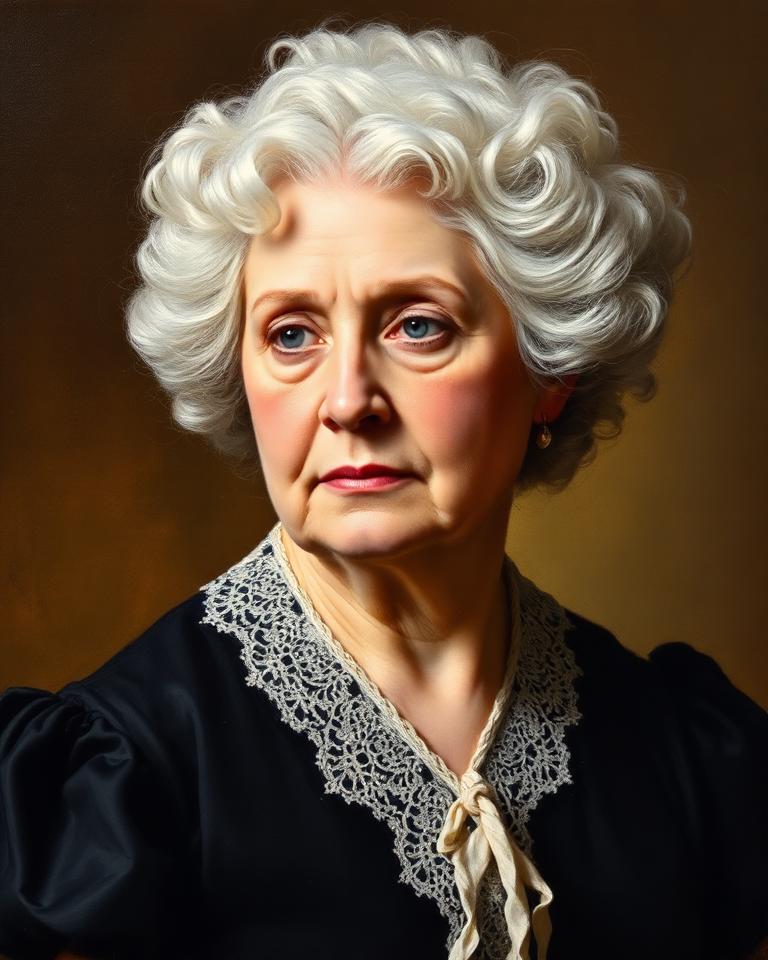
Quick Facts
- Years
- 1815 – 1902
- Category
- Social Reformers & Humanitarians
- Subcategory
- Social Reformers & Humanitarians
- Nationality
- American
- Occupation
- Suffragist and Social Activist
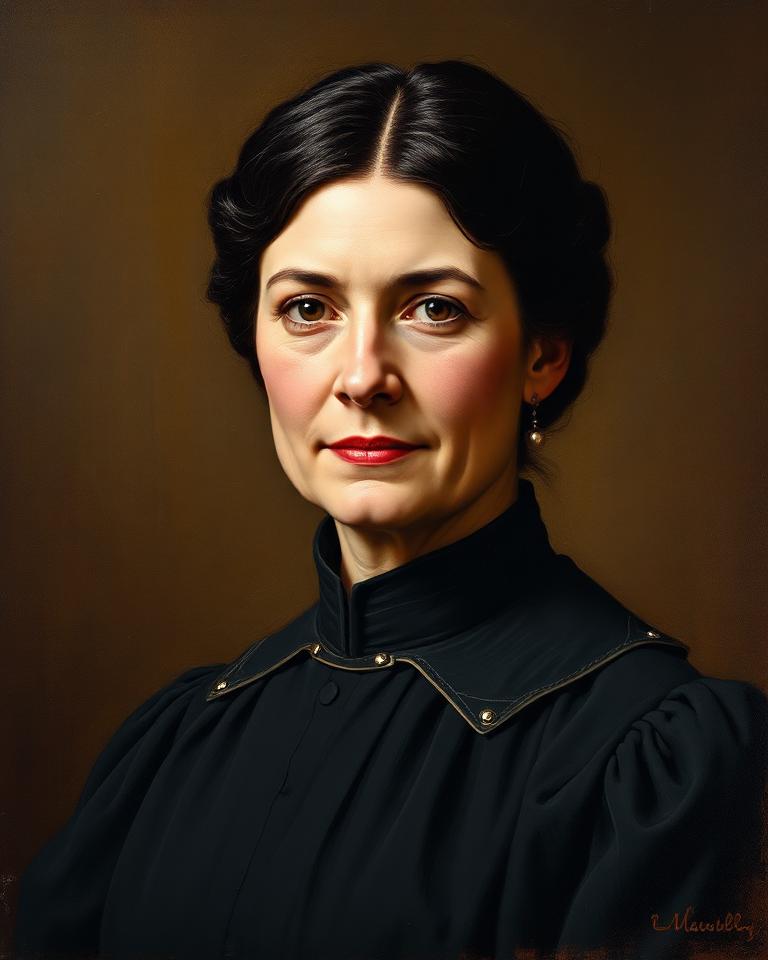
Elizabeth Cady Stanton
1815 – 1902 · American · Suffragist and Social Activist
Audiobook

Life Lessons from Elizabeth Cady Stanton
Marcus Alden · 53 min
Elizabeth Cady Stanton was a leading American suffragist, abolitionist, writer, and social reformer whose ideas helped define the nineteenth-century movement for women's rights. Born in 1815, she challenged laws and customs that denied women independent legal identities, property rights, educational opportunities, and political power. Her most famous early achievement was helping organize the 1848 Seneca Falls Convention and drafting its Declaration of Sentiments, which proclaimed that “all men and women are created equal” and demanded voting rights for women.
For more than half a century, Stanton supplied arguments, speeches, organizational leadership, and historical interpretation to the movement. Her partnership with Susan B. Anthony became one of the most consequential collaborations in American reform history: Stanton was often the principal writer and theorist, while Anthony excelled at organizing and campaigning. Stanton also advocated reforms in marriage, divorce, property law, and religion, making her agenda broader—and sometimes more controversial—than suffrage alone.
Her record was not without serious flaws. During disputes following the Civil War, she used racist and nativist rhetoric while opposing Black male suffrage without simultaneous enfranchisement for women. Historians therefore study her both as a foundational feminist thinker and as an example of the exclusions and prejudices within reform movements. Her work remains central to debates about citizenship, equality, family law, religion, and political strategy.
Quick Facts
| Field | Details |
|---|---|
| Full Name | Elizabeth Cady Stanton |
| Common Name(s) | Elizabeth Cady Stanton; Elizabeth Stanton |
| Born | November 12, 1815 |
| Died | October 26, 1902 |
| Age at Death | 86 |
| Birthplace | Johnstown, New York, United States |
| Nationality | American |
| Occupation | Suffragist, social activist, abolitionist, writer, lecturer |
| Historical Era | Antebellum reform era, Civil War, Reconstruction, Gilded Age |
| Famous For | Organizing the Seneca Falls Convention; drafting the Declaration of Sentiments; leading the women's suffrage movement |
| Political Affiliation if applicable | Republican ally during the Civil War era; later associated chiefly with independent reform organizations rather than a party |
| Religion if significant | Raised in a Protestant environment; later a prominent critic of orthodox Christianity and patriarchal biblical interpretation |
| Education | Johnstown Academy; Troy Female Seminary (later Emma Willard School) |
| Parents | Daniel Cady and Margaret Livingston Cady |
| Spouse(s) | Henry Brewster Stanton (married 1840; died 1887) |
| Children | Seven: Daniel, Henry, Gerrit Smith, Theodore, Margaret, Harriot, and Robert |
| Major Works | Declaration of Sentiments; History of Woman Suffrage (co-editor/co-author); The Woman's Bible; Eighty Years and More |
| Major Achievements | Seneca Falls Convention; leadership of the National Woman Suffrage Association; advocacy for married women's property rights; first female candidate for the U.S. House of Representatives |
Early Life
Elizabeth Cady was born in Johnstown, New York, the eighth of eleven children of lawyer and politician Daniel Cady and Margaret Livingston Cady. Several siblings died young, and the deaths of the family's sons deeply affected the household. According to Stanton's later recollections, her father lamented after one son's death that he wished Elizabeth had been a boy. She responded by striving to excel intellectually and physically. Because this story comes largely from her autobiography, historians treat its exact wording cautiously, but it reflects the gender constraints she experienced.
Daniel Cady served in Congress and became a New York judge. His law office gave Elizabeth unusual exposure to legal rules governing women. She listened to women seeking help under laws that gave husbands extensive control over wives' property, earnings, and children. Her father's law clerks, including future reformer Gerrit Smith, encouraged her studies.
At Johnstown Academy, she studied subjects often reserved for boys, including Greek, Latin, and mathematics, and won academic honors. Colleges generally excluded women, so she attended Emma Willard's Troy Female Seminary, one of the nation's leading schools for women. Although rigorous, it could not confer the collegiate opportunities available to men.
A youthful religious revival also influenced her. The preaching of Charles Grandison Finney frightened her with visions of sin and damnation. Her family helped her recover from the resulting distress, and she gradually rejected fear-based theology. This experience later informed her criticism of religious teachings that represented women's subordination as divinely ordained.
Rise to Prominence
Through her cousin Gerrit Smith, Stanton entered abolitionist circles. At Smith's home she met Henry Brewster Stanton, an antislavery lecturer and organizer. They married in 1840. She insisted that the word “obey” be omitted from the ceremony, an early expression of her views on marital equality.
The couple traveled to London for the World Anti-Slavery Convention. British organizers refused to seat female American delegates, including Lucretia Mott, because they were women. Stanton, attending as Henry's wife rather than as a delegate, bonded with Mott over the insult and discussed holding a convention on women's rights.
After several years in Boston, the Stantons settled in Seneca Falls, New York. Elizabeth experienced the isolation and exhausting domestic labor faced by mothers in relatively secluded households. In July 1848, she met Mott and other Quaker reformers at nearby Waterloo. Their conversation produced a call for a convention to discuss women's “social, civil, and religious condition and rights.”
At the Seneca Falls Convention on July 19–20, Stanton presented the Declaration of Sentiments. Modeled on the Declaration of Independence, it listed grievances concerning education, employment, property, marriage, religion, and politics. Its most controversial resolution demanded women's suffrage. Frederick Douglass supported the proposal, which passed. Newspaper ridicule made the convention nationally famous and made Stanton one of the most visible advocates of women's rights.
Major Achievements
The Seneca Falls Convention and Declaration of Sentiments
Stanton helped organize the 1848 gathering widely recognized as the first women's rights convention in the United States, although earlier activists had advanced related demands. Approximately 300 people attended, and 100 signed the declaration.
The document transformed private experiences into political grievances. By adapting the nation's founding language, Stanton argued that women's equality followed from American principles themselves. Its suffrage demand helped move voting rights toward the center of the movement's program.
Reform of Married Women's Legal Status
Stanton campaigned for laws allowing married women to own property, retain earnings, make contracts, and exercise stronger parental rights. New York's Married Women's Property Act of 1848 preceded the Seneca Falls Convention, but later expansions—especially the 1860 law—emerged from years of advocacy by Stanton and many others.
She did not secure these changes alone, and some provisions were later revised or limited. Nevertheless, her speeches and petitions helped expose the common-law doctrine of coverture, under which a married woman's legal identity was substantially absorbed into her husband's. Such reforms contributed to women's later economic and civic independence.
Partnership with Susan B. Anthony
Stanton met Susan B. Anthony in 1851 through Amelia Bloomer. Their partnership lasted more than five decades. Stanton, frequently constrained by pregnancy and childcare, wrote speeches, resolutions, and articles; Anthony traveled, organized meetings, gathered petitions, and delivered arguments to audiences.
This division of labor was neither absolute nor always harmonious, but it was highly effective. Together they built enduring networks, kept suffrage in public debate, and linked legal theory with grassroots organization.
Women's Loyal National League
During the Civil War, Stanton and Anthony founded the Women's Loyal National League in 1863. It organized a massive petition campaign demanding a constitutional amendment abolishing slavery. The league reportedly collected about 400,000 signatures and demonstrated women's capacity for national political mobilization despite their exclusion from voting.
The Thirteenth Amendment resulted from many military, political, and abolitionist forces, not from this campaign alone. Even so, the league connected women's activism to constitutional change and trained organizers for later suffrage work.
National Woman Suffrage Association
In 1869 Stanton and Anthony founded the National Woman Suffrage Association, partly in response to divisions over the proposed Fifteenth Amendment. Stanton became its first president. The NWSA favored a federal constitutional amendment and pursued a broad women's rights agenda, including changes to marriage and divorce law.
The rival American Woman Suffrage Association supported the Fifteenth Amendment and often emphasized state campaigns. The organizations reunited in 1890 as the National American Woman Suffrage Association, with Stanton as its first president. This institutional lineage contributed to the eventual ratification of the Nineteenth Amendment in 1920.
First Woman to Seek Federal Office
In 1866 Stanton declared herself a candidate for the U.S. House of Representatives from New York's Eighth Congressional District. The Constitution did not explicitly require officeholders to be voters, although women could not vote in New York. She received 24 votes.
The campaign was symbolic rather than electorally viable, but it challenged assumptions about women's eligibility for public leadership. She is generally identified as the first woman to run for the U.S. House.
Publishing and Preserving Movement History
Stanton and Anthony published the weekly newspaper The Revolution from 1868 to 1870, using the motto “Men, their rights, and nothing more; women, their rights, and nothing less.” Its broad agenda included suffrage, labor, marriage, and political questions, though financial problems ended their control.
With Anthony and Matilda Joslyn Gage, Stanton also initiated the multivolume History of Woman Suffrage. It preserved documents and firsthand accounts that might otherwise have disappeared. Scholars note, however, that its authors shaped the story around their own organizations and disputes, so it is invaluable but not neutral.
Challenging Patriarchal Religious Interpretation
Stanton and collaborators published The Woman's Bible in two parts in 1895 and 1898. It was not a new Bible translation but a commentary criticizing passages and interpretations used to justify women's subordination.
Many suffragists feared it would alienate religious supporters. The National American Woman Suffrage Association formally distanced itself from the project in 1896. Despite this rejection, the work became important to later feminist criticism of religion and demonstrated Stanton's willingness to address foundations of inequality beyond voting law.
Leadership and Work
Stanton led primarily through writing, public argument, convention strategy, and intellectual provocation. She possessed a talent for turning complex legal and social complaints into memorable statements. Rather than seeking only one reform, she treated voting rights, education, employment, marriage, motherhood, property, and religion as connected systems.
Her partnership with Anthony showed her collaborative strength. Stanton valued Anthony's discipline and mobility; Anthony relied on Stanton's rhetorical gifts. Lucretia Mott, Martha Coffin Wright, Matilda Joslyn Gage, and other reformers also influenced her work. Frederick Douglass was an important ally, especially at Seneca Falls, although Reconstruction-era suffrage disputes severely strained their relationship.
Her strengths included intellectual boldness, persistence, wit, and strategic use of American political language. Her weaknesses included impatience with compromise, a tendency toward sweeping claims, and rhetoric that could injure allies. She sometimes prioritized educated, native-born women in ways that contradicted universal equality. Her leadership was therefore visionary but not consistently inclusive.
Personal Life
Elizabeth and Henry Stanton had seven children between 1842 and 1859. Henry's work as a lawyer, politician, journalist, and antislavery speaker often took him away from home. Elizabeth managed a large household while continuing to write and organize. She sometimes described motherhood as both deeply meaningful and socially confining.
The marriage endured until Henry's death in 1887 but involved political disagreements and periods of separation caused by work. Stanton retained her birth surname as part of “Elizabeth Cady Stanton,” an unusual public choice that preserved her family identity. She opposed legal and religious doctrines that made wives subordinate, while her own marriage included both partnership and tension.
Her closest political friendship was with Susan B. Anthony, who sometimes helped care for the Stanton children while working with Elizabeth. Stanton was sociable, humorous, intellectually confident, and fond of lively conversation. Family recollections describe a busy household in which political work and domestic life overlapped.
In later years she traveled and lectured extensively, including in Europe, and spent increasing time with her adult children. She became less mobile with age and was significantly overweight, but continued writing. She died of heart failure at her New York City home on October 26, 1902, eighteen years before nationwide woman suffrage became constitutional law.
Philosophy and Beliefs
Stanton believed that individual rights belonged to women as autonomous human beings, not merely as wives or mothers. Natural-rights philosophy and the Declaration of Independence strongly shaped her thought. She argued that government without women's consent lacked full legitimacy.
Her feminism extended into private life. She criticized coverture, unequal divorce rules, compulsory maternity, and husbands' control of children and property. Some of her views on divorce and reproductive self-determination were far more radical than those of mainstream suffrage organizations.
Religiously, Stanton moved away from orthodox Protestant belief. She regarded interpretations of scripture that sanctified female obedience as major barriers to equality. Her criticism focused both on texts and on male-controlled institutions, though it offended believers who saw faith as compatible with women's rights.
Her political worldview contained contradictions. She supported abolition and helped campaign against slavery. Yet during Reconstruction she objected to enfranchising Black men while women remained excluded and used racist, classist, and anti-immigrant comparisons. These statements cannot be reconciled with universal equality and are essential to an honest assessment of her thought.
Challenges and Controversies
Stanton faced ridicule, hostile clergy, restrictive laws, financial difficulties, and the demands of raising seven children. Advocacy of suffrage and divorce reform was often portrayed as an attack on family and social order. Her broad program made coalition-building difficult.
The most consequential controversy arose over the Fourteenth and Fifteenth Amendments. Stanton and Anthony opposed accepting Black male suffrage without woman suffrage. Other reformers, including Lucy Stone and Frederick Douglass, argued that Black men's immediate vulnerability made the Fifteenth Amendment an urgent advance that should be supported while work for women continued.
Stanton's rhetoric in this conflict included derogatory references to Black men, immigrants, and uneducated voters. Defenders sometimes emphasize her anger at women's continued exclusion and her earlier antislavery record. Critics respond that strategic frustration does not excuse appeals to racial hierarchy. Most modern scholarship recognizes both her major contributions and the genuine harm of these statements.
Her association with George Francis Train created another dispute. Train financed The Revolution and supported women's suffrage, but he was an outspoken racist and political provocateur. Stanton and Anthony's willingness to work with him alienated former allies.
The Woman's Bible generated conflict near the end of Stanton's career. Supporters considered it a courageous critique of religious patriarchy; opponents believed it misrepresented scripture or endangered suffrage. NAWSA repudiated the project, revealing Stanton's growing distance from the movement's more cautious leadership.
Her historical writing also shaped movement memory in partisan ways. The History of Woman Suffrage elevated the NWSA tradition and gave less attention to rivals and Black women activists. Historians use it critically alongside other records.
Legacy
Stanton helped establish a language of women's equality that outlived her. The Nineteenth Amendment, ratified in 1920, realized her central political demand, though discriminatory laws and violence continued to prevent many Black, Indigenous, Asian American, and Latina women from voting freely.
Her broader agenda anticipated later campaigns concerning family law, workplace opportunity, reproductive autonomy, and gender within religion. Scholars continue to debate whether she should be understood principally as a liberal rights theorist, a radical critic of patriarchy, or a reformer whose racial and class prejudices limited her universalism. Each interpretation illuminates part of her record.
Her Seneca Falls home is preserved within Women's Rights National Historical Park in New York. The park also interprets the Wesleyan Chapel and sites associated with the M'Clintock and Hunt families. Stanton is represented in Adelaide Johnson's Portrait Monument in the U.S. Capitol alongside Susan B. Anthony and Lucretia Mott. A statue depicting Stanton, Anthony, and Sojourner Truth was unveiled in New York City's Central Park in 2020.
Her papers, speeches, and books remain widely taught. Modern commemoration increasingly places her achievements beside the contributions of Black women and other activists whom older suffrage histories marginalized. That fuller perspective makes her legacy more complicated, but also more historically useful.
Interesting Facts
- Stanton was one of eleven children, several of whom died in childhood.
- She studied Greek, Latin, and mathematics at Johnstown Academy.
- Colleges open to men generally would not admit her.
- She met Lucretia Mott at the 1840 World Anti-Slavery Convention in London.
- She asked that “obey” be omitted from her marriage vows.
- She drafted the principal version of the Declaration of Sentiments.
- Women's suffrage was the most disputed resolution at Seneca Falls.
- Frederick Douglass spoke in favor of that suffrage resolution.
- Amelia Bloomer introduced Stanton to Susan B. Anthony in 1851.
- Stanton raised seven children while sustaining a national reform career.
- She became the first president of the National Woman Suffrage Association.
- Her 1866 congressional candidacy earned 24 votes.
- She testified before congressional committees on women's suffrage.
- She and Anthony founded the newspaper The Revolution.
- She helped produce the first three volumes of History of Woman Suffrage.
- She was the first president of the reunited NAWSA.
- The Woman's Bible was commentary, not a translation of scripture.
- She died before the Nineteenth Amendment was ratified.
Famous Quotes
- “We hold these truths to be self-evident: that all men and women are created equal.” — Declaration of Sentiments (1848). The revision of the Declaration of Independence asserted that national ideals applied to women.
- “The history of mankind is a history of repeated injuries and usurpations on the part of man toward woman.” — Declaration of Sentiments (1848). It introduced a list of legal, political, and social grievances.
- “Now, in view of this entire disfranchisement of one-half the people of this country...” — Declaration of Sentiments (1848). Stanton framed women's exclusion as a problem of representative government.
- “The isolation of every human soul and the necessity of self-dependence must give each individual the right to choose his own surroundings.” — “The Solitude of Self” (1892). She argued for women's rights on the basis of individual responsibility and vulnerability.
- “No matter how much women prefer to lean, to be protected and supported...” — “The Solitude of Self” (1892). The passage insists that every person ultimately confronts life's trials individually.
- “Self-development is a higher duty than self-sacrifice.” — Stanton's address “The Solitude of Self” (1892). It challenged ideals that defined female virtue only through service to others.
- “The Bible and the Church have been the greatest stumbling blocks in the way of women's emancipation.” — Commonly documented in Stanton's later religious criticism and associated with The Woman's Bible era. It summarizes her controversial view of institutional religion.
- “The prolonged slavery of woman is the darkest page in human history.” — The Woman's Bible (1895–1898). It expresses her sweeping critique of patriarchal authority; its analogy between women's status and slavery remains controversial.
- “Come, come, my conservative friend, wipe the dew off your spectacles, and see that the world is moving.” — Stanton, commonly reproduced from her reform writing. It captures her impatience with cautious opposition.
- “Men, their rights, and nothing more; women, their rights, and nothing less.” — Motto of The Revolution (1868). The line announced the paper's uncompromising equality program.
Timeline
- 1815 — Born in Johnstown, New York, on November 12.
- 1830s — Attends Troy Female Seminary after studying at Johnstown Academy.
- 1840 — Marries Henry Brewster Stanton and attends the World Anti-Slavery Convention in London.
- 1842 — First child is born.
- 1847 — Family settles in Seneca Falls, New York.
- 1848 — Helps organize the Seneca Falls Convention and drafts the Declaration of Sentiments.
- 1851 — Meets Susan B. Anthony.
- 1854 — Addresses the New York legislature on women's legal rights.
- 1860 — New York expands married women's property protections; Stanton's seventh child is born the previous year.
- 1863 — Founds the Women's Loyal National League with Anthony.
- 1866 — Runs for the U.S. House of Representatives.
- 1868 — Begins publishing The Revolution with Anthony and Parker Pillsbury.
- 1869 — Helps found the National Woman Suffrage Association and becomes its president.
- 1870 — The Revolution passes out of Stanton and Anthony's control.
- 1876 — Helps prepare a women's rights declaration for the national centennial.
- 1878 — A federal woman-suffrage amendment is introduced in Congress in wording later used by the Nineteenth Amendment.
- 1881 — First volume of History of Woman Suffrage appears.
- 1887 — Henry Stanton dies.
- 1890 — NWSA and AWSA merge; Stanton becomes first president of NAWSA.
- 1892 — Delivers “The Solitude of Self” to Congress and a suffrage convention.
- 1895 — First part of The Woman's Bible is published.
- 1896 — NAWSA distances itself from The Woman's Bible.
- 1898 — Second part of The Woman's Bible and her memoir, Eighty Years and More, appear.
- 1902 — Dies in New York City on October 26.
- 1920 — Nineteenth Amendment is ratified, eighteen years after her death.
Frequently Asked Questions
Who was Elizabeth Cady Stanton?
Elizabeth Cady Stanton was an American suffragist, abolitionist, writer, lecturer, and advocate for broad changes in women's legal and social status. She helped organize the 1848 Seneca Falls Convention and wrote the principal draft of its Declaration of Sentiments. Over the next five decades, she campaigned for voting rights, property ownership, educational opportunity, marriage reform, and women's legal independence. Her writings made her one of the movement's most influential theorists.
Why is Elizabeth Cady Stanton important?
Stanton helped transform women's unequal status from a collection of private hardships into a national political issue. Her Declaration of Sentiments connected women's rights to the founding claims of the United States. She also built organizations, developed constitutional arguments, preserved movement records, and pressed reformers to consider inequality within marriage and religion. Her importance lies not only in supporting suffrage, but in articulating a broad theory of women's autonomy.
What happened at the Seneca Falls Convention?
Held on July 19–20, 1848, in Seneca Falls, New York, the convention discussed women's civil, social, and religious rights. Participants debated and adopted a declaration listing grievances and resolutions. The demand for women's voting rights was the most controversial proposal, but it passed with support from Frederick Douglass and others. About 100 attendees signed the declaration. The gathering became a landmark in the organized American women's rights movement.
Did Stanton write the Declaration of Sentiments alone?
Stanton drafted its principal text and modeled it on the Declaration of Independence. However, the document emerged from collaboration with Lucretia Mott, Martha Coffin Wright, Mary Ann M'Clintock, Jane Hunt, and other organizers. Participants debated and amended its resolutions at the convention. Calling Stanton its author is reasonable, but describing the final declaration as solely her creation would overlook the collective work behind it.
What was Stanton's relationship with Susan B. Anthony?
They were political partners and close friends for more than fifty years. Stanton often composed speeches, essays, and resolutions, while Anthony organized tours, conventions, and petition campaigns. Their responsibilities overlapped, and both exercised leadership. Family duties limited Stanton's travel during parts of her life, making Anthony's mobility particularly valuable. They sometimes disagreed, but their complementary talents helped sustain the suffrage movement across generations.
Was Elizabeth Cady Stanton an abolitionist?
Yes. She entered reform through antislavery networks, married abolitionist Henry Stanton, and co-founded the Women's Loyal National League, which petitioned for abolition during the Civil War. However, her later record was contradictory. During Reconstruction she used racist language while opposing Black male suffrage without simultaneous woman suffrage. Historians therefore recognize her abolitionist activism without overlooking rhetoric that harmed Black citizens and fractured reform alliances.
Why did Stanton oppose the Fifteenth Amendment?
The amendment prohibited denying voting rights on account of race, color, or previous enslavement, but not sex. Stanton believed that establishing male suffrage while excluding all women would reinforce women's political subordination. Supporters such as Frederick Douglass and Lucy Stone considered Black male enfranchisement immediately necessary and expected the campaign for women to continue. Stanton's position was intensified by racist and classist statements, making the dispute both strategic and moral.
Did Stanton vote illegally?
No famous illegal voting episode involving Stanton parallels Susan B. Anthony's 1872 vote and trial. Stanton challenged disenfranchisement through speeches, petitions, organizational work, and her symbolic run for Congress. Confusion sometimes arises because the two women worked so closely together. Anthony cast a ballot in Rochester and was prosecuted; Stanton supported the broader constitutional arguments but was not the defendant in that case.
Was she the first woman to run for president?
No. Victoria Woodhull is generally recognized as the first woman to run for U.S. president, in 1872. Stanton ran for the U.S. House of Representatives in 1866 and is commonly regarded as the first woman to seek election to Congress. She received 24 votes. Her candidacy demonstrated that the Constitution's qualifications for representatives did not explicitly limit officeholding to male voters.
What did Stanton believe about marriage and divorce?
She rejected coverture and argued that wives should possess independent legal identities, property, earnings, and parental rights. She also supported more liberal divorce laws, especially where marriages involved cruelty, desertion, or severe incompatibility. These positions alarmed conservative Americans and some suffragists, who feared association with divorce reform. Stanton believed political equality would remain incomplete if women lacked freedom and security within the household.
What was The Woman's Bible?
Published in two parts in 1895 and 1898, The Woman's Bible was a collection of commentaries by Stanton and other women on biblical passages involving women. It was not a translation of the whole Bible. Stanton argued that male-centered interpretations had legitimized women's subordination. Many suffragists considered the project unnecessarily divisive, and NAWSA repudiated it, but later scholars treated it as an early feminist critique of scripture and religious authority.
How many children did Stanton have?
She and Henry Brewster Stanton had seven children: Daniel, Henry, Gerrit Smith, Theodore, Margaret, Harriot, and Robert. Stanton's experience of pregnancy, childcare, and household management informed her political analysis. She understood domestic labor not as an abstract subject but as a major force shaping women's independence and public participation. Susan B. Anthony sometimes assisted the household while collaborating with Stanton.
Did Stanton live to see women win the vote?
She lived to see limited woman suffrage in several western states and territories, but not a nationwide constitutional guarantee. Stanton died in 1902. The Nineteenth Amendment was ratified in 1920, prohibiting voting discrimination on account of sex. Even then, many women of color continued to face poll taxes, literacy tests, citizenship restrictions, intimidation, and other barriers until later legal and political changes.
What was “The Solitude of Self”?
“The Solitude of Self” was Stanton's celebrated 1892 address, delivered to a congressional committee and a suffrage convention. Rather than grounding women's rights only in social usefulness or motherhood, she argued that every individual confronts life's responsibilities, dangers, and moral choices alone. Therefore, women needed education, political rights, and opportunities for self-development. The speech is often considered her strongest statement of individualist feminist philosophy.
Where is Elizabeth Cady Stanton buried?
Stanton is buried in Woodlawn Cemetery in the Bronx, New York City, alongside her husband, Henry Brewster Stanton. Her grave has become a commemorative site associated with the history of women's rights. Other major sites connected to her life are preserved in Women's Rights National Historical Park in Seneca Falls and Waterloo, New York.
How should historians assess her racist rhetoric?
It should be addressed directly rather than dismissed as merely typical of her era. Stanton used racial and nativist arguments during Reconstruction to object to enfranchising Black and immigrant men before educated women. Those statements reinforced hierarchy and wounded former allies. At the same time, historians document her earlier antislavery work and her foundational advocacy for women. A responsible assessment holds these realities together without allowing one to erase the other.
Lessons We Can Learn
- Turn personal injustice into public analysis. Stanton used women's encounters with discriminatory law to identify structural problems. Today, individual experiences can reveal where institutions need reform.
- Ground claims in shared principles. The Declaration of Sentiments applied American ideals to excluded people. Reform arguments gain force when institutions are measured against their stated values.
- Partnerships can multiply talent. Stanton's writing and Anthony's organizing complemented each other. Effective teams distribute work according to ability and circumstance.
- Care work affects public participation. Stanton's family responsibilities constrained her travel. Modern organizations should recognize childcare and domestic labor as practical questions of access.
- Legal reform requires sustained pressure. Property and suffrage changes followed decades of petitions, speeches, and organizing. Durable progress rarely comes from one event.
- Preserve records, but question perspective. History of Woman Suffrage saved essential documents while favoring its authors' faction. Archives are indispensable, yet never entirely neutral.
- Broad visions can expose connected inequalities. Stanton linked politics with marriage, education, economics, and religion. Problems often persist when reform addresses only one institution.
- Strategy does not excuse prejudice. Her Reconstruction rhetoric shows how pursuing one group's rights by degrading another undermines justice and coalitions.
- Movements need internal debate. Disputes over religion, race, and tactics were painful but reveal the importance of accountability and inclusive decision-making.
- Leaders may not witness their goals. Stanton died before national woman suffrage. Long-term work requires institutions capable of continuing beyond a founder's lifetime.
Related Historical Figures
- Susan B. Anthony — Stanton's closest political collaborator, organizer, and co-leader in the suffrage movement.
- Lucretia Mott — Quaker abolitionist whose exclusion in London helped inspire Stanton; co-organizer at Seneca Falls.
- Frederick Douglass — Abolitionist who supported suffrage at Seneca Falls but later disputed Stanton's Reconstruction strategy and rhetoric.
- Lucy Stone — Suffragist and abolitionist who led the rival American Woman Suffrage Association before organizational reunion.
- Matilda Joslyn Gage — Radical suffragist, co-author of History of Woman Suffrage, and critic of church authority.
- Amelia Bloomer — Newspaper editor and reformer who introduced Stanton to Anthony.
- Martha Coffin Wright — Stanton's fellow organizer at Seneca Falls and an important abolitionist and women's rights activist.
- Sojourner Truth — Formerly enslaved abolitionist and women's rights speaker who exposed the movement's intertwined racial and gender questions.
- Henry Brewster Stanton — Elizabeth's husband, an abolitionist lecturer, lawyer, journalist, and politician.
- Carrie Chapman Catt — Later NAWSA leader whose generation carried the suffrage campaign toward the Nineteenth Amendment.
Related Historical Figures