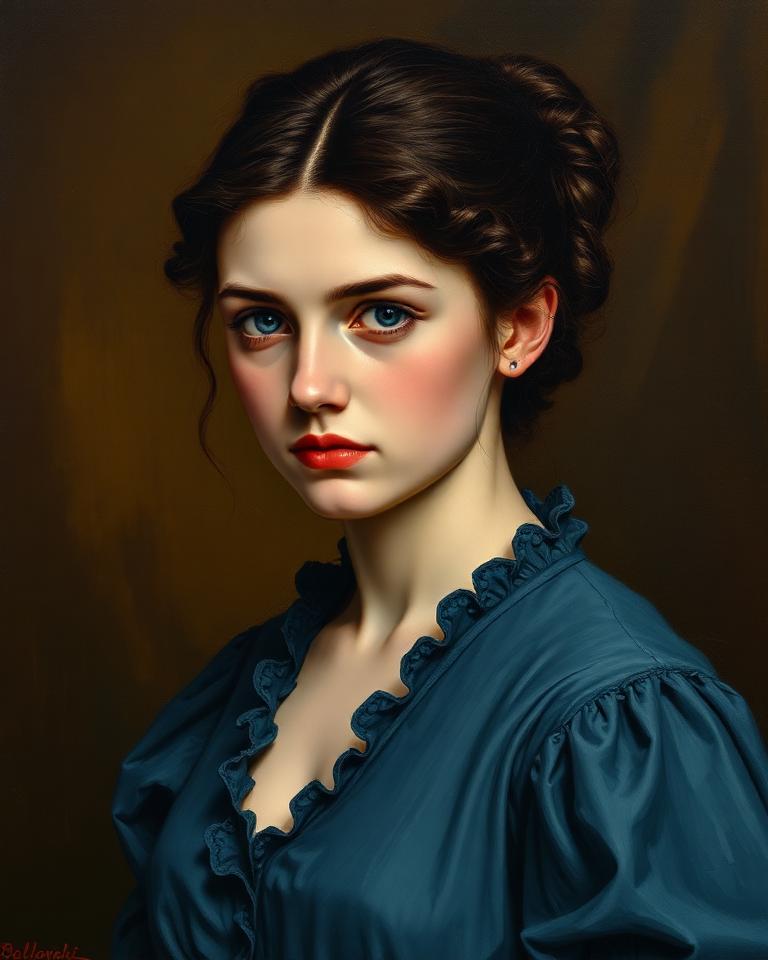
Quick Facts
- Years
- 1818 – 1848
- Category
- Social Reformers & Humanitarians
- Subcategory
- Literature & Creative Arts
- Nationality
- British
- Occupation
- Novelist and Poet
Emily Brontë
1818 – 1848 · British · Novelist and Poet
Audiobook

Life Lessons from Emily Brontë
Marcus Alden · 45 min
Emily Brontë (1818–1848) was an English novelist and poet whose small body of published work achieved an influence far beyond its size. She is best known for Wuthering Heights (1847), a formally daring novel of passion, cruelty, revenge, class conflict, and captivity set amid the Yorkshire landscape. Initially received with bewilderment and hostility by some reviewers, it later became a classic of English literature.
Emily also wrote powerful poetry concerned with freedom, mortality, solitude, nature, spiritual endurance, and the imagination. Because she published under the masculine pseudonym Ellis Bell and lived privately at Haworth Parsonage, reliable evidence about her personality and beliefs is limited. Later biographies have sometimes transformed her into a romantic legend: the solitary genius wandering the moors. Surviving manuscripts, family records, correspondence, and the recollections of others support parts of that image, but not all of its dramatic embellishments.
Her greatest achievement was creating a unique imaginative world in which landscape, character, narrative structure, and moral ambiguity reinforce one another. Wuthering Heights influenced later novelists, poets, critics, filmmakers, and musicians, while her poems established her as an important nineteenth-century lyric voice. Emily remains widely studied because her work resists simple interpretation and continues to generate debate about gender, violence, social hierarchy, religion, colonial contexts, and the limits of human freedom.
Quick Facts
| Field | Details |
|---|---|
| Full Name | Emily Jane Brontë |
| Common Name(s) | Emily Brontë; Ellis Bell, her publishing pseudonym |
| Born | 30 July 1818 |
| Died | 19 December 1848 |
| Age at Death | 30 |
| Birthplace | Thornton, near Bradford, Yorkshire, England |
| Nationality | British |
| Occupation | Novelist, poet, teacher, household manager |
| Historical Era | Early Victorian era; Romantic influence |
| Famous For | Wuthering Heights and her poetry |
| Political Affiliation | None recorded |
| Religion | Raised in the Church of England; her personal theology remains debated |
| Education | Clergy Daughters’ School at Cowan Bridge; Roe Head School; Pensionnat Heger, Brussels; extensive home education |
| Parents | Patrick Brontë and Maria Branwell Brontë |
| Spouse(s) | Never married |
| Children | None |
| Major Works | Wuthering Heights; poems including “Remembrance,” “The Prisoner,” and “No Coward Soul Is Mine” |
| Major Achievements | Created a major English novel; produced an influential poetic body; helped the Brontë sisters enter print |
Early Life
Emily Jane Brontë was born on 30 July 1818 in Thornton, Yorkshire, the fifth of six children of Patrick Brontë, an Anglican clergyman of Irish birth, and Maria Branwell Brontë, who came from Penzance in Cornwall. The surviving children were Maria, Elizabeth, Charlotte, Patrick Branwell, Emily, and Anne.
In 1820 Patrick became perpetual curate of Haworth, and the family moved into the parsonage beside the churchyard. The surrounding Pennine moors became central to Emily’s daily experience and later writing. Haworth was not an untouched wilderness: it was a growing township affected by industrialization, religious conflict, poor sanitation, disease, and sharp class inequalities.
Maria Brontë died of cancer in September 1821. Her unmarried sister, Elizabeth Branwell, came from Cornwall and remained to help raise the children. Patrick supervised much of their education, while the household had access to books, newspapers, periodicals, the Bible, and contemporary political discussion.
In 1824 Emily joined her older sisters at the Clergy Daughters’ School at Cowan Bridge. Conditions there were severe, and illness spread among the pupils. Maria and Elizabeth Brontë became sick and died of tuberculosis in 1825. Emily and Charlotte were brought home. Charlotte later drew on Cowan Bridge when creating Lowood School in Jane Eyre, although literary representation is not identical to documentary history.
At Haworth, Charlotte, Branwell, Emily, and Anne created elaborate imaginary worlds. Charlotte and Branwell developed Angria; Emily and Anne constructed Gondal, a fictional island realm of political rivalry, warfare, exile, and tragic love. Much of Emily’s surviving poetry emerged from or was associated with this imaginative universe.
Emily attended Roe Head School in 1835, where Charlotte was teaching, but returned home after only a few months. Charlotte reported that homesickness damaged Emily’s health. In 1838 Emily briefly worked as a teacher at Law Hill School near Halifax. The long hours proved exhausting, and she again returned to Haworth.
In 1842 Emily and Charlotte traveled to Brussels to study at the Pensionnat Heger, hoping eventually to establish their own school. Emily studied French, German, literature, and music under Constantin Heger and other teachers. Heger later praised the unusual power and logic of her mind. The sisters returned to England after Aunt Branwell’s death, and Emily did not resume residence in Brussels.
Rise to Prominence
Emily’s path to publication began privately. She wrote poems without actively seeking an audience and appears to have guarded her manuscripts closely. In 1845 Charlotte discovered one of Emily’s notebooks. Charlotte later said she was struck by the poems’ concentrated strength, but Emily reacted angrily to the invasion of her privacy.
After discussion among the sisters, Emily agreed to a joint publication. Charlotte, Emily, and Anne adopted the names Currer, Ellis, and Acton Bell. The initials preserved their own first initials, while the masculine or gender-ambiguous names helped protect their identities in a literary culture that often judged women writers through stereotypes.
Poems by Currer, Ellis, and Acton Bell appeared in 1846 at the authors’ expense. It sold only a tiny number of copies during its first year, though some reviewers noticed its quality. Commercial failure did not end the sisters’ ambitions.
Emily then completed Wuthering Heights. Thomas Cautley Newby accepted it together with Anne’s Agnes Grey, requiring financial support from the authors. The two novels appeared in December 1847, after Charlotte’s Jane Eyre had already become a success. Emily’s novel was issued as the work of Ellis Bell, and the shared Bell surname created uncertainty about the authors’ identities.
Early critics recognized energy and originality but often condemned the novel’s brutality, confusing structure, or perceived moral disorder. Emily did not live to witness its eventual elevation. Charlotte prepared a revised edition in 1850, identified Emily as the author, corrected textual errors, and supplied a biographical notice and preface that strongly influenced later perceptions.
Major Achievements
Creating Wuthering Heights
Emily’s only novel uses nested narrators, disrupted chronology, repeated names, and two generations of characters. The outsider Lockwood receives much of the story from the housekeeper Nelly Dean, but neither narrator is completely authoritative. Readers must judge competing testimony and reconstruct events.
The novel mattered because it rejected easy divisions between hero and villain, romance and abuse, civilization and savagery. Heathcliff is both a victim of degradation and an agent of sustained cruelty. Catherine Earnshaw’s bond with him is profound but destructive, while her marriage to Edgar Linton reflects emotional, social, and economic pressures.
Its long-term impact can be seen in modernist narrative experimentation, Gothic fiction, family sagas, psychological novels, and postcolonial criticism. It has generated extensive scholarship concerning gender, property, inheritance, race, childhood trauma, domestic violence, and the British Empire.
Producing a Distinctive Poetic Body
Emily left nearly 200 known poems and fragments, although editorial definitions and manuscript evidence can affect the count. Some belong to Gondal; others are personal, philosophical, dramatic, or difficult to classify.
Poems such as “Remembrance,” “The Prisoner,” and “No Coward Soul Is Mine” combine formal discipline with emotional force. Their speakers confront grief, confinement, time, faith, and death without sentimentality. Her poetry mattered because it united Romantic images of nature and imagination with a stark, individual voice.
Later editors sometimes altered punctuation, wording, titles, or Gondal contexts. Modern manuscript scholarship has therefore been essential in recovering the poems’ textual history.
Challenging Gendered Literary Expectations
Publishing as Ellis Bell allowed Emily to enter a marketplace shaped by assumptions about women’s proper subjects and tone. The novel’s violence and refusal to provide overt moral instruction unsettled readers accustomed to more conventional expectations.
The revelation that Ellis Bell was a clergyman’s daughter intensified curiosity. Emily’s achievement became important to the history of women’s authorship: she demonstrated that a woman writing from a relatively isolated household could produce formally radical and intellectually demanding fiction.
Transforming Landscape into Dramatic Structure
The Yorkshire environment in Wuthering Heights is not decorative scenery. Wind, exposed heights, enclosed rooms, cultivated grounds, seasonal changes, and physical distance shape conduct and symbolize competing forms of life.
The contrast between Wuthering Heights and Thrushcross Grange organizes much of the novel. Yet the places do not represent a simple opposition between evil and good. Their inhabitants change, intermarry, inherit, suffer, and sometimes reconcile. This complex use of place has influenced regional fiction and environmental readings of literature.
Leadership and Work
Emily held no public leadership office and did not manage a movement, institution, or political organization. Her “leadership” is best understood as creative independence and her role within the Brontë household.
After returning from Brussels, she took substantial responsibility for domestic work at Haworth. Family accounts associate her with cooking, cleaning, and care of the household servant Tabitha Aykroyd when needed. She also managed her own writing with unusual privacy and discipline.
Her working methods are only partly documented. Surviving manuscripts show revision, careful copying, and sustained engagement with Gondal. She valued autonomy and resisted intrusion. Her willingness to join the sisters’ publication plan shows that she could cooperate when persuaded, but she did not seek publicity in Charlotte’s manner.
Her strengths included concentration, imaginative consistency, intellectual independence, and resistance to fashionable opinion. Possible weaknesses included extreme reserve and reluctance to accept help, especially during her fatal illness. Some descriptions come from Charlotte’s retrospective accounts and should not be treated as objective psychological diagnoses.
Personal Life
Emily never married and no securely documented romantic relationship is known. Attempts to identify a real-life model for Heathcliff or a secret lover are speculative. Her emotional imagination should not be reduced to autobiography.
Her closest sustained childhood partnership was with Anne. Together they developed Gondal and recorded their ambitions in “diary papers.” Emily was also deeply attached to Haworth, her family, the moors, household animals, and music. She played the piano and studied music in Brussels.
Accounts describe her as shy with strangers, direct, physically active, and happiest at home. She enjoyed walking on the moors and cared for animals, including her large dog Keeper. Anecdotes about her toughness became part of Brontë legend, though details vary in reliability.
Family life grew increasingly troubled during the 1840s. Branwell experienced professional failures, debt, alcohol dependence, and likely opium use. His deterioration placed emotional and practical pressure on the household. He died on 24 September 1848, probably of tuberculosis, with chronic substance misuse weakening his condition.
Emily became seriously ill soon afterward. Charlotte believed she had caught a chill at Branwell’s funeral, but tuberculosis, then commonly called consumption, was the underlying disease. Emily refused medical examination until very late and continued household duties as long as possible. She died at Haworth Parsonage on 19 December 1848 and was buried in the family vault at St Michael and All Angels’ Church.
Philosophy and Beliefs
Emily was raised in an Anglican parsonage and knew the Bible and Protestant religious culture thoroughly. Her father was a Church of England clergyman, but her poetry does not simply repeat conventional doctrine.
“No Coward Soul Is Mine” expresses confidence in an indwelling, sustaining divinity and rejects fear of death. Critics disagree over whether its theology is orthodox Christian belief, mystical faith, pantheistic tendency, or a poetic synthesis. The evidence does not justify assigning Emily a precise private creed.
Freedom is a central value in her work. Her speakers resist imprisonment, spiritual domination, false comfort, and dependence upon public approval. Nature can offer liberation, but it can also be violent and indifferent.
Her political views are less clear. The family read newspapers and discussed public events, and Patrick held generally Tory views tempered by concern for social reform. Emily left no political manifesto and had no recorded party affiliation. Scholars have nevertheless examined how Wuthering Heights addresses property law, patriarchal power, social rank, education, and the treatment of outsiders.
Ethically, the novel does not present cruelty as admirable merely because its characters are passionate. It shows how humiliation and dispossession reproduce violence across generations, while the younger Catherine and Hareton suggest that education, affection, and mutual recognition can interrupt inherited harm.
Challenges and Controversies
Emily faced the practical barriers confronting nineteenth-century women writers: limited professional opportunities, prejudice in publishing, financial risk, and pressure to conceal gender. The sisters’ first poetry volume failed commercially, and Newby’s dealings with them caused frustration over contracts, publication, and the return of manuscripts.
The moral status of Wuthering Heights remains controversial. Some early reviewers saw it as coarse, brutal, or artistically uncontrolled. Later admirers treated its wildness as proof of genius. Modern critics often take a middle position: its violence is deliberate and structurally meaningful, but its emotional intensity can encourage romanticized adaptations that understate abuse.
Heathcliff’s origins are another field of debate. He is found in Liverpool and described with racialized terms used ambiguously in the period. Scholars have proposed Romani, Irish, African, South Asian, mixed-race, or other backgrounds, sometimes connecting Liverpool to slavery and imperial trade. The novel never supplies a definitive ancestry, so categorical claims exceed the evidence.
Charlotte’s editorial role is also debated. Her 1850 preface defended Emily while presenting her as inexperienced in the world and formed by a harsh region. That portrait helped establish Emily’s reputation but may have narrowed interpretation by emphasizing instinct and isolation over learning and craftsmanship.
Biographers face a broader evidence problem. Emily left few letters and no conventional diary. Ellen Nussey’s recollections, Charlotte’s writings, and later family testimony are valuable but partial. Claims about Emily’s motives, romances, or exact personality must therefore be stated cautiously.
Legacy
Emily’s reputation rose steadily after her death. By the late nineteenth and twentieth centuries, Wuthering Heights had become canonical. Writers and critics admired its unusual form, poetic language, uncompromising psychology, and resistance to Victorian moral conventions.
The novel has been adapted repeatedly for stage, cinema, radio, television, opera, ballet, and music. Adaptations often concentrate on Catherine and Heathcliff’s first-generation story, omitting the second generation and thereby changing the novel’s movement toward partial renewal.
Emily’s work remains relevant to discussions of coercive relationships, childhood neglect, inherited trauma, gender, class mobility, race, disability, property, and environmental belonging. It also offers an important warning against confusing destructive possession with healthy love.
The Brontë Parsonage Museum in Haworth, maintained by the Brontë Society, preserves manuscripts, furniture, personal objects, and the setting in which much of the family’s work was written. The church, family vault, moors, and local sites attract readers from around the world. A memorial in Poets’ Corner, Westminster Abbey, honors Charlotte, Emily, and Anne Brontë. Their birthplace in Thornton is also commemorated.
Emily’s most durable memorial is literary. One novel and a relatively compact body of poetry secured her place among the major writers of the nineteenth century.
Interesting Facts
- Emily was the fifth of the six Brontë children.
- She was born in Thornton but spent most of her life in Haworth.
- Her middle name was Jane.
- She and Anne invented the fictional world of Gondal.
- Many Gondal prose narratives have been lost, but poems survive.
- Emily used the pseudonym Ellis Bell.
- The Bell sisters retained their real first initials in their pen names.
- Their 1846 poetry volume initially sold only a few copies.
- Wuthering Heights was Emily’s only published novel.
- Its first edition was published with Anne’s Agnes Grey.
- Emily studied French, German, and music in Brussels.
- She briefly worked as a teacher at Law Hill School.
- She played the piano.
- Keeper, a mastiff-type dog, was closely associated with her.
- Emily left very few surviving letters.
- She died in the same year as her brother Branwell.
- Anne Brontë died less than six months after Emily.
- Charlotte publicly identified Emily as Ellis Bell after her death.
- The title Wuthering Heights refers to the exposed weather at the house.
- Kate Bush’s 1978 song “Wuthering Heights” helped introduce the novel to new audiences.
Famous Quotes
The safest quotations come from Emily’s published writings; statements attributed to her in later anecdotes are less secure.
-
“Whatever our souls are made of, his and mine are the same.” — Catherine speaking of Heathcliff in Wuthering Heights. It expresses identification so complete that ordinary social categories seem inadequate, while the surrounding plot shows its destructive complications.
-
“I am Heathcliff.” — Catherine in Wuthering Heights. The statement describes an imagined unity of being, not a stable or healthy relationship model.
-
“He’s more myself than I am.” — Catherine on Heathcliff. The line reinforces the novel’s concern with identity, possession, and emotional dependency.
-
“I cannot live without my life! I cannot live without my soul!” — Heathcliff after Catherine’s death. It conveys grief as anguish and obsession rather than peaceful mourning.
-
“No coward soul is mine.” — Opening of the poem commonly known by that title. Written near the end of Emily’s life, it proclaims courage before mortality.
-
“There is not room for Death.” — From “No Coward Soul Is Mine.” The speaker imagines divine reality as too powerful for annihilation.
-
“Cold in the earth—and the deep snow piled above thee.” — Opening of “Remembrance.” The poem examines whether enduring grief can coexist with continued life.
-
“Riches I hold in light esteem, / And Love I laugh to scorn.” — From “The Old Stoic.” The speaker rejects wealth and dependence in favor of liberty.
-
“And if I pray, the only prayer / That moves my lips for me, / ‘Leave me the heart that now I bear, / And give me liberty!’” — From “The Old Stoic.” It summarizes Emily’s recurring poetic commitment to inner freedom.
-
“I’ll walk, but not in old heroic traces.” — From “To Imagination.” The poem turns from inherited heroic patterns toward the sustaining power of imagination.
Timeline
- 1818 — Emily Jane Brontë is born at Thornton on 30 July.
- 1820 — The Brontë family moves to Haworth Parsonage.
- 1821 — Her mother, Maria Brontë, dies.
- 1824 — Emily enters the Clergy Daughters’ School at Cowan Bridge.
- 1825 — Maria and Elizabeth Brontë die; Emily returns home.
- Late 1820s–1830s — The Brontë children create imaginary kingdoms; Emily and Anne develop Gondal.
- 1835 — Emily attends Roe Head School briefly.
- 1838 — She teaches for a short period at Law Hill School.
- 1842 — Emily and Charlotte study in Brussels; they return after Aunt Branwell’s death.
- 1845 — Charlotte discovers Emily’s poetry; the sisters plan a joint volume.
- 1846 — Poems by Currer, Ellis, and Acton Bell is published.
- 1847 — Wuthering Heights and Agnes Grey appear in December.
- 1848 — Branwell dies in September; Emily dies of tuberculosis on 19 December.
- 1850 — Charlotte publishes a revised edition of Wuthering Heights with a preface and biographical notice.
- 1893 — The Brontë Society is founded.
- 1928 — A memorial to the Brontë sisters is unveiled in Westminster Abbey’s Poets’ Corner.
- 1948 — Haworth Parsonage becomes the home of the expanded Brontë museum collection.
- Present — Emily’s novel and poems remain internationally read, taught, adapted, and debated.
Frequently Asked Questions
Who was Emily Brontë?
Emily Brontë was an English novelist and poet born in Yorkshire in 1818. She was one of the literary Brontë siblings and wrote under the name Ellis Bell. Her only novel, Wuthering Heights, was published in 1847. Although her public career lasted only a few years and she died at 30, her innovative narrative technique, morally complex characters, and powerful poetry made her a central figure in English literature.
What is Emily Brontë best known for?
She is best known for Wuthering Heights, a novel centered on two Yorkshire households and two generations of interconnected families. Its most famous relationship is between Catherine Earnshaw and Heathcliff, but the complete book also follows the consequences of their choices and the younger generation’s movement toward reconciliation. Emily is additionally known for poems such as “Remembrance,” “The Prisoner,” and “No Coward Soul Is Mine.”
When and where was Emily Brontë born?
Emily was born on 30 July 1818 at Thornton, near Bradford in Yorkshire, England. Her father was then curate of Thornton. In 1820 he accepted the position of perpetual curate at Haworth, and the family moved to the parsonage there. Haworth and the nearby moorland became Emily’s principal home and had a major influence on the imaginative geography of her writing.
Why did Emily Brontë use the name Ellis Bell?
Emily and her sisters believed that women authors were likely to be judged through prejudice rather than literary merit. They therefore published as Currer, Ellis, and Acton Bell. These names preserved the initials of Charlotte, Emily, and Anne while concealing their gender. “Ellis” is often called masculine, though the Bells’ identities were initially ambiguous enough to generate speculation among publishers and reviewers.
Is Wuthering Heights autobiographical?
There is no evidence that its plot directly records Emily’s life. She knew the Yorkshire landscape, local speech, domestic conflict, books, newspapers, and social divisions, all of which could inform her fiction. Yet no documented Heathcliff or secret love affair explains the novel. Treating it as disguised autobiography underestimates Emily’s imagination and her experience developing fictional histories through Gondal.
Was Emily Brontë a recluse?
Emily was intensely private and strongly attached to Haworth, but “recluse” can mislead. She attended schools, taught at Law Hill, studied in Brussels, interacted with family and household acquaintances, and participated in publication. She was not a public literary personality and left little correspondence. The popular image of total isolation partly reflects Charlotte’s memorial portrait and later romantic biographies.
What is Gondal?
Gondal was an imaginary island world created principally by Emily and Anne Brontë. Its stories involved rulers, political conflict, imprisonment, betrayal, exile, warfare, and tragic attachment. Most prose records of Gondal have disappeared, but many poems and manuscript references survive. Scholars use them cautiously because not every poem can be assigned to a particular character or episode with certainty.
How was Wuthering Heights first received?
Its reception was mixed and frequently hostile. Reviewers noticed its force and originality, but some complained about brutality, improbable conduct, confusing narration, or an absence of explicit moral guidance. Because it appeared under a pseudonym and in an awkward multi-volume arrangement with Agnes Grey, its authorship was also unclear. Its canonical reputation developed gradually after Emily’s death.
Is Wuthering Heights a romance?
It contains an overwhelming attachment between Catherine and Heathcliff, but calling it simply a romance is inadequate. The relationship involves separation, revenge, coercion, emotional cruelty, and damage to other people. The novel also concerns inheritance, education, family violence, social status, and recovery across two generations. Many adaptations romanticize the first half while omitting the later consequences.
What was Emily Brontë’s religion?
She was raised as an Anglican in a clergyman’s household. Her poems use Christian language and express faith in a sustaining divine presence. Nevertheless, their emphasis on inward spirituality and the vitality of nature has prompted descriptions such as mystical or pantheistic. Scholars disagree, and her limited personal testimony makes a precise theological label unsafe.
Did Emily Brontë ever marry or have children?
No. Emily never married and had no children. No securely documented romantic partnership is known. Biographers have occasionally proposed secret attachments or real models for fictional relationships, but these suggestions lack firm evidence. Her poetry includes intense emotional voices, many connected to Gondal, and should not automatically be read as personal confession.
How did Emily Brontë die?
Emily died of tuberculosis at Haworth Parsonage on 19 December 1848. Her health declined rapidly after Branwell’s death that September. Contemporary family accounts state that she resisted medical help and continued her duties until she was extremely weak. Tuberculosis was widespread, difficult to diagnose early, and effectively untreatable with the medicine available in her lifetime.
How old was Emily Brontë when she died?
She was 30 years old. Her death came only one year after the publication of Wuthering Heights. Within the next several months, Anne Brontë also died of tuberculosis. Charlotte became the principal guardian of her sisters’ literary reputations and issued a new edition of Emily’s novel in 1850.
Did Emily plan another novel?
The publisher Thomas Cautley Newby wrote in a manner suggesting that a second novel might be expected, but no manuscript or reliable description survives. Scholars cannot establish whether Emily began another book, merely considered one, or was responding to publishing arrangements. Claims that a completed second novel was destroyed belong to speculation rather than documented fact.
Why is the narration of Wuthering Heights unusual?
The story reaches readers mainly through Lockwood and Nelly Dean, with additional letters and reported speech embedded within their accounts. The chronology shifts backward and forward, and narrators have limited knowledge, biases, and personal interests. This structure forces readers to evaluate evidence rather than receive an omniscient explanation, contributing to the novel’s ambiguity and modern critical appeal.
What does the title Wuthering Heights mean?
“Wuthering” is a regional term associated with turbulent atmospheric conditions. In the novel, it describes the exposed location of the Heights and the force of winds around it. The title also suggests emotional and social turbulence. The building is a household, an inherited property, and a symbolic space shaped by conflict, enclosure, and eventual change.
Where can people learn about Emily Brontë today?
The Brontë Parsonage Museum in Haworth is the leading site. It preserves the family home, manuscripts, books, furniture, artworks, and personal objects. Visitors can also see St Michael and All Angels’ Church and walk in the surrounding moorland. Major research collections include Brontë manuscripts held by institutions such as the British Library and the Morgan Library & Museum.
Lessons We Can Learn
- A small output can have enormous impact. Emily published one novel, yet its depth secured lasting importance. Quality and originality can matter more than volume.
- Initial failure is not a final verdict. The sisters’ poetry volume barely sold, but they continued. Early reception may not measure enduring value.
- Privacy and collaboration can coexist. Emily guarded her work but joined her sisters’ publishing effort. Creative independence need not exclude trusted cooperation.
- Structure shapes meaning. Her layered narrators make certainty difficult. Today, this encourages careful evaluation of who tells a story and why.
- Passion is not the same as healthy love. Catherine and Heathcliff’s bond harms themselves and others. Emotional intensity does not excuse coercion or cruelty.
- Trauma can spread across generations. Heathcliff reproduces the degradation he experienced. Breaking cycles requires education, empathy, and different choices.
- Place influences imagination. Emily transformed intimate knowledge of Yorkshire into literature of international significance. Close attention to local environments can produce universal art.
- Pseudonyms reveal structural prejudice. Ellis Bell helped Emily obtain a hearing without immediate gender bias. Institutions should judge work fairly without forcing concealment.
- Legends require evidence. Romantic stories about Emily often outrun the record. Responsible history distinguishes documentation, recollection, inference, and myth.
- Seeking medical help matters. Emily’s refusal of treatment occurred when medicine had few effective options, but her death still illustrates the dangers of delayed care and the historical burden of infectious disease.
Related Historical Figures
- Charlotte Brontë (1816–1855) — Emily’s sister, author of Jane Eyre, collaborator in publication, and influential editor of Emily’s posthumous reputation.
- Anne Brontë (1820–1849) — Emily’s younger sister, Gondal collaborator, poet, and author of Agnes Grey and The Tenant of Wildfell Hall.
- Patrick Brontë (1777–1861) — Their father, an Anglican clergyman who encouraged reading and outlived his wife and all six children.
- Branwell Brontë (1817–1848) — Emily’s brother, an artist and writer whose decline deeply affected the Haworth household.
- Maria Branwell Brontë (1783–1821) — Emily’s mother, whose early death shaped the children’s upbringing.
- Elizabeth Branwell (1776–1842) — Emily’s maternal aunt, who helped raise and financially support the Brontë children.
- Constantin Heger (1809–1896) — Emily’s Brussels teacher, who recognized her intellectual power and directed her literary studies.
- Ellen Nussey (1817–1897) — Charlotte’s lifelong friend, whose recollections provide important, though retrospective, evidence about Emily.
- Thomas Cautley Newby (c. 1807–1882) — Publisher of Wuthering Heights and Agnes Grey; his business dealings contributed to confusion and dispute.
- George Gordon, Lord Byron (1788–1824) — A major Romantic poet whose rebellious figures and dramatic worlds formed part of the literary culture influencing the Brontës.
Related Historical Figures