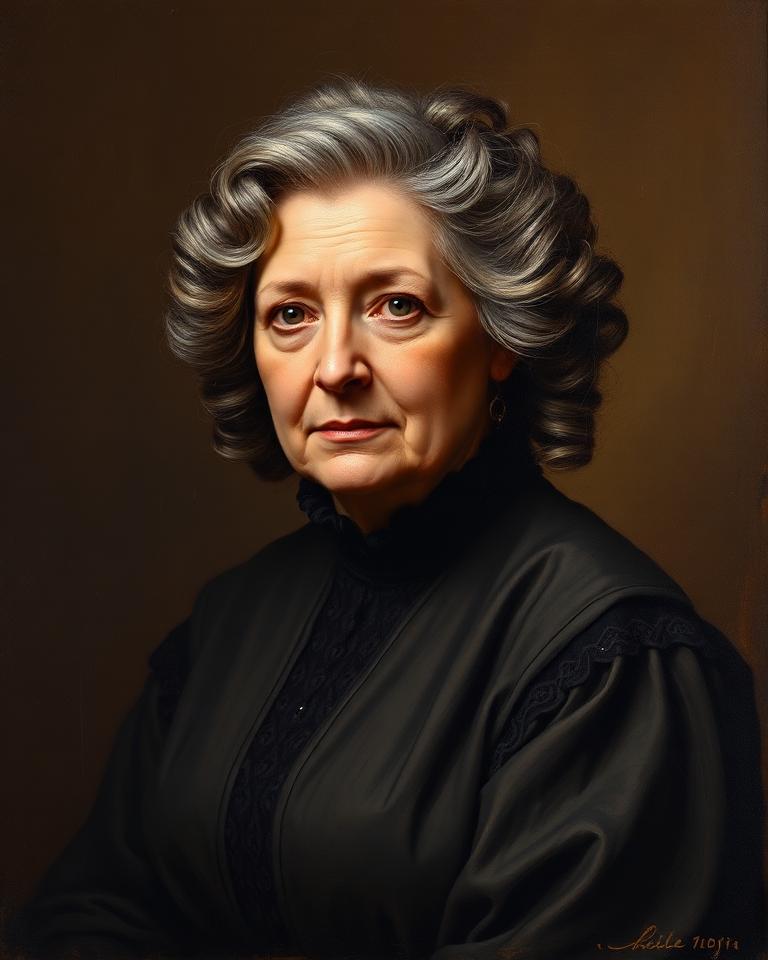
Quick Facts
- Years
- 1811 – 1896
- Category
- Social Reformers & Humanitarians
- Subcategory
- Social Reformers
- Nationality
- American
- Occupation
- Author and Abolitionist
Harriet Beecher Stowe
1811 – 1896 · American · Author and Abolitionist
Audiobook

Life Lessons from Harriet Beecher Stowe
Marcus Alden · 53 min
Harriet Beecher Stowe was an American author, reformer, and antislavery activist whose novel Uncle Tom’s Cabin became one of the nineteenth century’s most influential books. Born into the prominent Beecher family in 1811, she combined evangelical Christianity, domestic fiction, firsthand observations of slavery’s effects, and abolitionist testimony to create a story that brought the suffering caused by enslavement into millions of homes.
Published in book form in 1852, Uncle Tom’s Cabin became an extraordinary international success. It strengthened antislavery feeling in the United States and abroad, provoked fierce proslavery rebuttals, and helped make the moral crisis over slavery impossible for many readers to ignore. Its exact political effect cannot be measured, and it did not cause the Civil War by itself, but historians recognize it as a major cultural force in the sectional conflict.
Stowe was far more than the author of one novel. She wrote more than 30 books, including antislavery fiction, regional novels, religious writings, travel accounts, biographies, and domestic advice. Her career also reveals troubling contradictions: although she opposed slavery, some of her writing relied on racial stereotypes and paternalistic assumptions. Scholars continue to study her because her work demonstrates both literature’s power to shape public debate and the limitations of white nineteenth-century reform. Her life connects religion, gender, publishing, abolition, family, and national politics during one of the most consequential periods in American history.
Quick Facts
| Field | Information |
|---|---|
| Full Name | Harriet Elisabeth Beecher Stowe |
| Common Name(s) | Harriet Beecher Stowe; Harriet Stowe |
| Born | June 14, 1811 |
| Died | July 1, 1896 |
| Age at Death | 85 |
| Birthplace | Litchfield, Connecticut, United States |
| Nationality | American |
| Occupation | Author, teacher, editor, lecturer, and reformer |
| Historical Era | Antebellum era, American Civil War, and Reconstruction/Gilded Age |
| Famous For | Writing Uncle Tom’s Cabin and advancing antislavery opinion |
| Political Affiliation if applicable | Associated with antislavery reform; later supported the Republican Party, including Abraham Lincoln |
| Religion if significant | Congregationalist Protestant shaped by evangelical Calvinism |
| Education | Litchfield Female Academy; Hartford Female Seminary |
| Parents | Lyman Beecher and Roxana Foote Beecher |
| Spouse(s) | Calvin Ellis Stowe, married 1836–1886 |
| Children | Seven: twin daughters Harriet and Eliza; Henry Ellis; Frederick William; Georgiana May; Samuel Charles; Charles Edward |
| Major Works | Uncle Tom’s Cabin; A Key to Uncle Tom’s Cabin; Dred; The Minister’s Wooing; Oldtown Folks; Lady Byron Vindicated; Palmetto Leaves |
| Major Achievements | Produced a landmark antislavery novel; became an internationally known author; defended abolition through fiction and documentary argument; expanded women’s public influence through professional authorship |
Early Life
Harriet Elisabeth Beecher was born in Litchfield, Connecticut, on June 14, 1811. She was the sixth child of Congregationalist minister Lyman Beecher and Roxana Foote Beecher. Her mother died of tuberculosis in 1816, when Harriet was five. Her father later married Harriet Porter, who helped raise the large household.
The Beecher family was intellectually energetic, religiously intense, and deeply involved in public reform. Harriet’s siblings included prominent minister Henry Ward Beecher, educator Catharine Beecher, suffragist Isabella Beecher Hooker, and clergymen Edward and Charles Beecher. Their father expected his children to engage seriously with theology and moral questions, although the era offered sons far more professional opportunities than daughters.
Harriet studied at Sarah Pierce’s Litchfield Female Academy. She later attended Hartford Female Seminary, founded by Catharine Beecher, and subsequently taught there. The school gave young women unusually rigorous instruction in composition, languages, mathematics, history, and moral philosophy. Catharine’s example showed Harriet that women could become educators and public intellectuals while operating within—or carefully stretching—the gender expectations of their society.
Her childhood unfolded during the Second Great Awakening, when evangelical revivalism encouraged individuals to confront sin and support moral reform. Yet the Beecher household’s Calvinist inheritance also emphasized guilt, salvation, and divine judgment. These ideas remained central to Stowe’s imagination even as her mature theology increasingly emphasized Christlike love and moral sympathy.
In 1832 Lyman Beecher became president of Lane Theological Seminary, and Harriet moved with Catharine to Cincinnati, Ohio. Cincinnati stood just across the Ohio River from slaveholding Kentucky. It was a commercial center marked by racial conflict, antislavery activism, and competing views about slavery. Harriet taught at the Western Female Institute and joined the Semi-Colon Club, a literary circle whose members included writers, educators, and her future husband.
Life in Cincinnati exposed Stowe to Black communities, abolitionist arguments, fugitives from slavery, and accounts from people who had witnessed the institution. She visited Kentucky, although claims that she personally saw every scene later used in Uncle Tom’s Cabin are exaggerated. Her novel drew instead from many sources: observation, published narratives, legal cases, conversations, religious conviction, and imaginative reconstruction.
Rise to Prominence
Harriet began publishing sketches and stories in periodicals during the 1830s. In 1834 she received recognition from the Western Monthly Magazine for a story later known as “Uncle Lot.” These early works developed her skill in regional description, humor, moral argument, and domestic characterization.
In 1836 she married Calvin Ellis Stowe, a widowed biblical scholar and professor at Lane Theological Seminary. Marriage brought intellectual companionship but also continual financial strain, household labor, pregnancies, and child care. Calvin encouraged Harriet’s writing, while her earnings became important to the family.
The Stowes opposed slavery and aided fugitives, though surviving accounts do not support every dramatic Underground Railroad legend later attached to them. Cincinnati’s antislavery tensions became especially vivid during the city’s racial violence, including the riots of 1836 and 1841. In 1850 Calvin accepted a position at Bowdoin College, and the family moved to Brunswick, Maine.
That same year Congress passed the Fugitive Slave Act, compelling federal officials and, in practice, citizens in free states to assist in returning alleged fugitives. It denied accused people basic legal protections and intensified Northern resistance. Harriet’s sister-in-law Isabella Porter Beecher urged her to write something that would make the nation feel slavery’s cruelty. Stowe later described a church vision of an enslaved Christian dying under abuse as an important inspiration for Uncle Tom’s death.
Uncle Tom’s Cabin; or, Life Among the Lowly first appeared as a serial in the antislavery newspaper The National Era, beginning June 5, 1851. Initially planned as a shorter work, it ran for about ten months. John P. Jewett published it in two volumes on March 20, 1852.
The novel follows several enslaved people, particularly the devout Tom and Eliza, who escapes across the Ohio River with her child. Through family separation, sale, violence, flight, and Christian sacrifice, Stowe argued that slavery corrupted law, religion, family life, and individual morality. The book sold roughly 300,000 copies in the United States during its first year and became a sensation in Britain. Stage adaptations—many unauthorized—carried its characters to audiences who never read the novel.
Fame brought both influence and attack. Proslavery writers accused Stowe of fabrication. She answered with A Key to Uncle Tom’s Cabin in 1853, compiling laws, advertisements, court records, slave narratives, and other sources meant to demonstrate that her fiction rested on documented realities. Her rise from magazine contributor to internationally recognized writer showed that a woman working in a supposedly domestic genre could intervene decisively in national politics.
Major Achievements
Transforming Antislavery Literature
Uncle Tom’s Cabin translated political and theological arguments into an emotional family narrative. Stowe asked readers—especially white Christian readers—to imagine enslaved people as parents, children, spouses, and believers whose relationships could be destroyed by sale.
This mattered because slavery was often discussed as an abstract constitutional or economic issue. Stowe made its human consequences central. The novel strengthened antislavery sentiment, inspired discussion throughout the Atlantic world, and became a foundational text in the history of protest literature.
Its long-term impact is complex. “Uncle Tom” later became an insult partly because stage caricatures altered the character, while other figures hardened into damaging stereotypes. Nevertheless, the original Tom is depicted as morally courageous: he protects others and refuses to reveal the whereabouts of escaped women even when the refusal costs his life.
Documenting the Case Against Slavery
In A Key to Uncle Tom’s Cabin, Stowe responded to critics by connecting fictional episodes with evidence from the slaveholding states. The book cited statutes, newspaper notices, testimony, and published narratives, including accounts by formerly enslaved people.
The work was polemical rather than a modern academic study, and scholars evaluate its selections critically. Even so, it showed that slave markets, family separations, physical punishment, and the denial of legal personhood were not inventions. It extended her argument beyond sentiment into documentary advocacy.
Sustaining a Broad Literary Career
Stowe followed her famous novel with Dred: A Tale of the Great Dismal Swamp (1856), a darker antislavery work shaped by revolutionary resistance and the deteriorating political climate. Later books included The Minister’s Wooing (1859), The Pearl of Orr’s Island (1862), Oldtown Folks (1869), and Poganuc People (1878).
These works explored New England religion, memory, women’s lives, village culture, and changing social values. They helped preserve regional speech and customs while examining the psychological costs of rigid theology. Stowe therefore contributed to American literary regionalism as well as reform writing.
Establishing International Cultural Influence
Stowe traveled to Britain and continental Europe in 1853, 1856, and 1859. British antislavery supporters welcomed her as a major moral voice. The “Stafford House Address,” signed by hundreds of thousands of British women, expressed solidarity with American women against slavery, although critics noted Britain’s own imperial and class injustices.
Translation, dramatic adaptation, and foreign publication made Stowe one of the best-known American writers in the world. Her fame demonstrated the growing transatlantic power of print culture and women’s participation in public debate.
Expanding the Possibilities of Women’s Authorship
Stowe wrote while managing a large household under social conventions that treated domesticity as women’s principal sphere. She used the moral authority associated with motherhood and Christian womanhood to claim a public voice.
Her approach did not reject traditional gender roles as directly as later feminism would. Yet her commercial success, political influence, and professional persistence enlarged the space available to women writers. Her career also made visible the tension between creative work and unequal domestic responsibilities.
Leadership and Work
Stowe held no elected office and led no national abolitionist organization. Her leadership was literary, religious, and cultural. She influenced readers through narrative rather than through administrative command.
Her principal method was moral identification. She combined suspense, domestic scenes, humor, melodrama, biblical imagery, and direct appeals to readers. She believed conscience could be awakened when people emotionally recognized another person’s suffering.
Stowe worked collaboratively within extensive family, reform, publishing, and religious networks. Calvin read and encouraged her work. Abolitionists supplied information and promoted her books. Editors and publishers enabled wide circulation, while Black testimony and slave narratives provided essential evidence—although Stowe retained authority over how that material was represented.
Her strengths included narrative accessibility, discipline, emotional force, and an ability to connect private family experience with public injustice. She could make theological questions understandable through memorable characters.
Her weaknesses reflected both personal choices and the limits of her time. She sometimes substituted moral sentiment for sustained analysis of Black political agency. Her paternalism, racial stereotypes, and occasional interest in colonization compromised the egalitarian implications of her antislavery message. Her work could also become polemical or overly sentimental for some readers.
Personal Life
Harriet married Calvin Stowe on January 6, 1836. Their marriage lasted until Calvin’s death in 1886. They shared religious and intellectual interests, but their household faced irregular income, debt, frequent moves, and the demands of raising seven children.
Their children were twin daughters Harriet and Eliza, Henry Ellis, Frederick William, Georgiana May, Samuel Charles, and Charles Edward. Samuel died in the 1849 cholera epidemic at only 18 months old. Stowe later connected her grief with her ability to imagine the agony of enslaved mothers separated from their children, while recognizing that her own loss occurred under fundamentally different circumstances.
Her son Henry drowned in the Connecticut River in 1857 while a student at Dartmouth College. Frederick, a Civil War veteran wounded at Gettysburg, struggled with alcohol and disappeared in the 1870s; his ultimate fate remains uncertain. These losses weighed heavily on the family.
Stowe formed close relationships with her siblings, though the Beecher family’s public prominence sometimes generated conflict. The 1870s scandal involving Henry Ward Beecher—accused of adultery with Elizabeth Tilton—divided public opinion and strained family loyalties. Harriet defended her brother.
She balanced writing with sewing, household supervision, gardening, correspondence, and parenting. After the Civil War, she spent winters in Mandarin, Florida, where she promoted education and worship among local residents and wrote Palmetto Leaves. She later lived in Hartford, Connecticut, next door to Samuel Clemens, better known as Mark Twain.
In old age Stowe’s health and memory declined. Reports of her final years are sometimes sensationalized; retrospective diagnoses cannot be made with certainty. She died in Hartford on July 1, 1896, and was buried at Phillips Academy Cemetery in Andover, Massachusetts.
Philosophy and Beliefs
Stowe’s worldview was rooted in evangelical Protestant Christianity. She considered slavery a sin because it violated divine law, destroyed families, encouraged sexual exploitation, and treated human beings as property. Her fiction repeatedly contrasted authentic Christianity—defined by sacrificial love—with churches that accommodated slavery.
She inherited Calvinist ideas from her father but became uncomfortable with doctrines that seemed to portray God as harsh or salvation as inaccessible. Her later religious fiction emphasized compassion, spiritual experience, and Christ’s love more than doctrinal severity.
Politically, Stowe supported antislavery action and welcomed the Republican Party’s rise. During the Civil War she supported the Union and emancipation. Her reform politics were moral and evangelical rather than systematically democratic in a modern sense.
Her racial beliefs were inconsistent. She asserted Black humanity, intelligence, family affection, and spiritual equality at a time when white supremacy was deeply entrenched. Yet she sometimes wrote through racial types and entertained colonization—the idea that freed Black Americans might settle outside the United States. Black abolitionists challenged such proposals because African Americans were Americans entitled to freedom and citizenship at home.
Stowe believed women possessed special moral influence through family and religion. This concept enabled her public activism but remained tied to conventional ideals of womanhood. Her life nevertheless demonstrated that women could shape politics through authorship, education, organizing, and consumer culture.
Challenges and Controversies
The greatest controversy concerned Uncle Tom’s Cabin. Slaveholders and proslavery authors called it distorted propaganda. “Anti-Tom” novels portrayed plantations as benevolent and abolitionists as dangerous. Stowe replied that the institution’s legal power to sell, punish, and separate people made abuse structural rather than accidental.
Modern criticism focuses on racial representation. Some Black writers and scholars credit the novel with mobilizing white antislavery readers while condemning its stereotypes, dialect, paternalism, and emphasis on Christian suffering. James Baldwin’s influential 1949 essay “Everybody’s Protest Novel” criticized its sentimentality and constrained characters. Other scholars argue that historical context and distinctions between Stowe’s novel and racist stage versions must be preserved.
Stowe’s use of testimony also raises questions about voice and authority. She relied heavily on experiences recorded by formerly enslaved people, including Josiah Henson and Frederick Douglass’s era of slave narratives, while a white author received extraordinary fame and profit. Henson was one among several real-life sources associated with Tom; calling him the sole “original Uncle Tom” oversimplifies the novel’s creation.
In 1869 Stowe published “The True Story of Lady Byron’s Life,” accusing poet Lord Byron of an incestuous relationship with his half-sister. She intended to defend Lady Byron, whom she had known, but the article produced an international scandal. Her follow-up book, Lady Byron Vindicated (1870), did not restore her reputation fully. Evidence concerning the allegation remains debated, and critics faulted Stowe for revealing private confidences and presenting an uncertain case too aggressively.
Her Florida years also require context. Like many Northern reformers, she saw the postwar South through paternalistic assumptions. Her interest in regional development existed within the unequal conditions of Reconstruction. Assessing this period requires recognizing both her support for Black education and the limitations of her perspective.
Finally, the famous claim that Abraham Lincoln greeted her as “the little woman who wrote the book that started this great war” is unsupported by contemporary documentation. Stowe did meet Lincoln at the White House in 1862, but historians generally treat the quotation as apocryphal.
Legacy
Stowe’s central legacy is the demonstration that fiction can become a major form of political action. Uncle Tom’s Cabin did not single-handedly end slavery or start the Civil War, but it helped reshape public feeling and intensified an already profound national debate.
Her reputation has changed repeatedly. Nineteenth-century admirers praised her Christian humanitarianism. Twentieth-century critics often rejected her sentimentality and racial imagery. More recent scholarship examines her within the history of women’s writing, print capitalism, religion, performance, race, and transatlantic abolition.
Several sites preserve her history. The Harriet Beecher Stowe Center in Hartford interprets her home, family, and social activism. The Harriet Beecher Stowe House in Cincinnati preserves the setting associated with her formative Ohio years. Her later Florida residence no longer survives, but Mandarin remembers her connection to the community. Bowdoin College and other institutions maintain collections related to her.
Stowe appears on memorial plaques, library collections, historic trails, and public programs rather than through a single dominant national monument. Her Hartford home stands near the Mark Twain House, creating an important center for studying American literary culture.
Modern readers continue to debate how to teach Uncle Tom’s Cabin. Its antislavery intervention remains historically important, while its stereotypes require careful analysis. That combination makes Stowe relevant to discussions about representation, allyship, religious activism, propaganda, authorship, and the responsibilities of writers addressing injustice.
Interesting Facts
- Stowe’s middle name was spelled “Elisabeth,” not the more common “Elizabeth.”
- She was one of Lyman and Roxana Beecher’s eleven children.
- Her mother died when Harriet was five years old.
- She taught at Hartford Female Seminary, founded by her sister Catharine.
- Cincinnati’s location opposite Kentucky gave her close exposure to debates over slavery.
- She married biblical scholar Calvin Ellis Stowe in 1836.
- The couple had seven children, including twin daughters.
- Uncle Tom’s Cabin began as a newspaper serial in The National Era.
- The serial became longer than Stowe originally anticipated.
- The book edition appeared in two volumes in March 1852.
- Approximately 300,000 copies sold in the United States in its first year.
- Unauthorized stage versions became an enormous popular-entertainment industry.
- Josiah Henson was an important source associated with Tom, but not the character’s sole model.
- Stowe visited the White House and met Abraham Lincoln in 1862.
- The famous “little woman” remark attributed to Lincoln lacks reliable contemporary evidence.
- Stowe wrote more than 30 books across several genres.
- She established a winter home in Mandarin, Florida, after the Civil War.
- In Hartford, she lived next door to Mark Twain.
- She outlived her husband by ten years.
- Her Hartford residence is now a museum and educational center.
Famous Quotes
“The object of these sketches is to awaken sympathy and feeling for the African race.”
— Preface to Uncle Tom’s Cabin (1852). Stowe stated her reform purpose directly: she wanted readers’ emotional recognition to produce moral concern.
“The man that has learned to read and think, does not depend on the Bible to tell him what is right.”
— Uncle Tom’s Cabin, spoken by George Harris. In context, George condemns religious arguments used to legitimate enslavement and asserts moral reason against oppressive interpretation.
“The longest way must have its close—the gloomiest night will wear on to a morning.”
— Uncle Tom’s Cabin. The line expresses endurance and hope amid suffering, important themes in Stowe’s Christian moral vision.
“Scenes of blood and cruelty are shocking to our ear and heart. What man has nerve to do, man has not nerve to hear.”
— Uncle Tom’s Cabin. Stowe challenges readers who object to descriptions of violence more readily than to the violent system itself.
“There is one thing that every individual can do—they can see to it that they feel right.”
— Concluding remarks in Uncle Tom’s Cabin. She argues that ethical transformation begins with rejecting indifference, though feeling alone cannot replace political action.
“But, what can any individual do?”
— Uncle Tom’s Cabin. Stowe poses the question before urging personal responsibility, prayer, antislavery conviction, and humane conduct.
“Talk of the abuses of slavery! Humbug! The thing itself is the essence of all abuse!”
— Uncle Tom’s Cabin, voiced in the novel’s debate over slavery. The meaning is structural: no supposedly kind master can remove the injustice of ownership.
“So subtle is the atmosphere of opinion that it will make itself felt without words.”
— Oldtown Folks (1869). Stowe reflects on how communities transmit assumptions through custom and social pressure, not merely formal teaching.
“Women are the real architects of society.”
— Frequently attributed to Stowe, but a secure primary-source citation is difficult to establish. It should be treated as disputed rather than quoted as definitively hers.
“Never give up, for that is just the place and time that the tide will turn.”
— Widely attributed to Stowe online, but no reliable original source has been established. The attribution is disputed.
Timeline
- 1811 — Harriet Elisabeth Beecher is born in Litchfield, Connecticut, on June 14.
- 1816 — Her mother, Roxana Foote Beecher, dies.
- 1820s — Harriet studies at Litchfield Female Academy and Hartford Female Seminary.
- 1827 — She begins teaching at Hartford Female Seminary.
- 1832 — She moves to Cincinnati after Lyman Beecher joins Lane Theological Seminary.
- 1834 — Her early fiction receives recognition from the Western Monthly Magazine.
- 1836 — She marries Calvin Ellis Stowe; Cincinnati experiences severe antislavery-related violence.
- 1838 — Twin daughters Harriet and Eliza are born.
- 1840 — Son Henry Ellis is born.
- 1843 — Son Frederick William is born; The Mayflower, an early collection, appears.
- 1848 — Son Samuel Charles is born.
- 1849 — Samuel dies during Cincinnati’s cholera epidemic.
- 1850 — The family moves to Brunswick, Maine; Congress passes the Fugitive Slave Act.
- 1851 — Uncle Tom’s Cabin begins serialization in The National Era.
- 1852 — The novel appears in book form and becomes an international bestseller.
- 1853 — Stowe publishes A Key to Uncle Tom’s Cabin and makes her first European tour.
- 1856 — She publishes Dred and travels again in Europe.
- 1857 — Her son Henry drowns.
- 1859 — The Minister’s Wooing is published; Stowe makes another European trip.
- 1861 — The American Civil War begins.
- 1862 — Stowe meets President Abraham Lincoln in Washington and publishes The Pearl of Orr’s Island.
- 1863 — The Emancipation Proclamation takes effect.
- 1867 — She publishes Queer Little People and begins spending winters in Florida around this period.
- 1869 — Oldtown Folks appears; her Lady Byron article causes controversy.
- 1870 — She publishes Lady Byron Vindicated.
- 1873 — Palmetto Leaves describes Florida life and travel.
- 1878 — Poganuc People is published.
- 1886 — Calvin Stowe dies.
- 1896 — Harriet Beecher Stowe dies in Hartford on July 1.
- 1962 — Her Hartford home opens to the public as a historic site.
Frequently Asked Questions
Who was Harriet Beecher Stowe?
Harriet Beecher Stowe was a nineteenth-century American author and antislavery reformer. She wrote fiction, essays, travel literature, religious works, biography, and domestic advice, but is best known for Uncle Tom’s Cabin. Her evangelical faith convinced her that slavery was a grave moral sin. By portraying enslaved people’s family ties and suffering, she encouraged readers to view slavery as a personal and national ethical crisis. Her influence was international, although modern readers also criticize the racial stereotypes and paternalism in parts of her work.
Why is Harriet Beecher Stowe important?
Stowe demonstrated that a novel could shape political culture on a vast scale. Uncle Tom’s Cabin reached readers who might not have attended an abolitionist meeting or read a political tract. It intensified debate about slavery, supported antislavery feeling abroad, and became a landmark in publishing history. She is also important to women’s history because she built a professional literary career while women lacked equal political and professional rights. Her shortcomings make her equally valuable for studying the complexities of white reform.
What is Uncle Tom’s Cabin about?
The novel follows several enslaved characters whose lives reveal different dimensions of slavery. Eliza flees with her son to prevent his sale, while Tom is sold away from his family and eventually reaches the brutal plantation of Simon Legree. Tom refuses to betray others and dies after severe punishment. Interwoven plots examine family separation, fugitive laws, religious hypocrisy, resistance, and moral responsibility. Stowe’s central argument is that slavery is inherently abusive because one human being’s legal ownership of another destroys freedom and makes every relationship insecure.
Did Uncle Tom’s Cabin start the Civil War?
No single book started the Civil War. The conflict arose from decades of struggle over slavery, territorial expansion, political power, federalism, economic interests, resistance by enslaved people, and Southern secession. Uncle Tom’s Cabin mattered because it influenced public opinion and deepened sectional debate, especially after the Fugitive Slave Act. The famous statement allegedly made by Lincoln—that Stowe was the “little woman” who started the war—is not supported by contemporary documentation. Historians treat the novel as an important cultural influence, not a sole cause.
Did Harriet Beecher Stowe meet Abraham Lincoln?
Yes. Stowe visited President Abraham Lincoln at the White House on November 25, 1862, during the Civil War. The meeting occurred after she had become internationally famous and shortly before the Emancipation Proclamation took effect. Little reliable evidence survives about their conversation. The often-repeated claim that Lincoln greeted her as “the little woman who wrote the book that started this great war” appeared in later recollections and is generally considered apocryphal. The meeting itself is documented; the memorable quotation is not.
Was Harriet Beecher Stowe an abolitionist?
Yes, Stowe publicly opposed slavery and used her writing to advocate its end. Her family participated in antislavery networks, and her work condemned the institution as incompatible with Christianity. However, abolitionism included people with differing ideas about race, citizenship, tactics, and the future of freed people. Stowe’s views sometimes remained paternalistic, and she showed intermittent sympathy for colonization proposals. Therefore, calling her an abolitionist is accurate, but it should not imply that she consistently embraced modern principles of racial equality.
What inspired Uncle Tom’s Cabin?
The immediate political stimulus was the Fugitive Slave Act of 1850. Stowe also drew upon years in Cincinnati, conversations and reports concerning slavery, newspaper accounts, legal records, abolitionist literature, and narratives by formerly enslaved people. The death of her young son Samuel deepened her sensitivity to parental grief. She later recalled envisioning the death of an enslaved Christian during a church service. No single event or individual supplied the whole story; the novel emerged from a broad body of evidence, experience, faith, and imagination.
Was Uncle Tom based on a real person?
Tom was a composite fictional character rather than a portrait of one person. Josiah Henson, who escaped slavery and published an autobiography, was among the real people whom Stowe cited in A Key to Uncle Tom’s Cabin. Other narratives and documented cases also influenced the novel. Promotional culture later called Henson the “original Uncle Tom,” but this overstates the direct connection. Stowe created Tom from multiple sources and literary traditions. The original character is steadfast and resistant, unlike the submissive caricature found in many later stage productions.
Why did “Uncle Tom” become an insult?
In Stowe’s novel, Tom refuses to harm or betray others, withstands torture, and dies rather than reveal where two women have fled. Later theatrical “Tom shows,” many created without Stowe’s control, simplified the story and often turned Black characters into racist caricatures. Over time, “Uncle Tom” came to describe a Black person accused of servility toward white power. That meaning reflects the history of adaptation and racial politics more than the novel’s complete characterization, although critics also identify paternalistic elements in Stowe’s portrayal.
How accurate was Uncle Tom’s Cabin?
It is a novel, not eyewitness reportage, but many of its central abuses were well documented. Enslaved people could legally be sold, families were separated, fugitives were pursued, and physical violence was integral to enforcement. A Key to Uncle Tom’s Cabin presented sources for such claims. Some incidents were compressed, dramatized, or assembled from different accounts, and Stowe’s racial descriptions reflected literary conventions and prejudice. Accuracy should therefore be evaluated at two levels: the institution’s realities are strongly supported, while individual characters and scenes remain fictional constructions.
What other books did Stowe write?
Her second major antislavery novel was Dred: A Tale of the Great Dismal Swamp. She also wrote important New England regional fiction, including The Minister’s Wooing, The Pearl of Orr’s Island, Oldtown Folks, and Poganuc People. A Key to Uncle Tom’s Cabin defended the factual basis of her antislavery argument. Her nonfiction included Sunny Memories of Foreign Lands, House and Home Papers, Lady Byron Vindicated, and Palmetto Leaves. Altogether, she produced more than 30 books as well as numerous periodical contributions.
How did religion influence Stowe?
Religion supplied both the moral foundation and the language of Stowe’s reform. Raised in an eminent Congregationalist family, she believed slavery contradicted Christ’s commandment of love and corrupted churches that defended it. Uncle Tom’s Cabin presents Tom’s faith as a form of courage and condemns Christians who separate belief from action. Stowe’s theology changed over time: she moved away from the harshest forms of Calvinism toward a stronger emphasis on compassion, spiritual consolation, and the loving character of God.
What was Stowe’s relationship to the Underground Railroad?
Stowe and members of her circle opposed the Fugitive Slave Act and assisted people escaping slavery, but popular accounts sometimes embellish the details. Her Cincinnati home stood in a region where free Black residents, antislavery activists, and fugitives interacted, and Calvin Stowe publicly supported aiding escapees. Documentation does not justify describing Harriet as the director of a major Underground Railroad station or attaching every local legend to her personally. The safest conclusion is that she participated in antislavery aid within broader networks whose most vulnerable members were often Black organizers.
How did the public react to Uncle Tom’s Cabin?
Northern and British antislavery readers often greeted it enthusiastically, while proslavery Southerners condemned it as false and inflammatory. The book generated sermons, reviews, merchandise, translations, songs, illustrations, and theatrical adaptations. Proslavery writers produced “Anti-Tom” novels presenting idealized plantations. Black responses were varied: many welcomed its attack on slavery, while later authors criticized its stereotypes and model of passive suffering. The range of reactions confirms that the novel became not merely a bestseller but an international cultural controversy.
What happened in the Lady Byron controversy?
In 1869 Stowe published an article asserting that Lord Byron had committed incest with his half-sister, Augusta Leigh. Stowe said Byron’s estranged wife, Anne Isabella Milbanke, Lady Byron, had confided in her and that she wished to defend Lady Byron against hostile portrayals. The disclosure provoked outrage because the allegation was sensational, difficult to prove conclusively, and based partly on private communication. Stowe expanded her argument in Lady Byron Vindicated in 1870, but the episode damaged her public standing and remains historically disputed.
Where did Harriet Beecher Stowe live?
Stowe was born in Litchfield, Connecticut, and studied and taught in Hartford. She moved to Cincinnati in 1832, where her father worked at Lane Theological Seminary and where she married Calvin Stowe. The family relocated to Brunswick, Maine, in 1850 and later lived in Andover, Massachusetts. After the Civil War, she spent winters in Mandarin, Florida. Her final major residence was Hartford, where she lived near Mark Twain. That Hartford home is now the Harriet Beecher Stowe Center.
How did Harriet Beecher Stowe die?
Stowe died at her Hartford home on July 1, 1896, a little more than two weeks after her eighty-fifth birthday. She had experienced declining health and memory in old age. Some later writers have proposed specific neurological conditions, but retrospective diagnosis is uncertain and should not be presented as established fact. She was buried beside Calvin Stowe at Phillips Academy Cemetery in Andover, Massachusetts. Her death prompted renewed recognition of her role in antislavery literature and American cultural history.
Lessons We Can Learn
- Stories can humanize public issues. Stowe connected slavery to parents, children, and families. Today, evidence often becomes more understandable when accompanied by responsible human narratives.
- Moral concern should lead to action. Her conclusion urged readers to reject indifference. Sympathy matters most when joined to civic, institutional, or material change.
- Research strengthens advocacy. A Key to Uncle Tom’s Cabin answered denial with documentary sources. Modern reformers likewise need verifiable evidence.
- Influence does not eliminate blind spots. Stowe opposed slavery yet retained paternalistic assumptions. Good intentions do not exempt anyone from examining prejudice.
- Listen to those with lived experience. Black testimony underlay much antislavery literature. Ethical advocacy should recognize, credit, and center affected communities.
- Use available platforms creatively. Barred from formal political power, Stowe used novels and periodicals. People can adapt familiar media to address urgent problems.
- Distinguish history from legend. The supposed Lincoln quotation is memorable but unsupported. Repetition is not proof, even when a story reinforces an admired legacy.
- Private life shapes public work. Stowe’s experiences of motherhood and bereavement informed her treatment of family separation. Personal insight can deepen public empathy without equating unlike experiences.
- Public accusations require strong evidence. The Lady Byron controversy illustrates the harm caused by presenting disputed private claims too confidently.
- Revisit influential works critically. Uncle Tom’s Cabin can be recognized as antislavery while its stereotypes are challenged. Mature historical judgment can hold achievement and limitation together.
Related Historical Figures
- Lyman Beecher — Stowe’s father, a prominent Congregationalist minister whose evangelical theology and reform commitments shaped her upbringing.
- Catharine Beecher — Her elder sister, educator, and advocate of women’s education who trained Harriet and modeled female intellectual leadership.
- Henry Ward Beecher — Her brother, a famous antislavery clergyman whose career and later adultery scandal affected the entire Beecher family.
- Calvin Ellis Stowe — Her husband, biblical scholar, professor, and supporter of her literary career and antislavery commitments.
- Frederick Douglass — Formerly enslaved abolitionist and author whose activism shared Stowe’s antislavery field, though his political analysis centered Black freedom and citizenship more directly.
- Josiah Henson — Formerly enslaved author and community leader whose narrative was among the sources associated with the creation of Uncle Tom.
- William Lloyd Garrison — Radical abolitionist editor who demanded immediate emancipation and represented a more organizationally confrontational wing of the movement.
- Abraham Lincoln — President during the Civil War, whom Stowe met in 1862; a later legend exaggerated their exchange.
- Sojourner Truth — Abolitionist and women’s rights advocate whose life and speeches highlighted Black women’s leadership beyond white reform circles.
- Samuel Clemens (Mark Twain) — Author and Stowe’s Hartford neighbor; together their preserved homes represent major but distinct traditions in American literature.
Related Historical Figures