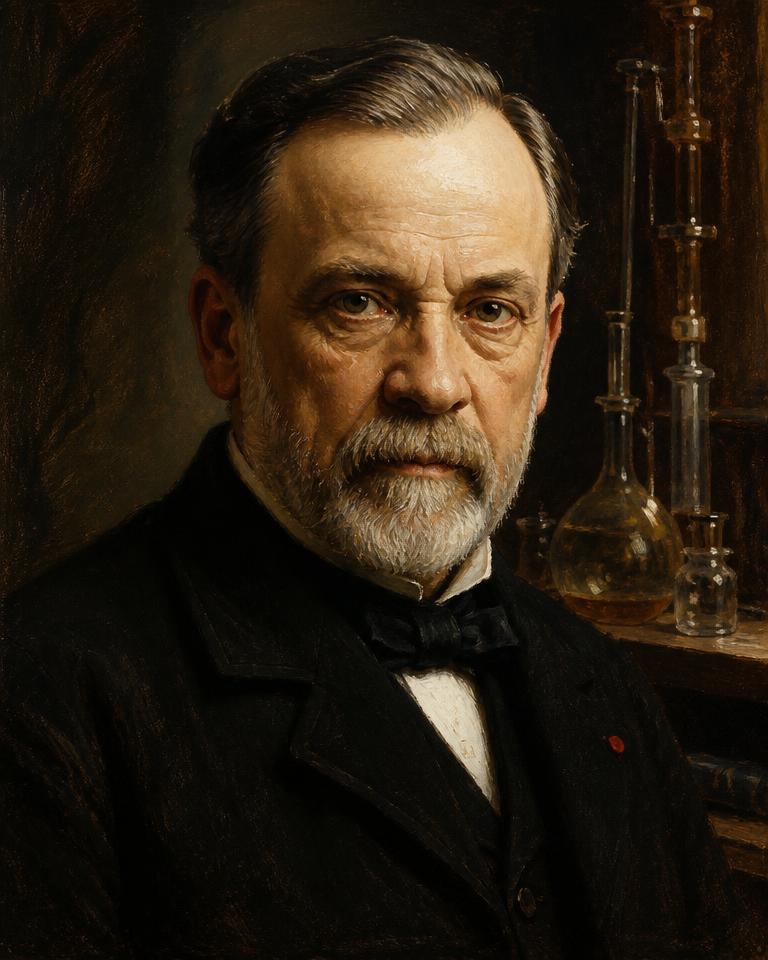
Quick Facts
- Years
- 1822 – 1895
- Category
- Scientists & Inventors
- Subcategory
- Microbiology
- Nationality
- French
- Occupation
- Chemist & Microbiologist
Louis Pasteur
1822 – 1895 · French · Chemist & Microbiologist
Audiobook

Life Lessons from Louis Pasteur
Marcus Alden · 54 min
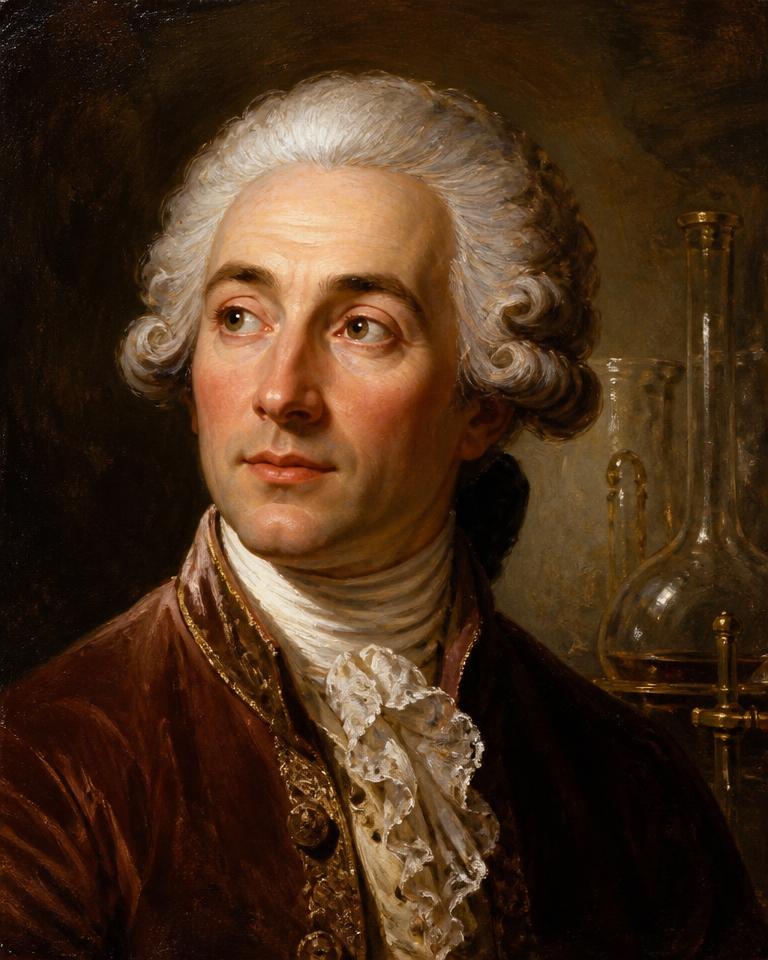
Louis Pasteur (1822–1895) was a French chemist and experimental scientist whose research helped establish microbiology and transformed medicine, agriculture, and food production. Beginning with studies of crystal structure, he moved into fermentation, spoilage, infectious disease, and vaccination. His experiments showed that particular microorganisms cause particular chemical changes and helped discredit the traditional belief that microscopic life routinely arises through spontaneous generation.
Pasteur’s name survives most visibly in pasteurization, the controlled heating process developed from his investigations of wine and beer spoilage. His work on silkworm diseases protected an important French industry, while his studies of chicken cholera and anthrax advanced the deliberate weakening, or attenuation, of microbes for vaccines. In 1885, his laboratory’s treatment of Joseph Meister after a rabid-dog bite brought international fame and encouraged the creation of the Pasteur Institute.
Pasteur did not create germ theory alone, and some of his methods, priority claims, and public presentations have generated scholarly debate. Nevertheless, his insistence on controlled experiments and his ability to connect laboratory science with practical problems made him one of the nineteenth century’s most influential researchers. He remains important because vaccination, infection control, industrial microbiology, and food safety all bear the imprint of the scientific world he helped build.
Quick Facts
| Field | Information |
|---|---|
| Full Name | Louis Pasteur |
| Common Name(s) | Louis Pasteur |
| Born | 27 December 1822 |
| Died | 28 September 1895 |
| Age at Death | 72 |
| Birthplace | Dole, Jura, France |
| Nationality | French |
| Occupation | Chemist, experimental scientist, microbiologist |
| Historical Era | Nineteenth century; Second Industrial Revolution |
| Famous For | Pasteurization, fermentation research, germ theory, vaccines against anthrax and rabies |
| Political Affiliation | Conservative republican sympathies later in life; no sustained party career |
| Religion | Roman Catholic; the precise character of his later devotion is debated |
| Education | Collège Royal de Besançon; École Normale Supérieure, Paris; doctorates in sciences, 1847 |
| Parents | Jean-Joseph Pasteur and Jeanne-Étiennette Roqui |
| Spouse(s) | Marie Laurent (married 1849) |
| Children | Jeanne, Jean-Baptiste, Cécile, Marie-Louise, Camille; only Jean-Baptiste and Marie-Louise survived childhood |
| Major Works | Studies on molecular asymmetry, fermentation, spontaneous generation, wine and beer, silkworm diseases, anthrax, and rabies |
| Major Achievements | Foundations of stereochemistry; microbial theory of fermentation; pasteurization; support for germ theory; attenuated vaccines; founding inspiration and first director of the Pasteur Institute |
Early Life
Pasteur was born in Dole in eastern France and grew up mainly in nearby Arbois. His father, Jean-Joseph Pasteur, had served as a sergeant in Napoleon’s army before becoming a tanner. His mother, Jeanne-Étiennette Roqui, came from a local family. The household was modest, disciplined, patriotic, and shaped by Catholic culture.
As a boy, Pasteur was not regarded as an obvious scientific prodigy. He produced accomplished pastel portraits of relatives and neighbors, showing patience and close observation. His academic promise emerged gradually. After an unhappy first attempt to study in Paris, he returned home, completed his baccalaureate in letters at Besançon in 1840, and later earned a science baccalaureate.
He entered the École Normale Supérieure in Paris in 1843. There he studied chemistry and physics and worked under Antoine-Jérôme Balard, the discoverer of bromine. Jean-Baptiste Dumas, an influential chemist and teacher, also became an important model. Pasteur received doctorates in physical and chemical sciences in 1847.
France was then rapidly expanding its universities, industries, and experimental institutions. Chemistry was becoming central to manufacturing and agriculture, while microscopes were revealing a biological world whose relationship to disease remained uncertain. Pasteur’s training at the border of chemistry, physics, and crystallography prepared him to investigate that world in unusually quantitative ways.
Rise to Prominence
Pasteur’s first major research concerned tartaric and paratartaric acids. In 1848 he painstakingly separated two kinds of tiny crystals that were mirror images of one another. Their solutions rotated polarized light in opposite directions. The work linked a substance’s optical behavior to molecular asymmetry and became foundational to stereochemistry.
Academic appointments followed at Strasbourg and Lille. In Strasbourg, he married Marie Laurent, daughter of the university rector. At Lille, a manufacturing center, local industrial problems redirected his attention. A distiller asked him to investigate failed beet-alcohol fermentation. Pasteur found that successful and spoiled fermentations contained different microorganisms.
He argued that fermentation was associated with the activity of living organisms rather than being merely the decomposition of unstable chemicals. This challenged influential chemists, including Justus von Liebig, although later biochemistry showed that enzymes and cell-free processes also mattered. Pasteur’s central insight—that identifiable microbes produce identifiable transformations—proved immensely fruitful.
Back in Paris, he conducted celebrated experiments with nutrient broths in swan-neck flasks. Air could enter, but airborne dust and microorganisms were trapped in the curved necks; the broth remained sterile unless contamination reached it. These results weakened claims that microbial life appeared spontaneously under ordinary conditions.
Practical investigations into wine spoilage, silkworm disease, and vaccination made Pasteur a national figure. His dramatic 1881 anthrax demonstration and the 1885 rabies treatment then brought worldwide fame.
Major Achievements
Molecular Asymmetry and Stereochemistry
In 1848 Pasteur showed that crystals of sodium ammonium tartrate occurred in left- and right-handed forms. By sorting them manually and testing their solutions, he connected crystal handedness with opposite rotations of polarized light.
This mattered because it suggested that molecules themselves possess three-dimensional asymmetry. The discovery helped establish stereochemistry, now essential to understanding pharmaceuticals, biological molecules, and chemical reactions.
Fermentation and Microbial Specificity
During the 1850s and 1860s, Pasteur studied lactic, alcoholic, and butyric fermentation. He associated each process with characteristic microorganisms and showed that contamination could redirect or spoil production.
His interpretation opposed purely chemical accounts of fermentation. Although Eduard Buchner later demonstrated cell-free fermentation, earning the 1907 Nobel Prize, Pasteur was right that microbial metabolism drives many industrial fermentations. Modern brewing, winemaking, biotechnology, and microbial ecology grew from this conceptual shift.
The Swan-Neck Flask Experiments
Pasteur boiled nutrient infusions in flasks with long curved necks. Air remained in contact with the liquid, but dust settled in the bend. The liquid stayed free of microbial growth until the flask was tilted or the neck otherwise permitted contamination.
The experiments did not address every conceivable form of spontaneous generation, but they strongly demonstrated that ordinary microbial growth came from environmental contamination. Sterile technique, laboratory microbiology, and infection control gained a powerful experimental basis.
Pasteurization and Food Safety
French wine producers faced costly spoilage. Pasteur found that gently heating wine could kill undesirable organisms without boiling the product. He patented a wine-preservation process in 1865, and related methods were applied to beer and later milk.
Modern pasteurization uses standardized temperature-and-time combinations that differ from Pasteur’s original procedures. Its significance is enormous: it reduces pathogens, extends shelf life, and remains a basic public-health safeguard.
Silkworm Disease Research
Beginning in 1865, Pasteur investigated epidemics devastating French silk production. He distinguished two diseases, pébrine and flacherie, and promoted microscopic examination and selection of healthy eggs.
His explanations evolved and were not flawless, but the program helped restore silk cultivation and demonstrated how laboratory observation could address agricultural epidemics. It also strengthened the idea that disease prevention requires identifying and interrupting transmission.
Vaccines Against Chicken Cholera and Anthrax
Pasteur’s laboratory found that weakened cultures could protect chickens against chicken cholera. He generalized this principle of attenuation and adopted the term “vaccination” in honor of Edward Jenner.
His team then developed an anthrax vaccine. In the public trial at Pouilly-le-Fort in 1881, vaccinated animals survived a challenge that killed most unvaccinated controls. The event powerfully advertised preventive microbiology, though laboratory notebooks later complicated Pasteur’s public account of exactly how the vaccine had been prepared.
Rabies Treatment
Rabies presented a special problem because its agent could not then be seen or grown like bacteria. Pasteur and colleagues, especially Émile Roux, developed a treatment using preparations from infected rabbit spinal cords dried for different periods.
In July 1885, nine-year-old Joseph Meister, badly bitten by a rabid dog, received a series of inoculations and survived. Because it was uncertain whether the dog had transmitted rabies, the case alone could not prove efficacy; accumulating cases built confidence. The achievement led directly to international support for the Pasteur Institute.
The Pasteur Institute
Public subscriptions funded the Pasteur Institute in Paris, inaugurated in 1888. It combined treatment, research, and teaching under Pasteur’s direction.
The institute became a model for biomedical research centers. Its scientists later made major discoveries involving diphtheria, plague, typhus, tuberculosis, and immunology, while an international network of Pasteur Institutes extended laboratory medicine worldwide.
Leadership and Work
Pasteur organized research around precise questions, controlled comparisons, repeated observation, and practical outcomes. He was exceptionally persistent and skilled at turning technical results into persuasive public demonstrations. He also understood that science required teams, facilities, patrons, and political support.
His laboratory included vital collaborators such as Émile Roux, Charles Chamberland, Louis Thuillier, and Jules Joubert. Marie Pasteur managed correspondence, copied manuscripts, and supported laboratory work. Pasteur could inspire loyalty, but he was demanding, hierarchical, secretive about procedures, and intensely protective of priority.
His strengths included experimental imagination, stamina, strategic communication, and the ability to connect chemistry, biology, industry, and medicine. His weaknesses included a tendency to simplify uncertain results in public, minimize collaborators, and frame disputes as decisive victories. Modern scholarship therefore views his accomplishments as both personal achievements and products of collective laboratory work.
Personal Life
Pasteur married Marie Laurent on 29 May 1849. Their partnership lasted until his death. Of their five children, Jeanne, Cécile, and Camille died young—two from typhoid fever and one from a tumor. These losses are often linked to Pasteur’s interest in infectious disease, although his scientific path had several causes and should not be reduced to personal tragedy.
He maintained close relationships with his family and often worked during holidays at Arbois. Portraiture remained evidence of his early artistic talent, but science dominated his adult routine. Colleagues described him as intense, patriotic, emotionally expressive, and deeply committed to work.
In 1868 he suffered a severe stroke that partially paralyzed his left side. He recovered enough to continue directing research, traveling, and supervising experiments, but later depended increasingly on assistants. Further strokes damaged his health before his death at Marnes-la-Coquette on 28 September 1895.
Philosophy and Beliefs
Pasteur believed strongly in experimental evidence and in science as a service to humanity, agriculture, and national prosperity. France’s defeat in the Franco-Prussian War intensified his patriotism; he even returned an honorary degree previously awarded by the University of Bonn.
Politically, he admired order and authority and had received support under Napoleon III. After the empire fell, he worked successfully within the French Republic. Labels such as Bonapartist, conservative, or republican capture only parts of his position.
He was raised Catholic and retained religious attachments. Claims that he was either an unquestioning clerical believer or secretly irreligious exceed the evidence. His published statements often treated science and faith as separate but compatible domains.
Ethically, Pasteur defended animal experimentation as necessary for saving life. That view supported vaccine research but remains morally contested. His rabies work also raised questions about when experimental treatment is justified under urgent conditions.
Challenges and Controversies
Pasteur worked in a competitive scientific culture. Félix-Archimède Pouchet defended spontaneous generation; Liebig opposed Pasteur’s vital interpretation of fermentation; Robert Koch and German bacteriologists disputed French claims over anthrax and methods of vaccination.
Priority was often shared. Theodor Schwann, Charles Cagniard de la Tour, Agostino Bassi, Ignaz Semmelweis, Joseph Lister, and others had already connected microorganisms with fermentation, disease, or infection control. Pasteur integrated and extended such work but did not single-handedly invent germ theory.
The anthrax vaccine is a notable controversy. Pasteur publicly emphasized oxygen attenuation, while surviving notebooks indicate that the 1881 demonstration used a vaccine prepared by a chemical method associated with Henry Toussaint’s approach. Historians generally regard the trial as scientifically important while criticizing the mismatch between public presentation and private procedure.
Rabies treatment was also risky. Pasteur was not a physician, and the method had not undergone modern clinical trials. Supporters stress the near certainty of death after symptomatic rabies and the encouraging survival record. Critics note uncertain diagnoses, changing protocols, and limited contemporary controls.
Pasteur made mistakes. His early understanding of silkworm disease was incomplete, and his broad language about fermentation was later qualified by cell-free enzymology. These limitations do not erase his influence; they show science advancing through correction as well as discovery.
Legacy
Pasteur changed how societies understood decay, contamination, infection, and prevention. Pasteurization protects food supplies; attenuation remains a vaccine strategy; and his fusion of basic research with clinical and industrial application anticipates modern translational science.
The Pasteur Institute remains a major biomedical organization, with an international network active in research, surveillance, education, and public health. Pasteur’s crypt lies in a richly decorated neo-Byzantine chapel beneath the institute in Paris.
His family home and laboratory in Arbois are preserved as the Maison de Louis Pasteur. Streets, schools, hospitals, statues, postage stamps, and scientific institutions around the world bear his name. The SI-derived unit once called the “pasteur” did not become standard, but his name is spoken daily through the verb “pasteurize.”
Modern historians study him not only as a heroic discoverer but also as a laboratory leader, scientific entrepreneur, patriot, and controversial public communicator. That fuller perspective makes his legacy more human—and more instructive.
Interesting Facts
- Pasteur was born in Dole but considered Arbois his family home.
- He produced skillful pastel portraits as a teenager.
- His first famous discovery concerned mirror-image crystals, not microbes.
- He sorted crystals by hand with tweezers.
- He began investigating fermentation after moving to industrial Lille.
- His swan-neck flasks allowed air in while trapping contaminated dust.
- “Pasteurization” was named for him, although later processes differ from his original wine treatment.
- Three of his five children died before adulthood.
- He suffered a disabling stroke at age 45.
- He continued directing major research after that stroke.
- He coined the biological use of “anaerobic” for life without free oxygen.
- He used “vaccination” broadly to honor Edward Jenner.
- The Pouilly-le-Fort anthrax trial was staged publicly before veterinarians, farmers, and journalists.
- Joseph Meister later worked at the Pasteur Institute.
- Pasteur was elected to the French Academy in 1881.
- The Pasteur Institute opened in 1888 through international donations.
- He was given a state funeral at Notre-Dame Cathedral.
- His remains were later placed in a crypt at the Pasteur Institute.
Famous Quotes
Translations vary because Pasteur wrote and spoke mainly in French.
- “Chance favors only the prepared mind.” From his 1854 inaugural address at Lille; it means discovery depends on prior knowledge and readiness.
- “In the fields of observation, chance favors only prepared minds.” A fuller translation of the same remark, often quoted in shortened form.
- “There are no applied sciences, only applications of science.” From the Lille address; Pasteur argued that practical innovation rests on fundamental knowledge.
- “Science knows no country, because knowledge belongs to humanity.” From an 1888 address; he added that the scientist still has a homeland, balancing international science with patriotism.
- “The role of the infinitely small in nature is infinitely great.” Associated with his reception into the French Academy in 1882; it summarizes the importance of microorganisms.
- “Do not put forward anything that you cannot prove by experimentation.” From advice attributed to Pasteur’s scientific teaching; wording differs among translations.
- “When I approach a child, he inspires in me two sentiments: tenderness for what he is, and respect for what he may become.” Documented in recollections and frequently translated; it expresses his concern for future human potential.
- “Work usually, work usefully.” A common translation of counsel given late in life; it reflects his ethic of disciplined service.
- “One must work; one must work. I have done what I could.” Reported among his final sentiments; versions vary.
- “Wine is the most healthful and most hygienic of beverages.” Printed in his work on wine; historically documented but not modern medical advice.
The popular saying “The microbe is nothing; the terrain is everything” is often linked to Pasteur’s deathbed, but reliable contemporary evidence is lacking; it should be treated as disputed.
Timeline
- 1822 — Born in Dole on 27 December.
- 1827 — Family settles in Arbois.
- 1840 — Receives baccalaureate in letters at Besançon.
- 1842 — Receives baccalaureate in sciences.
- 1843 — Enters the École Normale Supérieure.
- 1847 — Completes doctorates in physics and chemistry.
- 1848 — Discovers molecular asymmetry in tartrate crystals; appointed at Dijon, then Strasbourg.
- 1849 — Marries Marie Laurent.
- 1854 — Becomes dean of the new Faculty of Sciences at Lille.
- 1857 — Publishes major work on lactic fermentation; returns to the École Normale Supérieure.
- 1861 — Reports swan-neck flask experiments against spontaneous generation.
- 1862 — Wins the French Academy of Sciences prize concerning spontaneous generation.
- 1863–1865 — Studies wine spoilage and heat preservation.
- 1865 — Patents a wine-heating process; begins silkworm investigations.
- 1868 — Suffers a severe stroke.
- 1870–1871 — Franco-Prussian War intensifies his patriotic public role.
- 1876 — Publishes Studies on Beer.
- 1877 — Begins systematic research on anthrax.
- 1879 — Reports immunization work on chicken cholera.
- 1881 — Conducts public anthrax vaccine trial at Pouilly-le-Fort; elected to the French Academy.
- 1882 — Formally received into the French Academy.
- 1885 — Joseph Meister receives rabies inoculations.
- 1886 — International fundraising begins for a dedicated institute.
- 1888 — Pasteur Institute opens in Paris.
- 1895 — Dies at Marnes-la-Coquette on 28 September.
- 1896 — Remains transferred to the Pasteur Institute crypt.
Frequently Asked Questions
Who was Louis Pasteur?
Louis Pasteur was a French chemist and experimental scientist who helped establish microbiology. He demonstrated links between microorganisms and fermentation, investigated contamination and disease, developed heat treatments for spoiled beverages, and led vaccine research against chicken cholera, anthrax, and rabies. His career connected laboratory science to practical problems in industry, agriculture, veterinary medicine, and human health.
What is Louis Pasteur best known for?
He is best known for pasteurization, support for germ theory, and vaccine development. His name became internationally famous after Joseph Meister survived post-exposure rabies treatment in 1885. Historians also emphasize his earlier discovery of molecular asymmetry, which helped found stereochemistry and remains fundamental to modern chemistry and pharmacology.
Did Pasteur invent germ theory?
No single person invented germ theory. Earlier researchers, including Agostino Bassi, Theodor Schwann, and others, had connected microbes with biological processes or disease. Pasteur supplied influential experimental evidence, showed microbial specificity in fermentation and spoilage, and promoted the practical implications. Robert Koch later developed rigorous methods linking particular bacteria to particular diseases.
What is pasteurization?
Pasteurization is controlled heating designed to reduce harmful or spoilage-causing microorganisms while limiting changes to a product. Pasteur developed heat treatment to protect wine and beer. Later public-health systems adapted and standardized the principle for milk and other foods. Pasteurization reduces risk but does not necessarily sterilize a product or destroy every microbial spore.
Did Pasteur invent vaccination?
No. Edward Jenner had demonstrated vaccination against smallpox decades earlier, and variolation had an older history. Pasteur expanded vaccination by using laboratory-manipulated infectious agents. His work helped establish attenuation—the weakening of a pathogen—as a deliberate method for generating immunity. He adopted Jenner’s word “vaccination” for this broader practice.
How did the swan-neck flask experiment work?
Pasteur boiled nutrient broth in flasks whose long necks curved downward and upward. Air could enter, answering the objection that sealed containers lacked a supposed life-generating force. Dust and microbes settled in the bend rather than reaching the broth. Growth appeared when contamination reached the liquid, supporting the conclusion that microbes came from existing microbes.
Did Pasteur save Joseph Meister from rabies?
Meister survived after receiving Pasteur’s experimental inoculations following severe dog bites. The case was historically decisive in building confidence and support. However, no test could prove that Meister would otherwise have developed rabies. Evidence from later treated patients strengthened the treatment’s credibility, while modern rabies prevention uses standardized vaccines and immunoglobulin.
Was Louis Pasteur a medical doctor?
No. Pasteur trained in chemistry and physics, not medicine. This fact made the rabies treatment ethically and professionally controversial. Physicians administered or supervised parts of the clinical procedure, while Pasteur directed the research program. His career helped create a new biomedical space in which laboratory scientists worked closely with clinicians.
What did Pasteur discover about fermentation?
He showed that distinct microorganisms were associated with distinct fermentations and forms of spoilage. Yeast drove alcoholic fermentation, while other microbes produced lactic or butyric changes. He overstated the necessity of intact living cells, because enzymes can operate outside cells, but correctly established microorganisms as active chemical agents rather than incidental contaminants.
What was the anthrax vaccine trial?
At Pouilly-le-Fort in 1881, Pasteur’s group vaccinated farm animals and left comparable animals untreated. After exposure to anthrax, the vaccinated animals largely survived while unvaccinated ones died. The demonstration persuaded a broad public. Later notebook research showed that the preparation method differed from Pasteur’s simplified public account, creating a continuing historical controversy.
Why did Pasteur study silkworms?
France’s silk industry was being devastated by epidemic disease, and the government asked Pasteur to investigate. Despite having little prior knowledge of silkworms, he used microscopy and breeding controls to distinguish diseased stock. His recommendations helped producers select healthier eggs, illustrating the economic value of experimental biology.
How did Pasteur’s children affect his work?
Three of Pasteur’s five children died young, including two from typhoid fever. These tragedies likely deepened his awareness of disease, but evidence does not justify claiming that they alone caused his medical research. His investigations arose from chemistry, industrial fermentation, government commissions, institutional opportunities, and collaboration as well as family experience.
Was Pasteur religious?
Pasteur was raised Roman Catholic and retained religious commitments and ceremonial ties. He rejected the idea that scientific investigation necessarily eliminated faith. Yet some highly devotional quotations attributed to him are poorly sourced, and historians debate the intensity and form of his later beliefs. A cautious account avoids portraying him as either a dogmatist or an atheist.
What illness did Pasteur suffer?
In 1868 Pasteur suffered a serious stroke that left partial paralysis, especially on his left side. He gradually returned to work but relied more heavily on collaborators for laboratory manipulation. Further cerebrovascular problems weakened him later. His continued leadership illustrates resilience, while also underscoring how much his achievements depended on a team.
Did Pasteur steal other scientists’ ideas?
“Steal” is too simple a judgment. Pasteur sometimes claimed priority aggressively and did not always disclose methods fully. Henry Toussaint’s work was especially relevant to anthrax vaccination, and many predecessors contributed to germ theory. Nonetheless, Pasteur performed substantial original research, built effective experimental programs, and integrated scattered findings into powerful new practices.
How did Louis Pasteur die?
Pasteur died on 28 September 1895 at Marnes-la-Coquette, near Paris, after years of declining health associated with strokes. France honored him with a state funeral at Notre-Dame. He was first buried at the cathedral, then transferred in 1896 to a specially constructed crypt beneath the Pasteur Institute.
Why is Pasteur still relevant today?
Modern food safety, vaccination, sterile practice, microbial biotechnology, and translational research reflect principles that Pasteur helped establish. His career also offers cautionary lessons about research ethics, transparency, publicity, and credit. Studying him reveals both the power of experimental science and the importance of critically examining scientific heroes.
Lessons We Can Learn
- Prepare for discovery. Pasteur’s crystal research shows that apparent accidents reward trained observation; expertise makes anomalies meaningful.
- Connect theory with practical needs. Fermentation studies solved industrial problems while advancing biology; modern innovation likewise benefits from two-way exchange.
- Use controls. Swan-neck flasks isolated contamination as a variable; controlled comparison remains central to trustworthy evidence.
- Persist through setbacks. Pasteur continued after a disabling stroke; resilient teams can preserve meaningful work during adversity.
- Build interdisciplinary teams. Chemistry, medicine, veterinary science, and agriculture converged in his laboratory; complex problems rarely fit one discipline.
- Communicate clearly. The anthrax demonstration won public support; scientific results have greater impact when audiences understand them.
- Do not oversimplify evidence. Pasteur’s selective public accounts created controversy; transparency protects credibility.
- Credit collaborators and predecessors. Roux, Chamberland, Toussaint, and others were essential; fair attribution strengthens scientific culture.
- Balance urgency with ethics. Rabies treatment confronted a fatal threat with uncertain evidence; modern emergency research still requires safeguards.
- Create institutions, not only discoveries. The Pasteur Institute outlived its founder; durable organizations multiply knowledge across generations.
Related Historical Figures
- Edward Jenner — Pioneered smallpox vaccination; Pasteur broadened Jenner’s terminology and laboratory approach.
- Robert Koch — German bacteriologist, rival, and co-founder of modern germ theory and medical bacteriology.
- Joseph Lister — Applied germ theory to antiseptic surgery and publicly acknowledged Pasteur’s influence.
- Claude Bernard — French physiologist whose experimental medicine both influenced and sometimes conflicted with Pasteur’s interpretations.
- Justus von Liebig — Chemist who defended chemical explanations of fermentation against Pasteur’s biological account.
- Félix-Archimède Pouchet — Naturalist and principal French opponent in the spontaneous-generation debate.
- Émile Roux — Pasteur’s collaborator in rabies research and later a major Pasteur Institute leader.
- Charles Chamberland — Collaborator who worked on vaccines, filtration, and sterilization equipment.
- Henry Toussaint — Veterinarian whose anthrax vaccine research overlapped with and influenced Pasteur’s program.
- Agostino Bassi — Earlier demonstrated that a microorganism caused silkworm disease, anticipating germ theory.
Watch and Learn
Louis Pasteur - Scientist | Mini Bio | BIO · Biography
Related Historical Figures