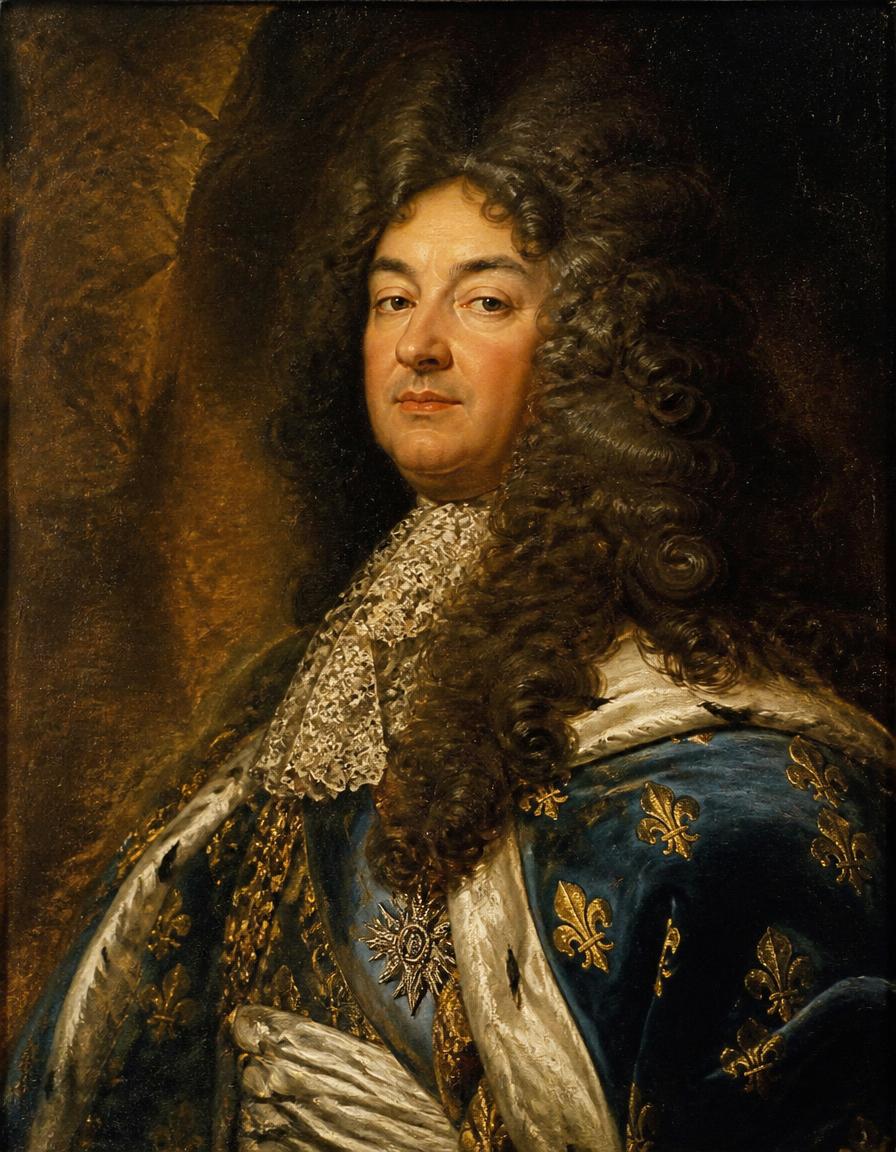
Quick Facts
- Years
- 1638 – 1715
- Category
- World Leaders & Revolutionaries
- Nationality
- French
- Occupation
- King of France
Louis XIV
1638 – 1715 · French · King of France
Audiobook

Life Lessons from Louis XIV
Marcus Alden · 56 min
Louis XIV (1638–1715), known as Louis the Great and the Sun King, ruled France for more than seventy-two years—the longest reign of any sovereign whose dates are securely documented. Becoming king at age four, he grew up amid the Fronde, a series of rebellions that threatened royal authority. After assuming personal control of government in 1661, Louis strengthened the monarchy, reorganized administration, sponsored industry and the arts, enlarged France’s borders, and made his court at Versailles a model for European rulers.
His reign represented both the power and the dangers of absolutist monarchy. Ministers such as Jean-Baptiste Colbert improved taxation, manufacturing, trade, and naval strength, while Louis’s patronage helped establish France as Europe’s leading cultural power. Yet repeated wars, heavy taxation, religious coercion, and the revocation of protections for Protestants caused severe suffering and left the kingdom burdened by debt.
Louis also reshaped the public image of monarchy. Architecture, ceremony, painting, music, theater, and carefully managed symbolism presented the king as the center of political order. Historians continue to study him because his reign illuminates state-building, propaganda, court society, confessional conflict, colonial expansion, and the limits of personal rule. His legacy survives most visibly at Versailles, but also in institutions, borders, cultural traditions, and political debates that extend far beyond France.
Quick Facts
| Field | Details |
|---|---|
| Full Name | Louis Dieudonné de France |
| Common Name(s) | Louis XIV; Louis the Great; the Sun King |
| Born | 5 September 1638 |
| Died | 1 September 1715 |
| Age at Death | 76 |
| Birthplace | Château de Saint-Germain-en-Laye, France |
| Nationality | French |
| Occupation | King of France and Navarre |
| Historical Era | Early modern Europe; Age of Absolutism |
| Famous For | Longest securely documented sovereign reign; Versailles; centralized monarchy; wars of expansion; royal patronage |
| Political Affiliation | Bourbon monarchy; not applicable in the modern party sense |
| Religion | Roman Catholicism |
| Education | Private royal education in religion, history, languages, military affairs, riding, dancing, and courtly arts |
| Parents | Louis XIII of France and Anne of Austria |
| Spouse(s) | Maria Theresa of Spain; later a probable secret marriage to Madame de Maintenon, though no surviving official record proves the ceremony conclusively |
| Children | Six legitimate children with Maria Theresa, only Louis, the Grand Dauphin, surviving childhood; numerous acknowledged children outside marriage |
| Major Works | Palace and court of Versailles; royal ordinances; founding or reorganization of academies, institutions, and manufactures |
| Major Achievements | Centralization of royal government; administrative and military reforms; cultural patronage; territorial expansion; construction of Versailles |
Early Life
Louis was born at Saint-Germain-en-Laye after more than twenty years of childless marriage between Louis XIII and Anne of Austria. His parents treated his birth as providential, giving him the name Dieudonné, “God-given.” His younger brother, Philippe, later Duke of Orléans, was born in 1640.
Louis XIII died on 14 May 1643. Four-year-old Louis inherited the crown, while Anne of Austria became regent. She relied heavily on Cardinal Jules Mazarin, an Italian-born diplomat who continued the policies of Cardinal Richelieu. Mazarin became Louis’s principal political mentor and taught him practical lessons in diplomacy, secrecy, patronage, and royal authority.
The young king received instruction from clerics, courtiers, and military men. His formal scholarship was less extensive than that of some contemporary princes, but he became skilled in ceremony, horsemanship, hunting, dancing, warfare, and the management of people. He developed a strong memory for faces and favors. Ballet was especially important: appearing as Apollo in the 1653 Ballet de la nuit helped associate him with solar imagery.
His childhood unfolded during France’s struggle with Habsburg Spain and amid fiscal pressure at home. Between 1648 and 1653, the Fronde brought revolts by courts, nobles, and urban groups. The royal family temporarily fled Paris, and Louis experienced insecurity and political humiliation. Historians debate how directly this experience explains his later policies, but it clearly reinforced his distrust of rebellion and his insistence on order.
Rise to Prominence
Although Louis was legally declared of age in 1651, Mazarin continued directing government. Royal forces defeated the Fronde, and Louis entered Paris in triumph in 1652. The crown restored order without eliminating noble status; instead, it increasingly bound aristocrats to royal service and patronage.
France’s war with Spain ended with the Treaty of the Pyrenees in 1659. The settlement brought territorial gains and arranged Louis’s marriage to the Spanish infanta Maria Theresa. They married in June 1660. She renounced claims to the Spanish inheritance in return for a dowry, but Spain never fully paid it—a fact later used in French dynastic arguments.
Mazarin died on 9 March 1661. The next day, Louis announced that he would govern personally rather than appoint another chief minister. Some contemporaries underestimated the twenty-two-year-old king, but he established a disciplined routine of councils, correspondence, audiences, and inspections.
A decisive early episode involved Nicolas Fouquet, the powerful superintendent of finances. Arrested in September 1661 and eventually imprisoned for life, Fouquet became a warning that no minister could rival the sovereign. Louis then elevated capable servants, notably Colbert in finance and administration, Michel Le Tellier and the Marquis de Louvois in military affairs, and Hugues de Lionne in diplomacy.
Major Achievements
Personal Government and Administrative Centralization
Louis made himself the final authority in policy while relying on specialized councils and professional ministers. Provincial intendants—royal officials overseeing justice, policing, and finance—extended the crown’s reach. He reduced the political independence of great nobles without abolishing their privileges.
This mattered because government became more coordinated and dependent on the monarch. The system was not a modern centralized bureaucracy: offices could be purchased, provinces retained different laws, and tax exemptions remained widespread. Nevertheless, Louis created a powerful model of personal monarchy that influenced European courts.
Financial, Commercial, and Naval Development
Colbert sought to increase royal revenue through stricter accounting, reduced corruption, support for manufactures, protective tariffs, and commercial companies. The government promoted luxury industries including textiles, glass, tapestries, and furniture. The Gobelins Manufactory became a center of royal production.
French ports, roads, canals, colonies, and the navy received investment. The Canal du Midi, completed in the 1680s under Pierre-Paul Riquet’s direction, linked the Atlantic watershed with the Mediterranean. France’s navy grew into a major force.
Results were mixed. Production and maritime capacity increased, but warfare repeatedly overwhelmed financial reforms. Indirect taxes, tax farming, unequal exemptions, and borrowing continued to burden the state and ordinary people.
Military Reform and Territorial Expansion
Under Le Tellier, Louvois, Sébastien Le Prestre de Vauban, and other professionals, France developed a larger, more standardized army. Reforms improved recruitment, supply, promotion, barracks, artillery, and fortification. Vauban designed and strengthened a defensive belt of fortresses along vulnerable frontiers.
Wars brought France territories including parts of Flanders, Franche-Comté, Alsatian possessions, and strategically important frontier towns. The 1678–1679 Treaties of Nijmegen marked a high point in Louis’s international prestige.
The long-term result was a more defensible France with borders closer to those of the modern state. Expansion also provoked coalitions, devastated contested regions, and imposed enormous fiscal and human costs.
Versailles and Court Culture
Louis transformed his father’s hunting lodge at Versailles into an immense palace and governmental center. Architects Louis Le Vau and Jules Hardouin-Mansart, designer Charles Le Brun, and landscape architect André Le Nôtre helped create its ceremonial spaces, gardens, and Hall of Mirrors. The royal court and government formally settled there in 1682.
Versailles projected magnificence, organized access to the king, and drew leading nobles into a competitive court culture. Rank, etiquette, residence, and favor became instruments of governance. Yet it is too simple to say Louis merely “imprisoned” nobles there: many moved between court, estates, armies, and provincial offices, using Versailles to pursue their own interests.
The palace became one of the most influential architectural complexes in history. Courts across Europe imitated its planning and ceremonial language.
Patronage of Arts, Sciences, and Institutions
Louis supported the Académie française and established or reorganized institutions including the academies of dance, inscriptions, sciences, architecture, and music. He patronized figures such as Molière, Jean Racine, Pierre Corneille, Jean-Baptiste Lully, Le Brun, and Hardouin-Mansart.
Royal patronage strengthened French classicism and helped standardize artistic taste, language, and performance. The Hôtel des Invalides provided care for veterans while also expressing royal military prestige. The Paris Observatory supported astronomical research.
Art served political purposes, but its achievements exceeded propaganda. French theater, music, decorative arts, architecture, fashion, and etiquette shaped European culture for generations.
Dynastic Diplomacy and the Spanish Succession
When Charles II of Spain died childless in 1700, he named Louis’s grandson Philip, Duke of Anjou, heir to the Spanish monarchy. Louis accepted the will, and Philip became Philip V of Spain. Fear of Bourbon predominance helped cause the War of the Spanish Succession.
The 1713–1714 peace settlements allowed Philip to remain king, provided the French and Spanish crowns could never unite. France surrendered important strategic and colonial advantages to Britain and recognized other territorial changes.
The outcome preserved a Bourbon dynasty in Spain, which still reigns today, but came at an extraordinary cost in debt, casualties, and destruction.
Leadership and Work
Louis treated kingship as continuous labor. He attended councils, read reports, made appointments, received diplomats, reviewed troops, and maintained a strict daily timetable. His ability to concentrate on administrative detail was a genuine strength.
He chose ministers largely from families dependent on royal service rather than from the highest aristocracy. This reduced the danger of a single overmighty subject. He encouraged competition among officials and kept final decisions in his own hands.
Ceremony was central to his method. Rituals such as the lever—the formal royal rising—distributed access and honor according to rank. Portraits, medals, festivals, architecture, and publications presented Louis as a victorious, divinely appointed ruler. The sun symbol conveyed order and life radiating from a center.
His strengths included discipline, dignity, political patience, memory, and talent for selecting capable administrators. Weaknesses included overconfidence, sensitivity to prestige, resistance to admitting mistakes, and a tendency to continue wars after attainable goals had narrowed. His later court also became more religious and less exuberant.
Louis did not exercise unlimited power in practice. Custom, law courts, provincial privileges, venal offices, noble influence, the Church, financial markets, and slow communication restricted what the monarchy could accomplish.
Personal Life
Louis married Maria Theresa in 1660. Contemporary accounts generally describe her as dutiful and devout, but she possessed limited political influence. Of their six children, only the Grand Dauphin survived childhood. Maria Theresa died in 1683.
The king had several mistresses, most famously Louise de La Vallière, Madame de Montespan, and Madame de Maintenon. He acknowledged a number of children by La Vallière and Montespan and arranged advantageous positions or marriages for them. Efforts to elevate legitimized sons late in his reign caused resentment among princes of the blood.
Madame de Maintenon, born Françoise d’Aubigné, became an important companion and religious influence. Most historians accept that Louis secretly married her after Maria Theresa’s death, probably in 1683, although documentation of the ceremony has not survived. The marriage was morganatic and never made her queen.
Louis enjoyed hunting, dancing, music, theater, gardens, building projects, billiards, and elaborate meals. He expected polished manners and emotional self-control. Courtiers also observed that he could be courteous, attentive, and loyal, though intimidating and highly conscious of rank.
His health was carefully recorded. In 1686 he underwent a dangerous operation for an anal fistula and recovered. He suffered dental problems and later gout. Gangrene in his leg caused his death in 1715.
Philosophy and Beliefs
Louis believed monarchy was ordained by God and that the king owed an account of his conduct ultimately to God. This doctrine of divine-right kingship did not mean arbitrary action in theory: a Christian ruler was expected to uphold justice, religion, law, and the welfare of his subjects. In practice, however, Louis permitted little institutional challenge to his authority.
The statement “I am the state” is almost certainly apocryphal. His government remained a network of councils, courts, privileges, offices, and negotiated relationships. Still, he personified sovereignty more fully than most European monarchs.
Louis’s Roman Catholic faith deepened with age. He viewed religious unity as important to political unity. This conviction informed campaigns against Jansenism and Protestantism and contributed to the 1685 revocation of the Edict of Nantes. Coercion showed the intolerance embedded in confessional states of the period, but contemporaneous norms do not remove his responsibility for the policy.
His political ethics emphasized glory, reputation, hierarchy, obedience, and service. The pursuit of gloire could mean honorable public achievement, but it also encouraged expensive wars and theatrical displays of power.
Challenges and Controversies
The most serious religious controversy was the revocation of the Edict of Nantes through the Edict of Fontainebleau in 1685. Protestant worship was suppressed, churches were demolished, and many Huguenots faced forced conversion, imprisonment, or military coercion through the dragonnades. Perhaps 150,000–200,000 fled despite prohibitions, though estimates vary. Defenders claimed Louis sought unity; critics then and now emphasize persecution, lost skills, and damage to France’s reputation.
War dominated the reign. The War of Devolution, Dutch War, War of the Reunions, Nine Years’ War, and War of the Spanish Succession expanded or defended French power. French actions, including the devastation of the Palatinate in 1688–1689, aroused outrage. Some historians stress rational frontier security in a competitive state system; others see aggression driven by dynastic ambition and prestige.
Fiscal policy remained deeply unequal. Nobles and many clergy enjoyed exemptions, while peasants and commoners bore much of the tax burden. Tax collection could be harsh and inefficient. War expenditure produced mounting debt despite emergency devices such as capitation and the dixième income tax.
The 1690s and 1700s brought harvest failures, high prices, disease, and famine. The government attempted relief, but limited transport and administrative capacity made intervention inadequate. Exact mortality totals are debated, yet suffering was unquestionably severe.
French colonial growth also formed part of Louis’s reign. The 1685 Code Noir regulated slavery in French Caribbean colonies, required Catholic baptism, and entrenched enslaved status and brutal punishments. Although drafted by royal officials and shaped by colonial practices, it remains a grave element of the monarchy’s legacy.
Versailles has been criticized as extravagant. Its cost was large but difficult to calculate because construction extended over decades and accounts combined many projects. It did not by itself bankrupt France; warfare was far more expensive. Nevertheless, the palace symbolized inequalities that later critics associated with Bourbon monarchy.
Legacy
Louis left France militarily formidable, culturally prestigious, territorially larger, and institutionally more centralized. French became the principal language of elite diplomacy, while French architecture, dress, cuisine, theater, and court ceremony influenced Europe.
His reign also exposed structural weaknesses. Chronic warfare, regressive taxation, religious intolerance, and dependence on credit damaged the kingdom. These problems did not directly cause the French Revolution seventy-four years later, but they contributed to traditions and financial structures inherited by later monarchs.
Louis was succeeded by his five-year-old great-grandson, Louis XV, because his son, grandson, and eldest great-grandson had died before him. The resulting regency demonstrated how vulnerable a highly personalized system could be during a royal minority.
The Palace of Versailles is now a museum and UNESCO World Heritage Site. Louis’s apartments, gardens, portraits, statues, fountains, and chapel remain major sources for understanding his monarchy. Other associated sites include the Louvre, Les Invalides, the Paris Observatory, Saint-Germain-en-Laye, and the Basilica of Saint-Denis, where his remains were buried before revolutionary desecration of the royal tombs.
Modern scholarship treats Louis neither simply as a heroic nation-builder nor as a caricatured despot. His reign is studied as a complex combination of administrative innovation, cultural achievement, coercion, inequality, warfare, and image-making.
Interesting Facts
- Louis reigned for 72 years and 110 days, from 1643 to 1715.
- He became king four days before his fifth birthday.
- His second name, Dieudonné, means “God-given.”
- He adopted the sun as his best-known royal emblem.
- He danced the role of Apollo in the 1653 Ballet de la nuit.
- Versailles became the principal seat of court and government in 1682.
- The Hall of Mirrors contains 357 mirrors.
- Louis’s brother Philippe founded the Orléans branch of the Bourbon dynasty.
- Only one of Louis and Maria Theresa’s six children lived beyond childhood.
- Louis survived a major operation for an anal fistula in 1686.
- Molière performed under royal patronage and died in 1673.
- Louis founded the Académie royale de danse in 1661.
- The Mississippi basin was claimed for France and named Louisiana in his honor in 1682.
- The Man in the Iron Mask was imprisoned during his reign, but the prisoner’s identity remains uncertain.
- Louis outlived his son and eldest grandson.
- His immediate successor was his five-year-old great-grandson, Louis XV.
- He died four days before his seventy-seventh birthday.
- His embalmed heart was placed separately, following royal custom.
Famous Quotes
- “Every time I appoint someone to a vacant position, I make a hundred unhappy and one ungrateful.” Commonly attributed to Louis and consistent with court patronage, but its precise original source is uncertain; it summarizes the political cost of distributing favor.
- “The Pyrenees no longer exist.” Traditionally attributed to Louis after the Spanish marriage settlement. The phrase is probably apocryphal; it symbolizes hoped-for Bourbon cooperation rather than literal political union.
- “I am the state.” (L’État, c’est moi.) The most famous alleged quotation is unsupported by contemporary evidence and is generally regarded as apocryphal. It nevertheless captures a later stereotype of his absolutism.
- “I am going away, but the state will always remain.” Reported as a deathbed statement and often contrasted with “I am the state.” Wording varies among accounts; it expresses awareness that monarchy outlasted the individual ruler.
- “Do not imitate me in my taste for building, or in my love of war.” Reported advice to his heir near his death. It reflects late recognition of the costs of architectural ambition and conflict.
- “Try to remain at peace with your neighbors.” Also reported in Louis’s final counsel to the future Louis XV; it advised a different foreign policy after decades of war.
- “Do not forget your obligations to God.” Part of traditional accounts of his deathbed advice, expressing the religious understanding of kingship that shaped his rule.
- “Kings owe no account of their conduct to anyone but God.” Drawn from the political instruction composed for the Dauphin under Louis’s supervision. It states the divine-right ideal, although royal power remained practically constrained.
- “The occupation of king is great, noble, and delightful when one feels worthy of performing all the duties it requires.” From the king’s memoirs or instructions for the Dauphin; it presents government as demanding work rather than mere privilege.
- “There is little that can withstand a man who can conquer himself.” Commonly linked to Louis’s memoirs and ideal of self-command. Translations vary, but the sentiment reflects the disciplined royal persona he cultivated.
Timeline
- 1638 — Born at Saint-Germain-en-Laye on 5 September.
- 1640 — Birth of his brother Philippe.
- 1643 — Succeeds Louis XIII; Anne of Austria becomes regent.
- 1648 — The Fronde begins; Peace of Westphalia ends the Thirty Years’ War.
- 1651 — Declared of age.
- 1652 — Returns to Paris after royal victory over major Frondeurs.
- 1653 — Performs as Apollo in the Ballet de la nuit.
- 1654 — Consecrated at Reims.
- 1659 — Treaty of the Pyrenees ends war with Spain.
- 1660 — Marries Maria Theresa of Spain.
- 1661 — Mazarin dies; Louis begins personal rule; Fouquet is arrested; Dance Academy founded.
- 1664 — Colbert establishes the French East India Company; major Versailles festivities held.
- 1667–1668 — War of Devolution.
- 1672–1678 — Franco-Dutch War.
- 1673 — France occupies Maastricht; Molière dies.
- 1678–1679 — Treaties of Nijmegen enhance French power.
- 1682 — Court and government settle at Versailles; Louisiana named for Louis.
- 1683 — Maria Theresa and Colbert die; probable secret marriage to Maintenon follows.
- 1685 — Edict of Fontainebleau revokes the Edict of Nantes; Code Noir issued.
- 1686 — Louis undergoes successful fistula surgery.
- 1688–1697 — Nine Years’ War.
- 1693–1694 — Severe famine and mortality crisis.
- 1697 — Peace of Ryswick ends the Nine Years’ War.
- 1700 — Louis’s grandson becomes Philip V of Spain.
- 1701–1714 — War of the Spanish Succession.
- 1711 — The Grand Dauphin dies.
- 1712 — The Duke and Duchess of Burgundy and their elder son die.
- 1713 — Treaty of Utrecht; Philip V retains Spain but renounces the French succession.
- 1714 — Treaties of Rastatt and Baden complete the peace.
- 1715 — Louis dies at Versailles on 1 September; Louis XV succeeds him.
Frequently Asked Questions
Why was Louis XIV called the Sun King?
Louis adopted the sun as a symbol of order, splendor, and central authority. Apollo, the classical sun god, was associated with harmony and the arts, qualities useful to royal representation. Louis appeared as Apollo in a court ballet and incorporated solar imagery into medals, architecture, festivals, and decoration. The title “Sun King” therefore reflects a deliberate political and cultural image: just as planets were imagined moving around the sun, the court appeared to revolve around the monarch. It should not be interpreted as an official constitutional title.
How long did Louis XIV rule France?
Louis ruled from 14 May 1643 until 1 September 1715, a reign of 72 years and 110 days. He became king at four, so his mother and Mazarin governed during his minority. Louis began personal government after Mazarin’s death in 1661, giving him approximately fifty-four years of active personal rule. His full reign remains the longest securely documented reign of a sovereign. The length allowed him to influence several generations of officials, soldiers, artists, and foreign rulers.
Was Louis XIV an absolute monarch?
Louis was the leading example of European absolutism, meaning he claimed supreme, divinely sanctioned authority and rejected representative control over national policy. Yet “absolute” did not mean unlimited in practice. He had to work through councils, courts, officeholders, provincial institutions, clergy, financiers, and local elites. Laws, customs, communication limits, and financial dependence constrained him. Scholars therefore describe his monarchy as powerful but negotiated: Louis strengthened central direction while relying on established social hierarchies and corporate privileges.
Did Louis XIV really say “I am the state”?
There is no reliable contemporary evidence that Louis said L’État, c’est moi. The phrase appeared in later historical writing and is generally treated as apocryphal. It is memorable because it seems to summarize the personal monarchy associated with his reign, but it oversimplifies how France was governed. A better-attested deathbed sentiment states that the king was departing while the state would remain, although even that wording varies among sources. Historians use alleged quotations cautiously and distinguish symbolic usefulness from documentary authenticity.
Why did Louis XIV build Versailles?
Louis expanded Versailles to create a royal residence, governmental center, diplomatic stage, and monument to Bourbon power. Its distance from turbulent Paris may have appealed to him, but security alone does not explain the project. Versailles allowed the king to organize court access, reward service, display French artistic excellence, and impress foreign envoys. By bringing many nobles near the sovereign, it made royal favor central to elite advancement. The palace was expensive, but wars—not Versailles alone—were the monarchy’s greatest financial burden.
How did Louis XIV control the nobility?
Louis combined patronage, service, ceremony, surveillance, and selective exclusion. Nobles sought commands, pensions, church offices, court appointments, and access to the king. Versailles turned etiquette into a competition for distinction, while government often relied on administrators whose authority came directly from the crown. However, nobles were not simply powerless captives. They commanded armies, governed provinces, managed estates, arranged marriages, and maintained local influence. Louis controlled aristocratic politics more effectively by channeling ambition than by eliminating noble power.
Who were Louis XIV’s most important ministers?
Cardinal Mazarin trained Louis before 1661. During personal rule, Jean-Baptiste Colbert directed finance, commerce, manufactures, naval development, and cultural administration. Michel Le Tellier and his son, the Marquis de Louvois, transformed military organization. Hugues de Lionne managed diplomacy, while Vauban became the era’s outstanding fortification engineer and siege expert. Louis intentionally avoided appointing a new chief minister after Mazarin. His system depended on talented specialists who reported to him and whose overlapping responsibilities prevented any one servant from dominating the government.
What wars did Louis XIV fight?
His major conflicts included the War of Devolution, the Franco-Dutch War, the War of the Reunions, the Nine Years’ War, and the War of the Spanish Succession. Their aims involved dynastic claims, defensible frontiers, commercial rivalry, strategic fortresses, and European prestige. Early wars produced important territorial gains, especially along France’s northern and eastern borders. Later conflicts generated increasingly broad coalitions against France. The final war preserved a Bourbon monarch in Spain but exhausted France and confirmed Britain and Austria as major beneficiaries of the peace.
Did Louis XIV improve France’s economy?
Under Colbert, the monarchy promoted manufacturing standards, luxury industries, roads, canals, colonies, trading companies, ports, and a greatly expanded navy. These efforts strengthened sectors of the economy and enhanced France’s capacity to compete internationally. However, protectionist regulations could be restrictive, colonial companies often underperformed, and the tax system remained unequal. Above all, repeated wars consumed revenue and forced heavy borrowing. Louis’s economic record is therefore mixed: significant state-sponsored development occurred, but fiscal instability and burdens on common taxpayers persisted.
Why did Louis XIV revoke the Edict of Nantes?
Louis believed that religious unity strengthened political unity and accepted reports—often misleading—that Protestantism was disappearing in France. In 1685 he revoked the toleration granted to Huguenots by Henry IV. Protestant worship was banned, and coercive conversions intensified. The policy reflected Louis’s Catholic convictions, advice from religious and political circles, and the intolerance common to many confessional governments. It nevertheless represented deliberate persecution. Large numbers of skilled Huguenots escaped abroad, and France suffered reputational, demographic, and economic losses.
Who was Madame de Maintenon?
Françoise d’Aubigné, Marquise de Maintenon, first entered royal family life as governess to Louis’s children by Madame de Montespan. Intelligent, discreet, and devout, she became Louis’s close companion. Most historians believe they married privately after Queen Maria Theresa’s death, although no conclusive marriage certificate survives. Because Maintenon was not of equal royal rank, she was never queen. Her exact political influence is debated; she could recommend people and policies, but claims that she secretly ruled France exaggerate the available evidence.
How many children did Louis XIV have?
Louis and Maria Theresa had six legitimate children, but only their eldest son, Louis the Grand Dauphin, survived childhood. The king also fathered children with mistresses, especially Louise de La Vallière and Madame de Montespan, and acknowledged several of them. Exact totals vary depending on whether uncertain paternity and children who died at birth are included. Louis arranged titles, marriages, and offices for acknowledged offspring. Because the Grand Dauphin and the next generation died before him, Louis was ultimately succeeded by his great-grandson.
What was Louis XIV’s relationship with the arts?
Louis used art to glorify the monarchy, but his patronage also built durable cultural institutions. He supported academies devoted to painting, sculpture, science, architecture, dance, music, and inscriptions. Molière, Racine, Lully, Le Brun, Le Nôtre, and Hardouin-Mansart worked within the royal cultural world. Court festivals and buildings communicated political hierarchy, while standards developed in France influenced Europe. Artistic production was regulated and propagandistic, yet it also generated works and techniques whose significance cannot be reduced to royal publicity.
Did Versailles bankrupt France?
No single palace project bankrupted France. Versailles consumed substantial resources over decades, and maintenance of court life was expensive, but military spending vastly exceeded palace costs. Structural weaknesses in taxation, exemptions enjoyed by privileged groups, costly borrowing, and repeated continental wars drove royal debt. Versailles became a powerful symbol of extravagance, especially in later political criticism, because it visibly concentrated wealth and privilege. Its symbolic role should be distinguished from a complete fiscal explanation.
How did Louis XIV die?
In August 1715 Louis developed severe pain in his leg. Physicians eventually recognized gangrene, but treatment could not stop its spread. He died at Versailles on 1 September 1715, four days before his seventy-seventh birthday. His body was buried at the royal necropolis in Saint-Denis, while his heart and entrails were placed separately according to custom. Revolutionary authorities later opened and disturbed royal tombs. His five-year-old great-grandson succeeded as Louis XV under a regency.
Was Louis XIV a successful ruler?
The answer depends on the criteria used. He strengthened administration, expanded and fortified France, elevated its global prestige, sponsored major cultural achievements, and secured a Bourbon dynasty in Spain. Conversely, he pursued destructive wars, entrenched unequal taxation, persecuted Protestants, supported a colonial system based on slavery, and left enormous debts. Most historians reject simple verdicts. Louis was highly effective at projecting authority and building institutions, but his ambitions repeatedly exceeded France’s resources and imposed grave costs on subjects and neighbors.
Lessons We Can Learn
- Symbols shape institutions. Versailles and solar imagery made authority visible. Modern leaders should recognize that architecture and communication influence legitimacy, while avoiding spectacle detached from public needs.
- Capable advisers matter. Colbert, Louvois, and Vauban gave Louis specialized expertise. Leadership improves when skilled advisers can provide evidence rather than flattery.
- Centralization has limits. Royal direction increased consistency, but local privileges and weak communications persisted. Reform must account for conditions beyond the center.
- Early success can encourage overreach. Victories in the 1660s and 1670s encouraged later ambitions. Organizations should reassess strategy instead of assuming past performance guarantees future gains.
- War can erase economic progress. Colbert’s reforms could not offset decades of military expense. Fiscal resilience requires matching commitments to sustainable resources.
- Persecution harms societies. Revoking Huguenot protections caused suffering and exile. Religious or ideological conformity imposed by force damages rights, trust, talent, and reputation.
- Public image cannot replace outcomes. Royal propaganda celebrated uninterrupted triumph even during hardship. Credibility requires honest acknowledgment of setbacks.
- Institutions outlast individuals. Academies, infrastructure, artistic standards, and administrative practices survived Louis. Durable leadership invests in systems rather than personal fame alone.
- Inequality weakens reform. Tax exemptions protected privileged groups and shifted burdens downward. Policies perceived as unfair become harder to sustain.
- Succession planning is essential. Multiple dynastic deaths produced another child king. Governments and organizations need robust arrangements that do not depend on one person or generation.
Related Historical Figures
- Louis XIII — Louis XIV’s father, whose ministers strengthened the monarchy and whose death placed a child on the throne.
- Anne of Austria — His mother and regent, who defended his crown during minority and worked closely with Mazarin.
- Cardinal Mazarin — His chief mentor, regency-era minister, and architect of French victory over Spain.
- Jean-Baptiste Colbert — The minister most associated with financial administration, commerce, industry, the navy, and royal culture.
- Marquis de Louvois — War minister who helped organize France’s powerful standing army.
- Sébastien Le Prestre de Vauban — Engineer whose fortresses and siege methods shaped Louis’s military frontiers.
- Maria Theresa of Spain — Louis’s queen, whose dynastic inheritance connected Bourbon France to the Spanish succession.
- Madame de Maintenon — Louis’s probable second wife and an important companion during the later, more devout phase of his reign.
- William III of England — Dutch stadtholder and English king who organized European resistance to French expansion.
- Philip V of Spain — Louis’s grandson, whose accession triggered the War of the Spanish Succession and established Spain’s Bourbon dynasty.
Related Historical Figures